
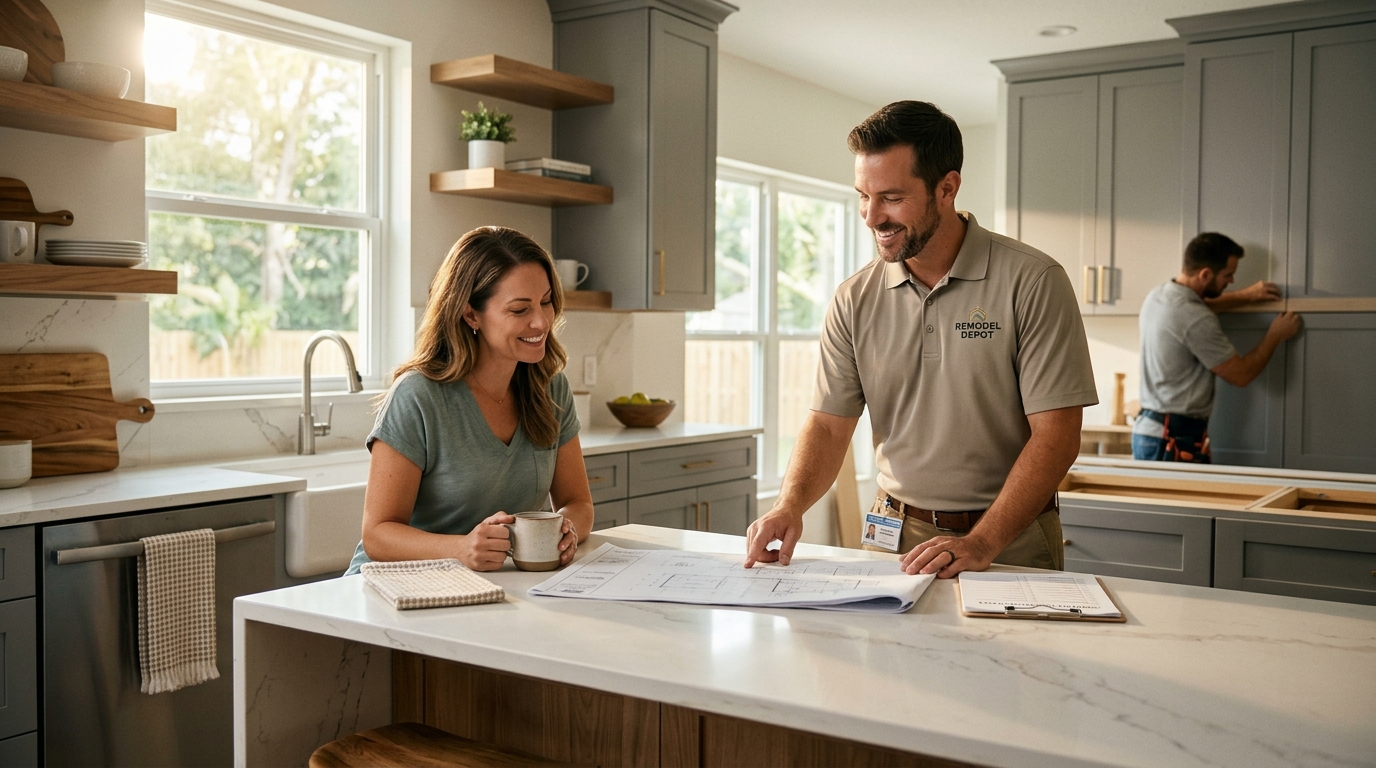
Benefits of Using a Licensed General Contractor for Your Remodeling Project
Choosing who manages your remodeling project is one of the most consequential decisions you will make as a homeowner. A licensed general contractor is a construction professional who has met state-mandated requirements for education, testing, insurance, and financial responsibility. In Florida, that means passing rigorous exams administered by the Department of Business and Professional Regulation (DBPR) and carrying mandatory liability and workers' compensation coverage. Below, we break down exactly why hiring a licensed general contractor protects your investment, your safety, and your peace of mind, especially for Tampa Bay homeowners planning a renovation with Remodel Depot.
What Contractor Licensing Actually Means in Florida
Florida's Construction Industry Licensing Board (CILB), housed within the DBPR, issues general contractor credentials under Chapter 489, Part I of the Florida Statutes. A Certified General Contractor (CGC) license authorizes work anywhere in the state with no limitation on building height, occupancy, or structural complexity.
To earn this credential, applicants must demonstrate at least four years of verifiable construction experience, pass a multi-part state exam with a minimum score of 70%, submit to a background check, and prove financial responsibility. This rigorous process ensures that every licensed contractor understands project management, contract administration, and Florida building codes before they ever set foot on your job site.
Continuing Education Requirements
Licensing is not a one-time event. Florida CGC holders must complete 14 hours of DBPR-approved continuing education every two years, covering workplace safety, advanced building codes, and updated laws. This keeps your contractor current on the latest standards, which directly benefits the quality of your whole-home remodel.
Insurance and Liability Protection
One of the most tangible benefits of hiring a licensed general contractor is mandatory insurance coverage. Florida law requires licensed contractors to carry a minimum of $300,000 in public liability insurance and $50,000 in property damage coverage, plus workers' compensation.
This matters because if an accident occurs on your property during construction, you are protected from financial liability. An unlicensed worker who gets injured on your site could leave you personally responsible for medical bills and lawsuits, and your homeowner's insurance may refuse the claim entirely.
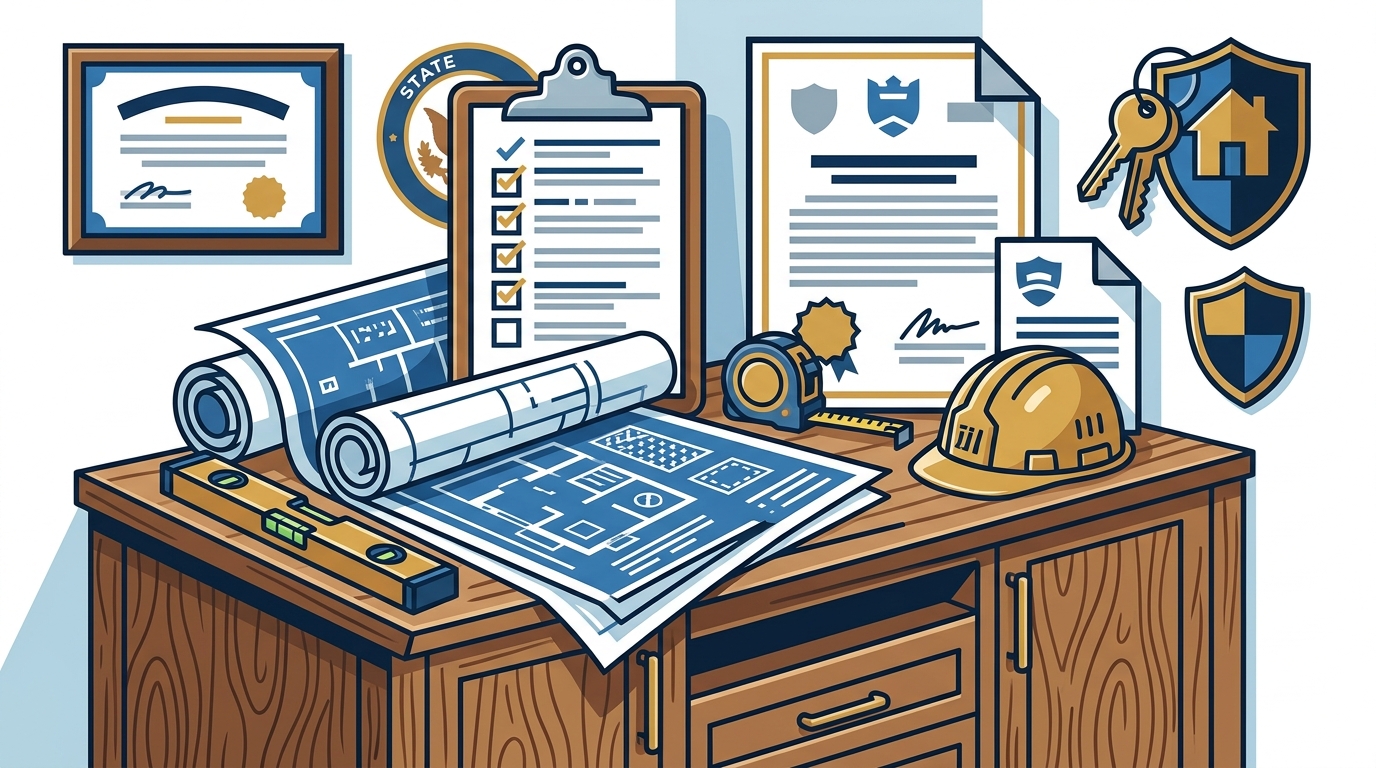
Verify Before You Sign
Always ask for current certificates of insurance and confirm them directly with the provider. A trustworthy contractor will share this information willingly. For tips on vetting professionals, read our guide on how to find a reliable remodeling contractor in Tampa Bay.
Building Code Compliance and Permits
Building code compliance is the process of ensuring that all construction work meets the safety and structural standards set by local and state authorities. Licensed general contractors are trained to navigate these requirements, pulling the correct permits and scheduling mandatory inspections so your project passes every review.
Skipping permits or failing inspections can result in fines, mandatory tear-outs, and complications when you sell your home. A licensed contractor prevents these costly mistakes by building compliance into the project plan from day one.
Professional Project Management
Remodeling projects involve coordinating multiple specialty trades: plumbing, electrical, drywall, carpentry, and more. A licensed general contractor serves as the single point of contact who manages scheduling, budgets, subcontractors, and material procurement so you do not have to.
This coordination keeps work on track and on budget. Whether you are updating your kitchen with custom cabinetry or transforming your living room with modern built-ins, professional project management prevents delays and miscommunication between trades.
Quality Assurance and Accountability
Licensed contractors have a reputation and a credential on the line with every job. Their license can be suspended or revoked by the CILB for substandard work, giving them a strong incentive to deliver quality craftsmanship. This built-in accountability is something unlicensed operators simply do not have.
At Remodel Depot, our team combines traditional woodworking skills with modern techniques to create pieces that fit your space perfectly. Explore our approach to precision craftsmanship in our post on best materials for residential built-ins.
Risks of Hiring an Unlicensed Contractor
The savings promised by an unlicensed contractor almost always come with hidden costs. Unlicensed individuals typically lack insurance coverage, which means property damage or injuries become your financial burden. Without a license, there is often no guarantee of quality, and it is extremely difficult to seek legal recourse if work is left incomplete or defective.
Safety Hazards
Unlicensed workers may not understand current building codes, leading to faulty wiring, fire risks, or compromised structural integrity. Many insurance companies will void homeowner's claims for damage caused by unlicensed work, leaving you with no safety net at all.
Licensed vs. Unlicensed Contractor Comparison
| Factor | Licensed General Contractor | Unlicensed Contractor |
|---|---|---|
| State-Verified Credentials | Yes, DBPR/CILB verified | No verification |
| Liability Insurance | Required ($300K minimum in FL) | Typically none |
| Workers' Compensation | Required by law | Rarely carried |
| Permit Pulling | Legally authorized | Cannot legally pull permits |
| Building Code Knowledge | Exam-tested and CE-maintained | Unverified |
| Legal Recourse | License complaint process available | Limited or none |
| Accountability | License at risk for poor work | No professional consequence |
Key Takeaways
- A licensed general contractor in Florida must pass state exams, carry insurance, and complete continuing education every two years.
- Mandatory liability and workers' compensation insurance protects you from financial exposure during construction.
- Licensed contractors handle permits and inspections, ensuring full building code compliance.
- Professional project management keeps your remodel on schedule and on budget.
- Unlicensed contractors expose you to safety hazards, voided insurance claims, and limited legal recourse.
- Accountability is built into the licensing system: the CILB can suspend or revoke a license for substandard work.
- Verifying credentials through the Florida DBPR portal takes only minutes and protects your investment.
Frequently Asked Questions
What is a licensed general contractor?
A licensed general contractor is a construction professional who has met all state requirements for education, examination, insurance, and financial responsibility, authorizing them to manage and oversee building projects legally.
How do I verify a contractor's license in Florida?
You can verify any Florida contractor's license for free through the DBPR's online license search at myfloridalicense.com. Search by name or license number to confirm active status.
What insurance should a licensed contractor carry?
In Florida, licensed general contractors must carry at least $300,000 in public liability insurance, $50,000 in property damage coverage, and workers' compensation insurance unless a legal exemption is filed.
Can an unlicensed contractor pull building permits?
No. Only licensed contractors or homeowners (for owner-occupied residences) may legally pull building permits in Florida. Work done without permits can result in fines and mandatory removal.
Why is hiring an unlicensed contractor risky?
Unlicensed contractors typically carry no insurance, may skip code requirements, and offer no formal accountability. If something goes wrong, you bear the full financial and legal burden.
How much does it cost to hire a licensed general contractor in Tampa Bay?
Costs vary by project scope. Licensed contractors may charge a percentage of total project cost or a fixed fee. For detailed budgeting, see our 2026 Florida remodeling cost guide.
Does Remodel Depot hold a Florida general contractor license?
Yes. Remodel Depot is a licensed Florida General Contractor specializing in custom cabinetry, built-ins, and full-service remodeling for residential and commercial clients across Tampa Bay.
Ready to Remodel With a Licensed Contractor You Can Trust?
Your home deserves a team that combines verified expertise, proper insurance, and genuine craftsmanship. Remodel Depot is a licensed Florida General Contractor serving Tampa Bay homeowners and businesses with custom cabinetry, built-ins, and complete renovations. Contact Remodel Depot today to schedule your free consultation and start your project with confidence.