Custom Entertainment Center Process: A Step-by-Step Guide
A custom entertainment center is a built-to-order media unit designed to fit your exact wall dimensions, storage needs, and style preferences. Unlike mass-produced furniture, a professionally crafted entertainment center integrates seamlessly into your living space, hiding cables and housing everything from your TV to gaming consoles. Whether you are planning a living room modernization or a full renovation, understanding the creation process helps you make informed decisions and get results that last.
Step 1: Initial Consultation and Needs Assessment
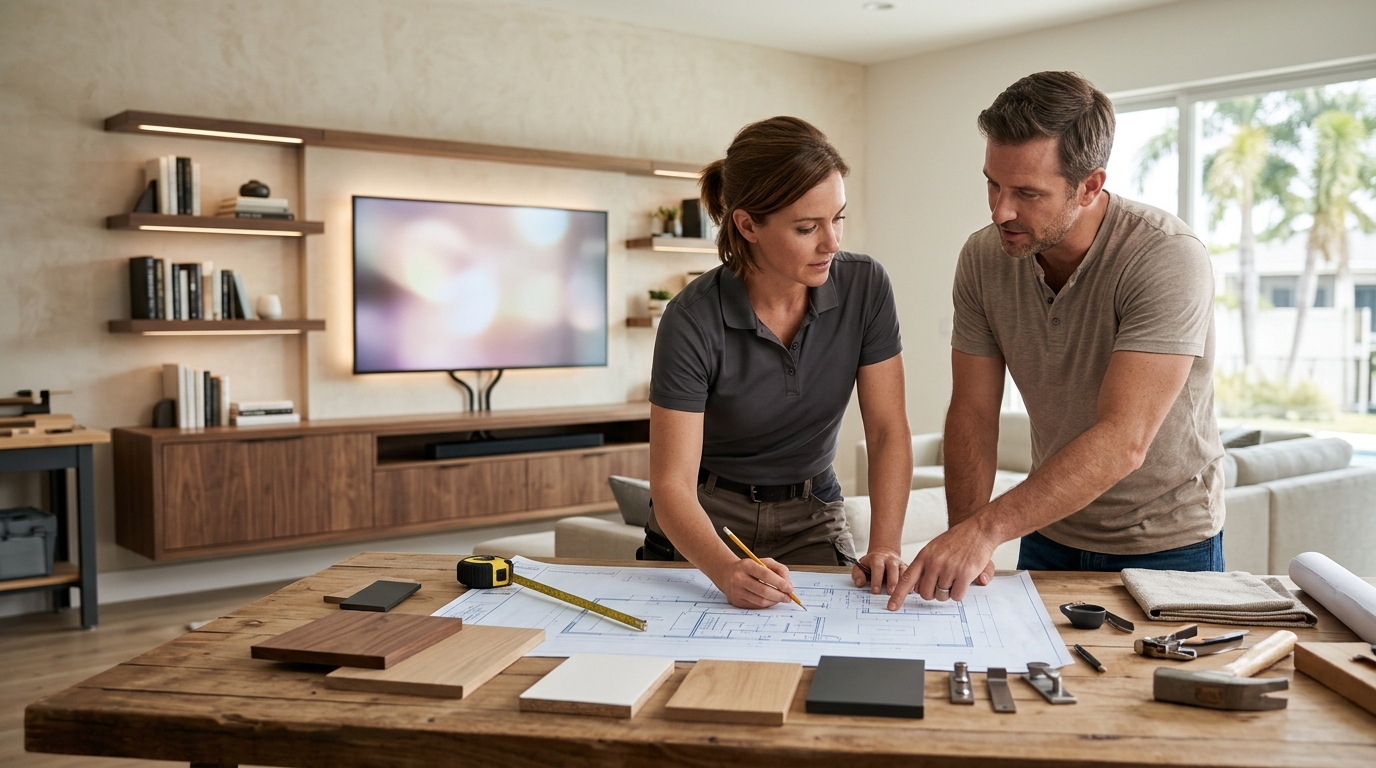
Every custom entertainment center begins with a thorough consultation. A skilled contractor will measure your wall space, note the location of electrical outlets and HVAC vents, and discuss how you plan to use the unit. As experts at This Old House recommend, you should consider the size of your television, the number of components you need to house, and the amount of storage required.
This is also the time to share your style preferences. Do you want open shelving, closed cabinets, or a combination? Working with a licensed general contractor ensures the project is properly scoped from day one.
Step 2: Design and Planning
A design phase is the blueprint stage where ideas become actionable plans. Your contractor will create detailed diagrams with precise measurements for every cabinet, shelf, and custom feature. Planning should account for proper ventilation; electronics need 1 to 2 inches of clearance behind components to prevent overheating.
Key Design Considerations
- Optimal TV viewing height: 42 to 48 inches from floor to screen center
- Cable management routing for a clean, cord-free look
- Adjustable vs. fixed shelving for future flexibility
- Proportional balance relative to your wall size
If your entertainment center is part of a larger renovation, coordinate the design with your whole-home remodeling plan to maintain visual consistency.
Step 3: Material Selection
Choosing the right materials directly affects durability, appearance, and cost. A built-in is a piece of custom furniture permanently integrated into a room's architecture. Below is a comparison of common wood options used in entertainment center construction.
| Material | Characteristics | Best For | Relative Cost |
|---|---|---|---|
| Oak | Strong, distinctive grain | Traditional and transitional styles | $$ |
| Maple | Smooth grain, light color | Modern, sleek designs | $$ |
| Cherry | Darkens over time, warm tone | Formal living rooms | $$$ |
| Pine | Lightweight, easy to work | Budget-friendly or rustic looks | $ |
| Plywood/MDF | Consistent, paintable | Painted finishes, cost savings | $ |
For more detail on picking the right lumber and panel products, see our guide on best materials for residential built-ins.
Step 4: Construction and Assembly
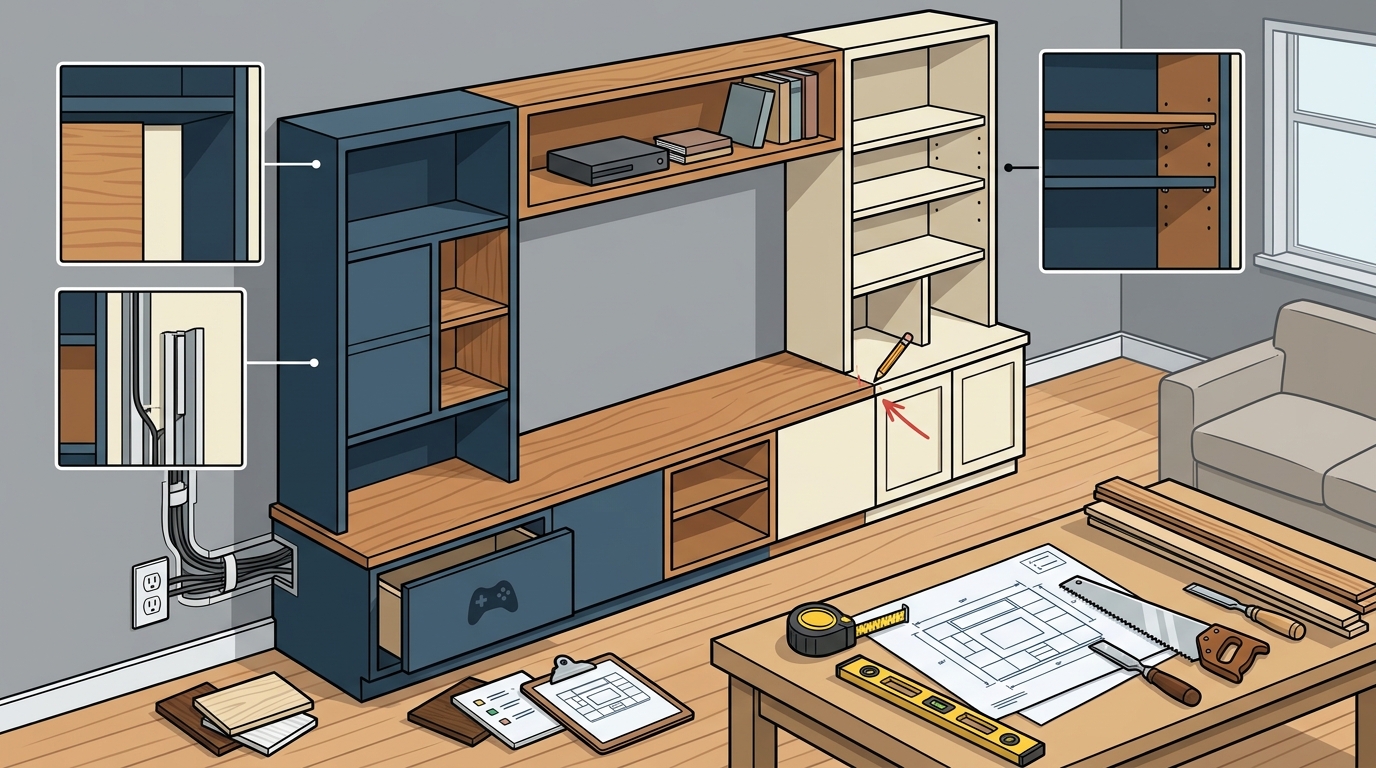
Construction is where craftsmanship matters most. A professional woodworker will cut panels, assemble the cabinet boxes, install drawer slides, and route dados for shelves. Soft-close hinges and full-extension drawer slides are standard upgrades that protect your equipment and improve daily use.
Cable Management
Cable management is the practice of organizing and concealing wires within a media unit for a cleaner look. Cutouts are made at outlet locations using a jigsaw, and additional holes are drilled for ventilation and cable access. Planning these openings during construction is far easier than retrofitting later.
Structural Integrity
For wall-mounted or built-in units, verify your wall can support the weight. In Tampa Bay homes, especially older construction, stud placement and wall composition should be assessed before anchoring heavy cabinetry. A reliable remodeling contractor will handle this assessment as part of the build.
Step 5: Finishing and Installation
Finishing transforms raw wood into a polished piece. This involves sanding, priming, and applying paint or stain. Gaps and nail holes are filled with wood filler and caulk for a seamless look. Crown molding, baseboard trim, and decorative details are added last to give the piece a furniture-quality appearance.
The unit is then installed, leveled, and secured to the wall. Final touches include mounting your TV, connecting components, and dressing shelves with decor. If you are also upgrading your kitchen or bath, your contractor can coordinate timelines across rooms. Learn more about custom cabinetry options for Tampa Bay kitchens.
Cost Factors to Consider
Custom entertainment center pricing varies widely based on size, materials, and complexity. A simple built-in using stock cabinets might start around $1,000 to $2,000 in materials alone, while a fully custom, professionally built unit can range from $3,000 to $8,000 or more including labor.
Key cost drivers include:
- Linear footage and overall dimensions
- Wood species and finish type (paint vs. stain)
- Hardware quality (soft-close, decorative pulls)
- Electrical work for integrated lighting or outlets
- Design complexity (arches, fluted columns, mantels)
Getting a detailed quote from a licensed general contractor protects you from hidden costs and ensures quality workmanship.
Key Takeaways
- A custom entertainment center starts with a thorough consultation covering wall measurements, outlet placement, and storage needs.
- Detailed design drawings with precise dimensions prevent costly mistakes during construction.
- Material choice impacts durability, aesthetics, and budget. Oak, maple, cherry, pine, and plywood/MDF are the most common options.
- Proper cable management and ventilation (1 to 2 inches of clearance) should be planned during the design phase, not after.
- Professional finishing with primer, paint or stain, and trim creates a furniture-grade look.
- Costs typically range from $1,000 for a simple DIY build to $8,000+ for a fully custom professional installation.
- Working with a licensed contractor in Tampa Bay ensures code compliance, structural safety, and a warranty on workmanship.
Frequently Asked Questions
How long does it take to build a custom entertainment center?
Most custom entertainment centers take 2 to 6 weeks from design approval to installation, depending on complexity, material availability, and the contractor's schedule.
What is the best wood for a custom entertainment center?
Oak and maple are popular for their durability and versatility. Cherry adds warmth to formal spaces, while pine works well for rustic or budget-conscious projects. Plywood with a veneer finish is a strong, cost-effective alternative for painted units.
Can a custom entertainment center be built around a fireplace?
Yes. Many homeowners in Tampa Bay combine entertainment centers with fireplace surrounds. Your contractor will ensure proper heat clearance and use fire-rated materials where needed.
Do I need a permit for a built-in entertainment center?
In most Florida jurisdictions, a freestanding or wall-anchored entertainment center does not require a permit. However, if the project involves electrical work or structural modifications, permits may be necessary. A licensed contractor will advise you.
How do I keep cables organized in a custom media center?
Professional builders route cables through pre-cut openings behind the unit and use cable management channels. Planning outlet and port locations during the design phase ensures a clean, clutter-free result.
What is the difference between a built-in and a freestanding entertainment center?
A built-in entertainment center is permanently attached to the wall and often spans floor to ceiling, creating a seamless architectural look. A freestanding unit is movable furniture that sits against the wall. Built-ins offer more customization and a higher-end appearance.
Can I add lighting to my entertainment center?
Absolutely. LED puck lights, strip lighting, and recessed fixtures are common additions. Integrated lighting highlights display shelves and creates ambient atmosphere in your living room.
Why should I hire a licensed contractor instead of doing it myself?
A licensed contractor brings expertise in structural assessment, code compliance, and precision craftsmanship. DIY builds can save money on simpler designs, but complex built-ins benefit from professional execution and come with workmanship guarantees.
Ready to Create Your Custom Entertainment Center?
If you are a homeowner in Tampa Bay looking for a custom entertainment center that fits your space perfectly, Remodel Depot can help. As a licensed Florida General Contractor (CGC1504088), we combine traditional woodworking skills with modern techniques to deliver built-ins and cabinetry you will love for years. Contact Remodel Depot today to schedule your free consultation and get a detailed quote for your project.