Best Materials for Built-Ins: A Residential Homeowner Guide
Choosing the right materials for residential built-ins is one of the most important decisions you will make during a remodeling project. The material you select affects durability, appearance, cost, and long-term maintenance. Whether you are planning a custom bookcase for your living room, a window seat with storage, or a full wall entertainment center, the options range from budget-friendly MDF to premium solid hardwood. In this guide, we break down the most popular materials used for built-in cabinetry, compare their strengths and weaknesses, and help you make a confident choice for your Tampa Bay home.
What Are Built-Ins?
A built-in is a piece of furniture or cabinetry that is constructed directly into the architecture of a room, creating a seamless, custom look. Built-ins include bookshelves, entertainment centers, window seats, mudroom cubbies, and office desks that are permanently attached to walls or alcoves.
Because built-ins become part of your home's structure, material quality matters more than it does for freestanding furniture. At Remodel Depot, we work with Tampa Bay homeowners to select materials that balance beauty, performance, and budget for every custom cabinetry project.
Hardwood Plywood: The Industry Standard
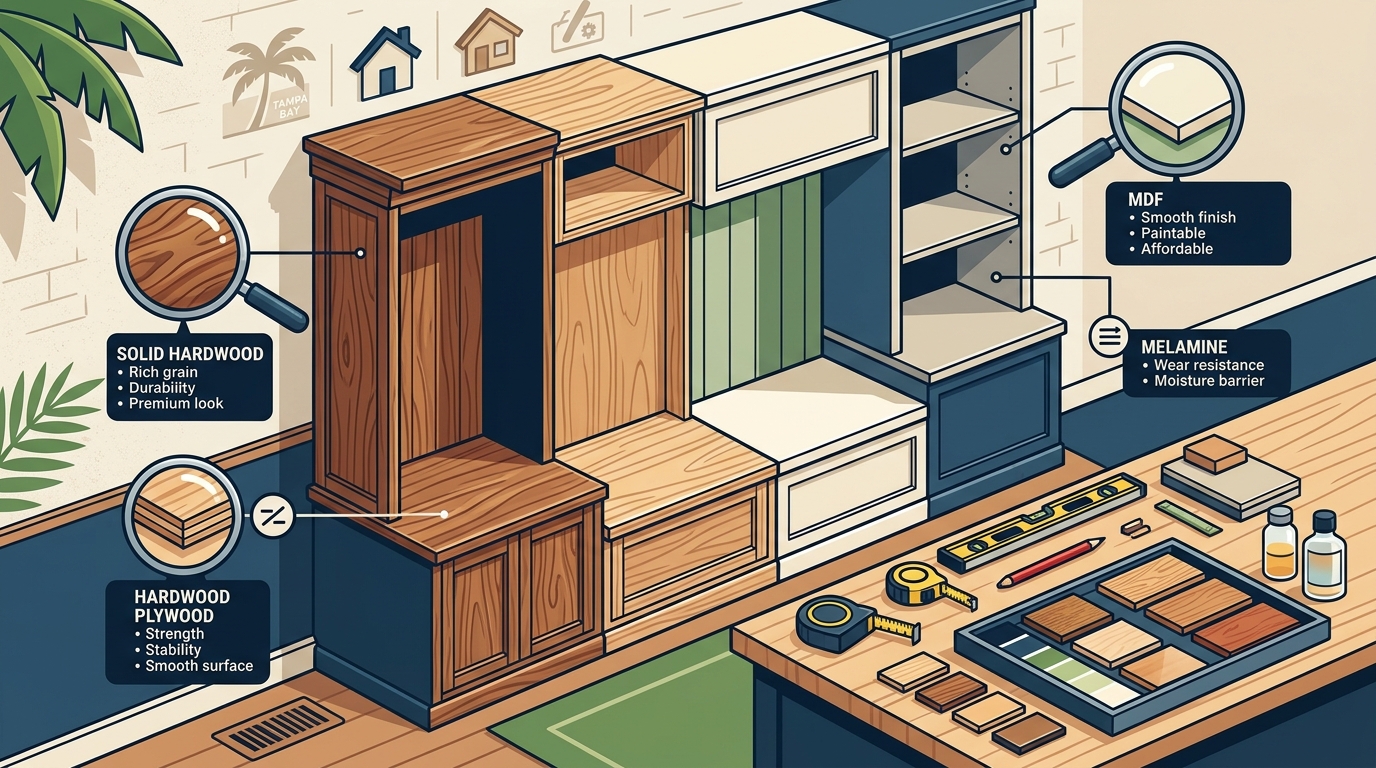
Hardwood plywood is a type of engineered wood made from thin sheets of real wood veneer bonded together under heat and pressure. It is the most widely recommended material for built-in cabinet boxes, shelving, and structural components.
Why Professionals Prefer Plywood
Plywood offers superior screw-holding power, dimensional stability, and moisture resistance compared to other engineered panels. Its cross-grain construction prevents warping and shrinking when humidity levels change, which is especially important in Florida's climate. Cabinet-grade plywood in 3/4-inch thickness is the gold standard for built-in carcasses.
Best Plywood Types for Built-Ins
Baltic birch plywood features consistent multi-ply layers and is a step up in core quality for drawers and shop-grade cabinetry. Veneered plywood with a hardwood face such as maple, cherry, or walnut delivers the look of solid wood at a lower price point. For shelving that will be visible, prefinished plywood saves finishing time while providing a clean interior look.
MDF: Best for Painted Built-Ins
Medium-density fiberboard (MDF) is an engineered wood product manufactured by breaking down wood residuals into fine fibers, combining them with resin, and pressing the mixture into dense, flat panels. Its ultra-smooth surface makes it the top choice for painted doors, drawer fronts, and decorative panels.
Strengths and Limitations
MDF is significantly cheaper than plywood, easy to machine for detailed profiles, and produces a flawless painted finish without visible grain. However, MDF is prone to moisture damage and can swell when exposed to water. It is also heavier than plywood and has weaker screw-holding ability, meaning shelves under heavy loads may sag over time without reinforcement.
For built-in projects in dry living spaces like home offices or bedrooms, MDF is a smart, budget-friendly option. In moisture-prone areas such as bathrooms, plywood is the safer default.
Solid Hardwood: The Premium Choice
Solid hardwood refers to lumber milled directly from trees such as oak, maple, cherry, or walnut. It is the most traditional and visually striking material for built-in face frames, trim, and accent pieces.
When to Use Solid Wood
Solid wood is ideal for face frames, crown molding, and any visible trim work where natural grain and stain-ability are priorities. Poplar is a popular and cost-effective hardwood that paints beautifully, while red oak offers a distinctive grain that looks best with stain or clear coat finishes. Most professional cabinetmakers, including our team at Remodel Depot, use solid hardwood for face frames combined with plywood or MDF for the cabinet boxes behind them.
Melamine and Thermofoil Options
Melamine-faced chipboard (MFC) is a particleboard core laminated with a durable melamine coating. Thermofoil is a thin vinyl layer applied over MDF or particleboard to create a seamless, glossy finish. Both materials offer budget-friendly solutions for interior shelving and utility built-ins.
Melamine's plastic veneer is more scratch-resistant than a painted surface, making it practical for closet interiors and pantry shelving. Thermofoil works well in modern, minimalist spaces but can warp or peel if exposed to high heat. Neither material matches the longevity or refinement of plywood or solid hardwood in high-visibility areas.
Material Comparison Table
| Material | Best Use in Built-Ins | Moisture Resistance | Paintability | Approximate Cost (per linear ft) |
|---|---|---|---|---|
| Hardwood Plywood | Cabinet boxes, shelves, structural panels | Good | Good (needs prep) | $60 - $225 |
| MDF | Painted doors, drawer fronts, decorative panels | Poor | Excellent | $40 - $150 |
| Solid Hardwood | Face frames, trim, crown molding | Moderate | Varies by species | $80 - $300+ |
| Melamine / MFC | Closet interiors, pantry shelves | Moderate | N/A (pre-finished) | $30 - $100 |
| Thermofoil | Modern cabinet doors on a budget | Low-Moderate | N/A (vinyl wrap) | $35 - $120 |
Key Takeaways
- Hardwood plywood is the best all-around material for built-in cabinet boxes and shelving due to its strength and moisture tolerance.
- MDF delivers the smoothest painted finish and is ideal for doors and panels in dry rooms.
- Solid hardwood should be reserved for visible face frames, trim, and stained accents.
- Melamine and thermofoil are budget-friendly for utility areas but lack the durability of plywood or hardwood.
- Florida's humidity makes moisture resistance a critical factor when choosing built-in materials.
- Combining materials (plywood boxes with MDF doors and hardwood face frames) is the professional approach used by experienced contractors.
- Working with a licensed general contractor ensures the right material is specified for each component of your built-in.
Frequently Asked Questions
What is the best material for built-in bookshelves?
Hardwood plywood in 3/4-inch thickness is the best choice for built-in bookshelves. It resists sagging under the weight of books and offers good moisture tolerance. MDF can be used for lighter-duty shelves but may need reinforcement for longer spans.
Is MDF good enough for built-in cabinets?
MDF works well for painted cabinet doors and drawer fronts in dry areas. For cabinet boxes and structural components, plywood is the stronger and more moisture-resistant option. Many builders combine both materials for the best results.
How does Florida humidity affect built-in materials?
High humidity can cause MDF to swell and lose structural integrity if it is not properly sealed. Plywood's cross-grain construction provides better dimensional stability in humid climates, making it a safer choice for Tampa Bay homes.
Can I use solid wood for the entire built-in?
You can, but it is significantly more expensive than using engineered panels for the cabinet boxes. Solid wood is also more prone to seasonal expansion and contraction. Most professionals use solid hardwood only for face frames and visible trim.
What is cabinet-grade plywood?
Cabinet-grade plywood is a premium plywood product featuring a smooth hardwood veneer on one or both faces, sanded to a furniture-quality finish. It is available in species like birch, maple, and oak and comes in common thicknesses of 1/4-inch, 1/2-inch, and 3/4-inch.
How much do built-in materials cost?
According to Angi, MDF-based built-in bookcases cost approximately $40 to $150 per linear foot, while plywood versions range from $60 to $225 per linear foot. Solid hardwood costs more depending on the species selected.
Should I paint or stain my built-ins?
If you want a painted finish, MDF doors paired with plywood boxes deliver the cleanest look. If you prefer a natural wood grain appearance, choose hardwood plywood or solid wood and apply a stain or clear coat. The material you select should align with your finish preference from the start.
Why should I hire a professional for built-ins?
Built-ins require precise measurements, proper material selection for each component, and skilled installation to look seamless. A licensed contractor like Remodel Depot ensures your built-ins are structurally sound, beautifully finished, and built to last in Tampa Bay's climate.
Get Started With Your Built-In Project
Ready to add custom built-ins to your Tampa Bay home? Remodel Depot specializes in custom cabinetry and built-in solutions tailored to your space, style, and budget. Contact us today for a free estimate and let our experienced team help you choose the perfect materials for built-ins that will last for years to come.