
What Is the Process for Creating a Custom Entertainment Center?
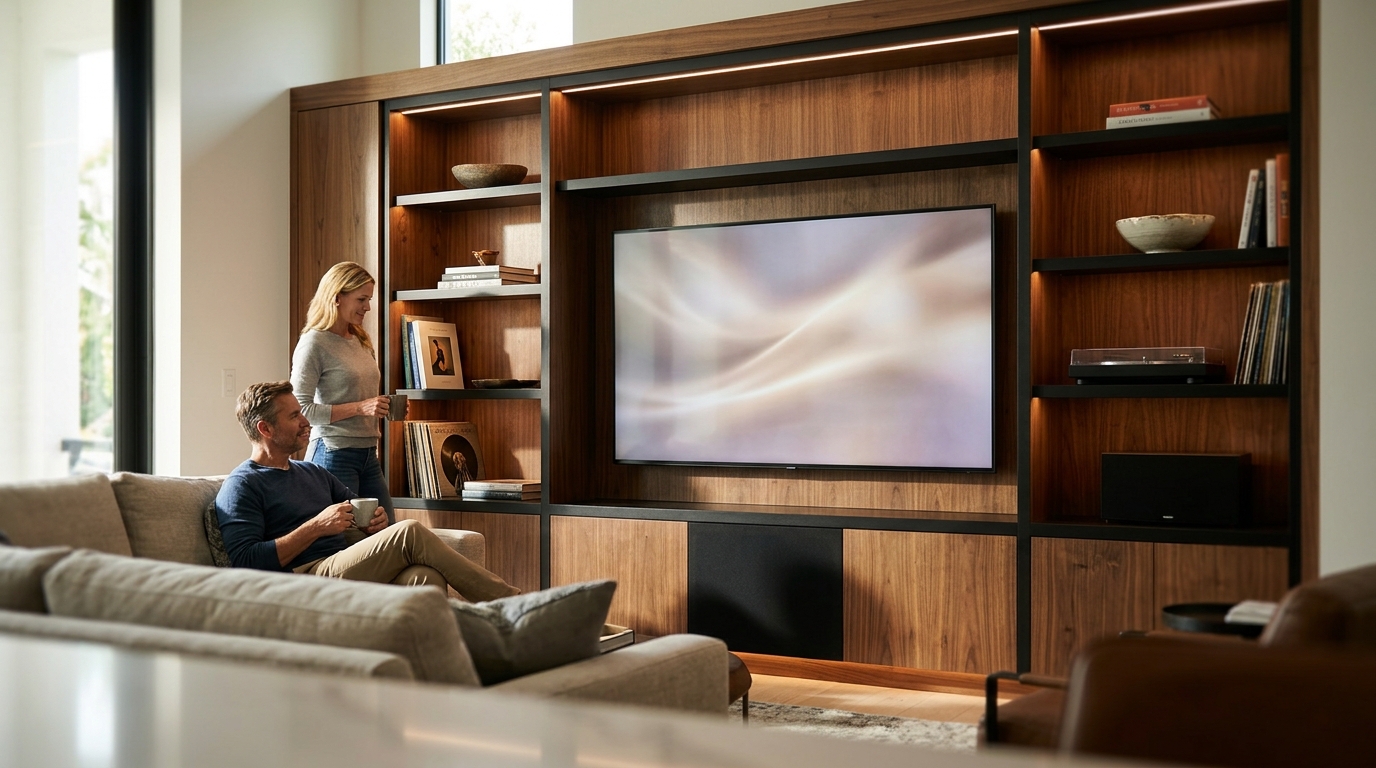
A custom entertainment center is a built-in or freestanding media unit designed and constructed to fit a specific room, wall, and lifestyle. Unlike off-the-shelf furniture, a custom piece lets you control every dimension, material, and feature, from cable management channels to adjustable shelving for gaming consoles. At Remodel Depot, our Tampa Bay team walks clients through a proven process that turns an empty wall into a stunning focal point. Below, we break down each stage so you know exactly what to expect when you invest in a professionally crafted entertainment center for your home.
1. Initial Consultation and Needs Assessment
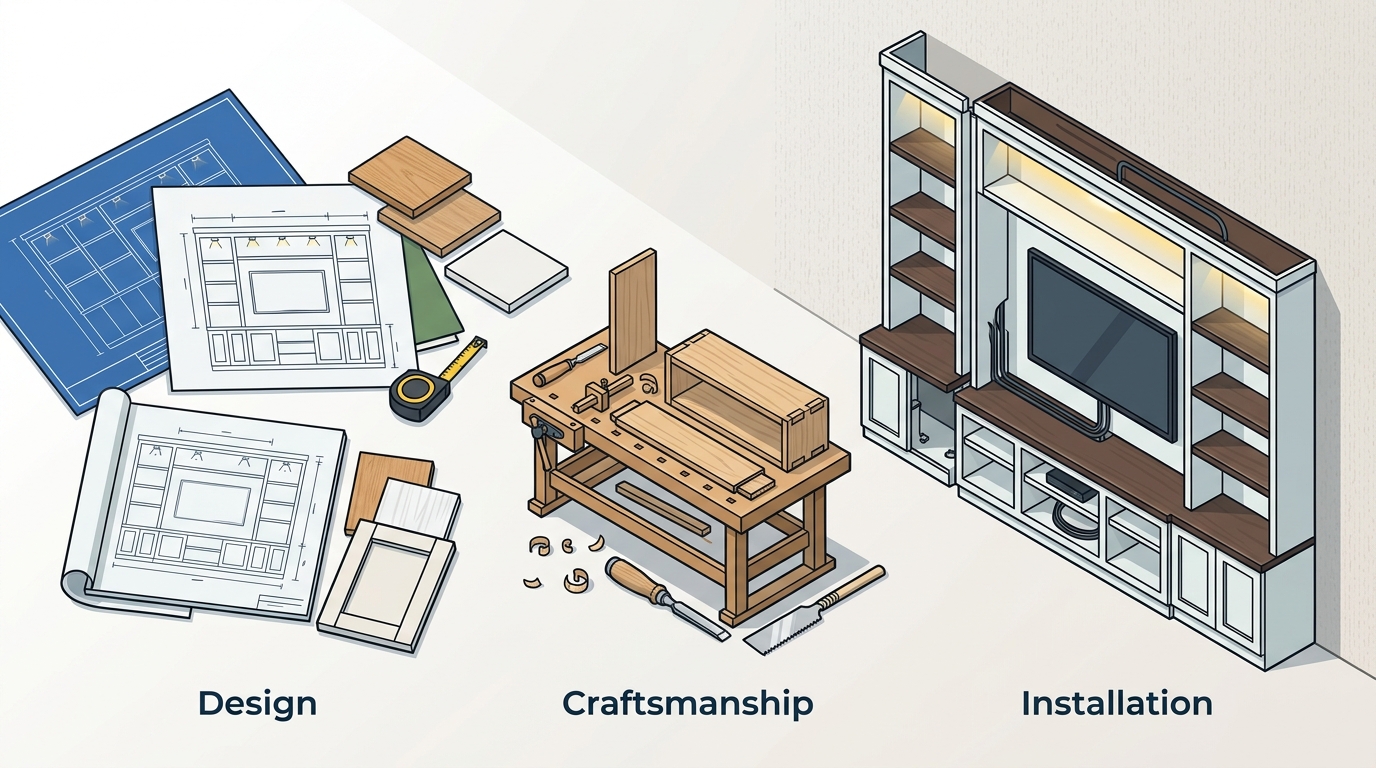
Every successful custom entertainment center begins with a plan. During the consultation, your contractor takes precise measurements of the wall, notes existing electrical outlets and HVAC vents, and discusses how you intend to use the space. Will you mount a 75-inch TV? Do you need hidden storage for a soundbar, game consoles, or vinyl records?
A needs assessment is a structured conversation that identifies functional requirements, aesthetic preferences, and budget parameters before any design work begins. This step prevents costly changes later and ensures the final piece truly fits your lifestyle. If you are also considering updates to surrounding rooms, our kitchen remodeling and bathroom remodeling teams can coordinate timelines.
2. Design and Planning
With measurements in hand, your designer creates a scaled drawing. Comfortable TV viewing height generally falls between 42 and 48 inches from the floor to screen center, according to ergonomic guidelines from woodworking experts. The plan also specifies shelf placement, door styles, and whether shelving will be adjustable or fixed.
Choosing a Layout Style
Built-in entertainment centers sit flush against the wall and often include crown molding that ties them into the room's architecture. Freestanding units offer more flexibility if you plan to rearrange the room later. Your designer will recommend the best approach based on wall dimensions and your home's style.
Incorporating Storage Zones
Smart designs divide the unit into zones: open display shelves for decor, closed cabinets for electronics, and drawers for media collections. Planning these zones early keeps the finished piece organized and visually balanced.
3. Material Selection
Material selection is the process of choosing wood species, hardware, and finish options that align with your design vision and durability needs. Common choices include oak, maple, cherry, and poplar, each offering distinct grain patterns and price points.
| Wood Species | Character | Best For | Relative Cost |
|---|---|---|---|
| Oak | Prominent grain, high durability | Traditional and transitional styles | $$ |
| Maple | Smooth grain, light color | Modern, painted finishes | $$ |
| Cherry | Warm tone, darkens with age | Formal living rooms | $$$ |
| Poplar | Affordable, paints well | Budget-friendly painted units | $ |
Hardware matters too. Soft-close hinges and full-extension drawer slides protect electronics from vibration and provide easy access. Our custom cabinetry specialists help you select hardware that complements the overall design.
4. Shop Construction and Assembly
With an approved design and materials sourced, construction begins in the shop. Cabinet boxes are built from 3/4-inch hardwood plywood for strength, while 1/4-inch plywood is used for back panels. Face frames are assembled with pocket screws and wood glue, then left to cure overnight for maximum joint strength.
Doors are fabricated next. Shaker-style doors remain the most popular option for entertainment centers because they blend with both modern and traditional interiors. Building components off-site in a controlled environment ensures tighter tolerances and a cleaner finish than on-site fabrication alone.
5. On-Site Installation
Installation day involves transporting finished components to your home and securing them to wall studs. Your installer will verify that the wall can support the weight of the structure, shim for level, and fasten cabinets together with screws. Baseboard molding may need to be temporarily removed to create a flush fit against the wall.
If you are tackling a broader renovation, our built-ins page shows how entertainment centers can integrate with bookshelves, window seats, and home office cabinetry for a cohesive look throughout your living space.
6. Finishing Touches and Cable Management
Cable management is the practice of routing power cords, HDMI cables, and speaker wires through hidden channels so they remain invisible from the front of the unit. Cutouts are made at outlet locations, and built-in power strips inside cabinets minimize visible cords. Allow 1 to 2 inches of clearance behind electronics for proper airflow and heat dissipation.
Crown molding, baseboards, and trim are added last to blend the entertainment center seamlessly into the room. A final coat of paint or stain, light sanding between coats, and careful caulking complete the transformation from raw wood to furniture-grade showpiece.
Custom vs. Store-Bought: A Quick Comparison
| Factor | Custom Entertainment Center | Store-Bought Unit |
|---|---|---|
| Fit | Exact to your wall dimensions | Standard sizes only |
| Materials | Solid hardwood, plywood | Often particleboard or MDF |
| Cable Management | Integrated channels and outlets | Limited or none |
| Durability | Decades with proper care | 5-10 years typical |
| Resale Value | Adds to home value as a built-in | Depreciates quickly |
| Lead Time | 4-8 weeks typical | Immediate to 2 weeks |
Key Takeaways
- Start with a thorough consultation that covers measurements, electrical locations, and lifestyle needs.
- Plan TV viewing height between 42 and 48 inches from the floor for ergonomic comfort.
- Select wood species based on style preference, durability, and budget.
- Demand soft-close hardware and full-extension drawer slides for long-term usability.
- Insist on integrated cable management to keep cords hidden and electronics ventilated.
- Build components in a shop environment for tighter tolerances before on-site install.
- Coordinate with your contractor if other remodeling projects are happening simultaneously.
Frequently Asked Questions
How long does it take to build a custom entertainment center?
Most projects take 4 to 8 weeks from initial consultation through final installation, depending on design complexity and material availability.
How much does a custom entertainment center cost?
Costs vary widely based on size, materials, and features. A professionally built unit in the Tampa Bay area typically ranges from $3,000 to $10,000 or more for large wall-to-wall designs.
Can a custom entertainment center increase my home's value?
Yes. Built-in cabinetry is considered a permanent home improvement and can positively affect appraisal value, especially when it complements the room's architecture.
What is the best wood for an entertainment center?
Oak and maple are popular for their durability and versatility. Cherry offers a rich, warm aesthetic that deepens over time. Poplar is an excellent budget choice when you plan to paint the unit.
Do I need a permit for a built-in entertainment center?
In most Florida jurisdictions, a standalone cabinetry installation does not require a building permit unless you are adding or modifying electrical circuits. Your contractor should verify local requirements.
How do you handle cable management?
Professionals cut access holes at outlet locations, install internal power strips, and route cables through concealed channels behind the unit. Ventilation clearance of 1 to 2 inches is maintained behind all electronics.
Can I add lighting to my entertainment center?
Absolutely. LED strip lights, puck lights, and recessed fixtures are popular options that highlight display shelves and create ambient lighting without generating excessive heat.
Why hire a licensed contractor instead of doing it myself?
A licensed general contractor, like Remodel Depot (FL License #CGC1504088), ensures code compliance, structural integrity, and a warranty-backed finished product. Complex builds involving electrical work should always be handled by professionals.
Ready to Create Your Dream Entertainment Center?
Remodel Depot specializes in custom cabinetry and built-ins for homeowners across Tampa Bay. From the first consultation to the final finishing touch, our licensed team manages every detail so you can enjoy the result without the stress. Contact us today for a free estimate and let's turn that blank wall into the centerpiece of your living room.