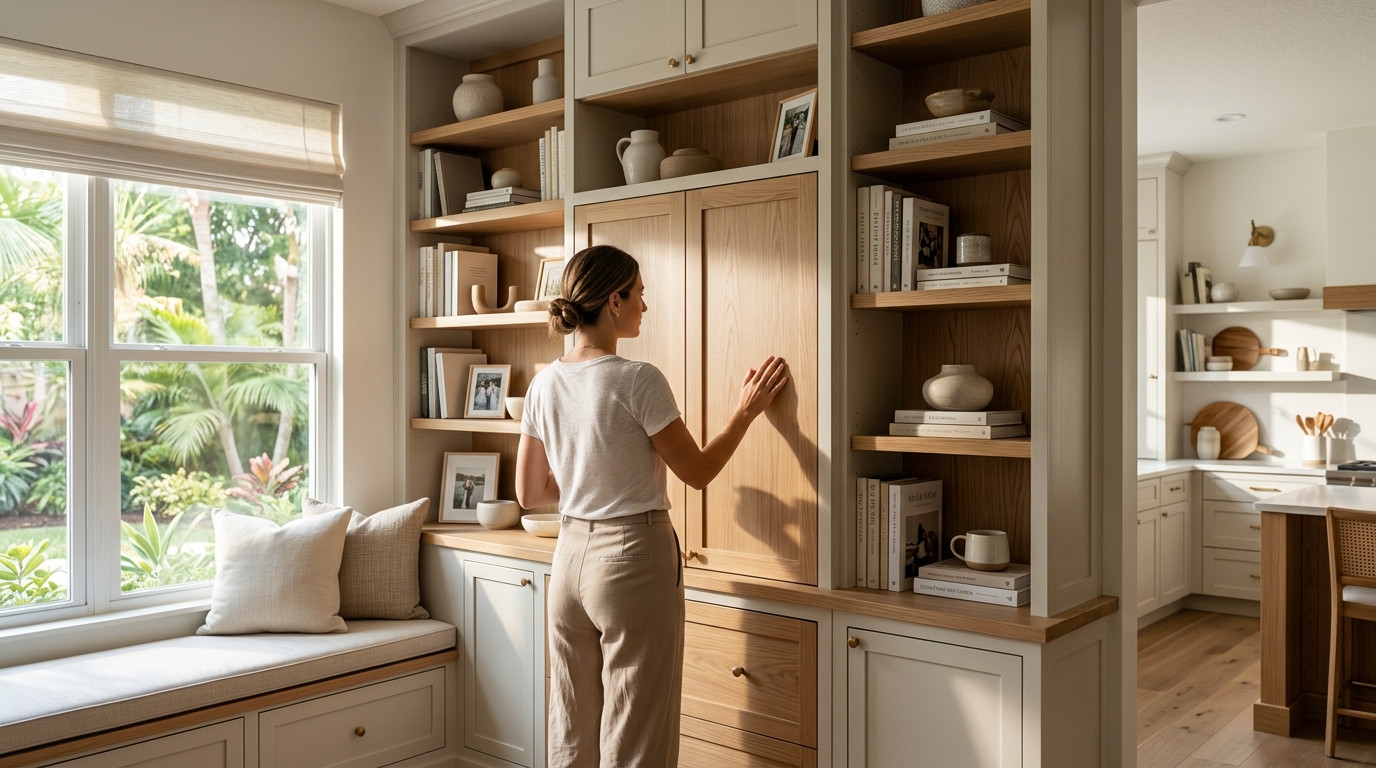
Choosing the right materials for your residential built-ins is one of the most important decisions in any remodeling project. The material you select affects durability, appearance, maintenance, and long-term value. Whether you are planning a custom bookcase, an entertainment center, or a full wall of cabinetry, understanding the strengths and limitations of each option helps you make a confident investment. In this guide, we break down the most popular materials used by professional contractors today and explain which works best for different rooms, budgets, and styles in your home.
What Are Residential Built-Ins?
Residential built-ins are custom storage or display units designed to fit seamlessly into a specific wall, alcove, or room layout. Unlike freestanding furniture, built-ins are permanently installed and tailored to your exact dimensions and style preferences. Common examples include bookshelves, window seats, entertainment centers, mudroom cubbies, and custom kitchen cabinetry.
Because built-ins are a long-term addition to your home, selecting the right material is critical. The material determines how well your piece handles daily use, humidity, and the test of time.
Hardwood Plywood: The Professional Standard
Hardwood plywood is the go-to material for most professional cabinetmakers and contractors building residential built-ins. It is an engineered wood product made from thin layers of real wood veneer glued together under pressure, creating a panel that is both strong and dimensionally stable.
Why Contractors Prefer It
Compared to solid wood, plywood is more economical and more stable. It resists warping and bowing, holds screws securely, and comes in species like birch, maple, and oak. Cabinet-grade plywood features a smooth hardwood veneer face that looks beautiful stained or finished.
Best Uses
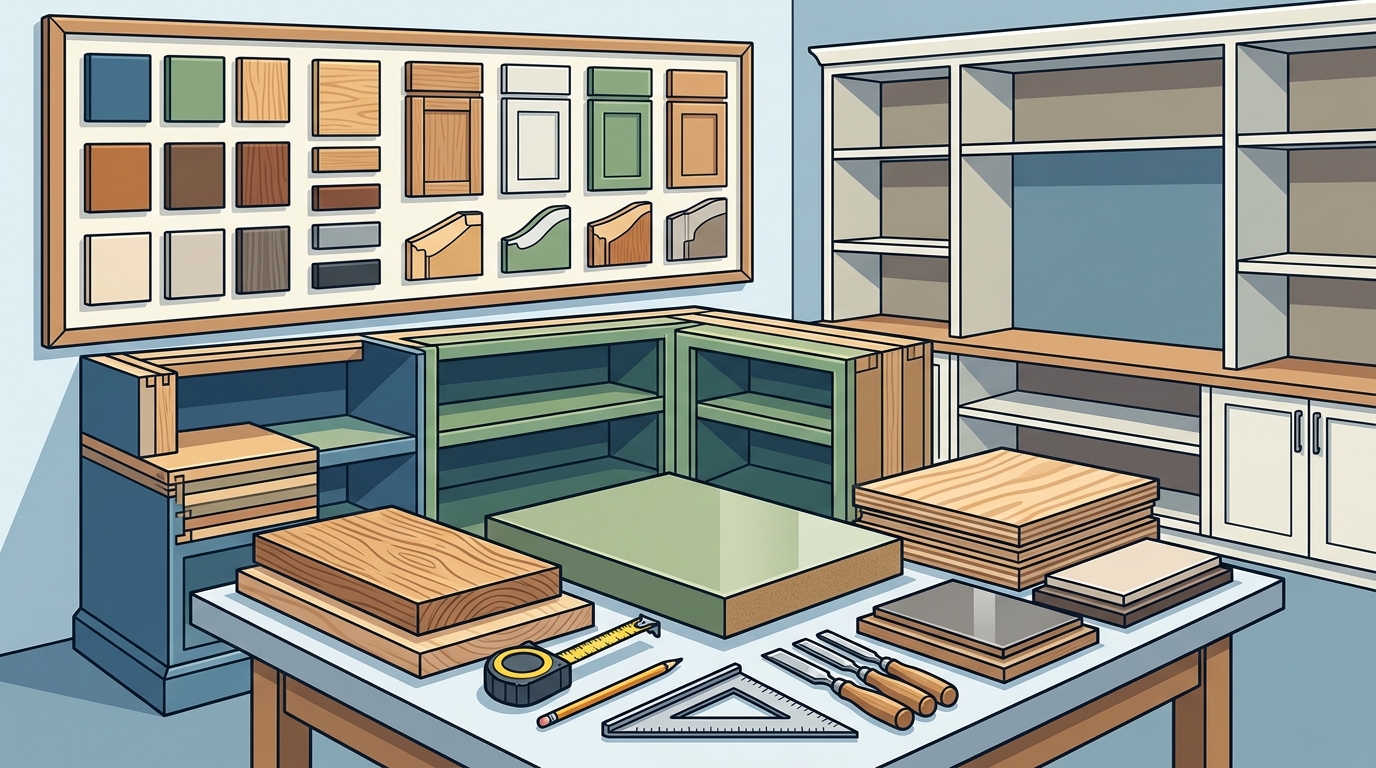
Hardwood plywood excels for cabinet boxes, custom entertainment centers, bookshelves, and any built-in where you want visible wood grain. Most professionals use 3/4-inch panels for structural components and 1/2-inch for drawer boxes.
Florida Consideration
In Tampa Bay's humid climate, plywood's superior moisture resistance makes it an especially smart choice for kitchen and bathroom built-ins. Marine-grade plywood is available for areas with heavy water exposure, though it comes at a higher price point.
MDF: The Budget-Friendly Workhorse
Medium-density fiberboard (MDF) is a material created by mixing wood fibers from broken-down hardwood and softwood residuals with resin, then pressing them into flat panels under high heat and pressure. It is one of the most widely used materials in residential cabinetry.
Strengths of MDF
MDF's smooth, grain-free surface makes it ideal for painted finishes. It can be easily cut into curves, profiles, and intricate designs without splintering. It is significantly less expensive than plywood or solid wood, making it a popular pick for budget-conscious projects.
Limitations to Know
MDF is prone to moisture damage. When exposed to water, it can swell and lose structural integrity, so it is best suited for dry interior spaces like living rooms, bedrooms, and closets. It is also heavier than plywood and can sag on long unsupported shelf spans. For projects in wet areas, consider pairing MDF doors with plywood cabinet boxes for the best of both worlds.
Solid Hardwood: Premium Character and Strength
Solid hardwood is lumber milled directly from trees like oak, maple, cherry, or walnut. It offers unmatched natural beauty and can be sanded and refinished multiple times over its lifespan, making it the most long-lasting option available.
Poplar is a hardwood that is smooth, affordable, and excellent for painted face frames and trim details. Red oak offers a classic grain pattern that looks stunning with a stain finish. Solid wood is most commonly used for face frames, doors, and decorative trim rather than full panel construction, where plywood is more cost-effective and stable.
For homeowners investing in heirloom-quality custom built-ins, solid hardwood paired with a plywood box delivers the best combination of beauty and performance.
Melamine and Thermofoil Options
Melamine is a particleboard or MDF core covered with a durable plastic laminate surface. It is pre-finished, scratch-resistant, and requires no painting, which makes it a practical choice for closet systems, laundry rooms, and utility built-ins.
Thermofoil is a thin vinyl layer applied over MDF to create a seamless, easy-to-clean surface. It works well in modern, minimalist spaces but can peel or warp with prolonged heat exposure. Both options offer affordability and low maintenance, though they lack the warmth and character of real wood.
Material Comparison Table
| Material | Cost | Durability | Moisture Resistance | Best Finish | Ideal Use |
|---|---|---|---|---|---|
| Hardwood Plywood | $$ | High | Good | Stain or Paint | Cabinet boxes, shelves, entertainment centers |
| MDF | $ | Moderate | Poor | Paint | Painted doors, closet systems, trim |
| Solid Hardwood | $$$ | Very High | Moderate | Stain | Face frames, doors, decorative elements |
| Melamine | $ | Moderate | Fair | Pre-finished | Closets, laundry, utility areas |
| Thermofoil | $ | Low-Moderate | Fair | Pre-finished | Modern kitchen/bath fronts |
| Marine Plywood | $$$ | Very High | Excellent | Stain or Paint | High-moisture areas (kitchens, baths) |
How to Choose the Right Material for Your Project
Start by identifying the room and its conditions. Bathrooms and kitchens demand moisture-resistant materials like plywood or marine-grade panels. Living rooms and bedrooms allow more flexibility, including MDF for painted pieces.
Next, consider your finish preference. If you want a natural wood grain, hardwood plywood or solid wood is the right call. For a smooth painted look, MDF delivers a flawless surface. Working with a licensed general contractor ensures you get expert guidance on material selection tailored to Florida's climate and your specific needs.
Budget also matters. Many professional builders combine materials strategically, using plywood for structural boxes, MDF for painted door fronts, and solid wood for visible face frames. This hybrid approach maximizes value without sacrificing quality.
Key Takeaways
- Hardwood plywood is the top all-around choice for built-in cabinet boxes due to its strength, stability, and moisture resistance.
- MDF is best for painted surfaces and detailed profiles but should be kept away from moisture-prone areas.
- Solid hardwood offers the highest quality for face frames, doors, and decorative trim.
- Melamine and thermofoil provide affordable, low-maintenance options for closets and utility spaces.
- In humid climates like Tampa Bay, moisture resistance should be a primary factor in material selection.
- Combining multiple materials in a single project is a common professional strategy that balances cost and performance.
- Working with an experienced contractor helps ensure the right material choices for long-lasting results.
Frequently Asked Questions
What is the best material for built-in bookshelves?
Hardwood plywood (3/4-inch, birch or maple) is the best choice for bookshelves. It is strong enough to support heavy loads without sagging, resists warping, and looks great stained or painted.
Is MDF good for built-in cabinets?
MDF works well for built-in cabinet doors and drawer fronts, especially when a painted finish is desired. However, it should not be used in kitchens or bathrooms where moisture exposure is likely unless paired with a moisture-resistant plywood box.
How does Florida's humidity affect built-in materials?
Florida's high humidity can cause MDF to swell and warp over time. Plywood and solid hardwood handle humidity much better. A reliable Tampa Bay remodeling contractor will recommend materials suited to local conditions.
What is cabinet-grade plywood?
Cabinet-grade plywood is a type of plywood specifically designed for furniture and cabinetry, featuring a smooth hardwood veneer face (typically graded A or B) and a core construction optimized for screw-holding strength and finishing quality.
Can I mix materials in a single built-in project?
Yes. Most professional cabinetmakers use a combination of plywood for structural boxes, MDF for painted doors, and solid wood for face frames. This hybrid approach is cost-effective and delivers excellent results.
How much do built-in materials cost?
Material costs vary widely. A 4x8 sheet of cabinet-grade birch plywood typically runs $50 to $90, MDF costs $30 to $50 per sheet, and solid hardwood boards range from $4 to $12 per board foot depending on species. Labor and design complexity add to total project cost. See our Florida remodeling cost guide for broader budgeting help.
What material is best for a custom entertainment center?
A combination of hardwood plywood for the main structure and solid wood or MDF for doors and trim is the most popular approach. Learn more in our step-by-step entertainment center guide.
Should I hire a contractor or DIY my built-ins?
Simple closet organizers can be a DIY project, but full-room built-ins with integrated cabinetry, lighting, and custom dimensions benefit greatly from professional installation. A licensed contractor ensures precise fits, proper material choices, and long-lasting craftsmanship.
Get Started With Your Custom Built-Ins
Ready to add beautiful, lasting built-ins to your Tampa Bay home? Remodel Depot is a licensed Florida General Contractor (License #CGC1504088) specializing in custom cabinetry and built-ins. Our team will help you select the perfect materials for your space, budget, and lifestyle. Contact Remodel Depot today for a free estimate and start bringing your vision to life.