
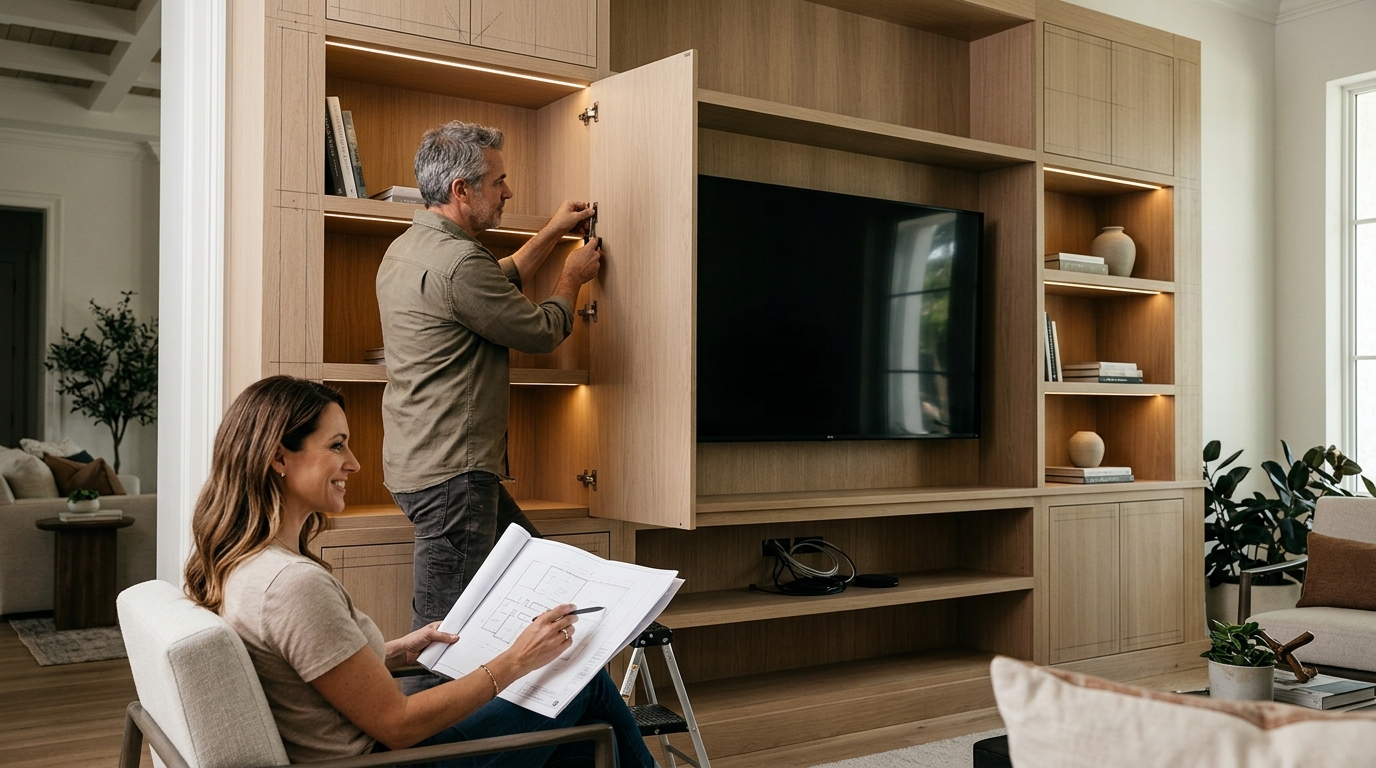
A custom entertainment center is a built-in or freestanding media unit designed and constructed to fit your exact room dimensions, storage needs, and aesthetic preferences. Unlike mass-produced furniture that forces you to work around its limitations, a custom piece transforms an empty wall into a functional focal point. Whether you want concealed cable management, adjustable shelving for gaming consoles, or integrated LED lighting, the process starts with a clear plan and ends with a piece built to last decades. Here is everything you need to know about how a professional custom entertainment center comes together in Tampa Bay.
Why Choose a Custom Entertainment Center
Store-bought entertainment centers come in standard sizes that rarely match your wall dimensions or ceiling height. A custom build gives you full control over materials, layout, and finish, allowing you to design furniture that fits your room perfectly and meets your entertainment needs. This means every inch of space is utilized, from floor to crown molding.
Custom units also offer concealed cable management for a cleaner aesthetic and adjustable shelving for books, speakers, or gaming consoles. At Remodel Depot, we combine traditional woodworking skills with modern techniques to create entertainment centers that look like they were always part of the architecture.
Step 1: Initial Consultation and Space Assessment
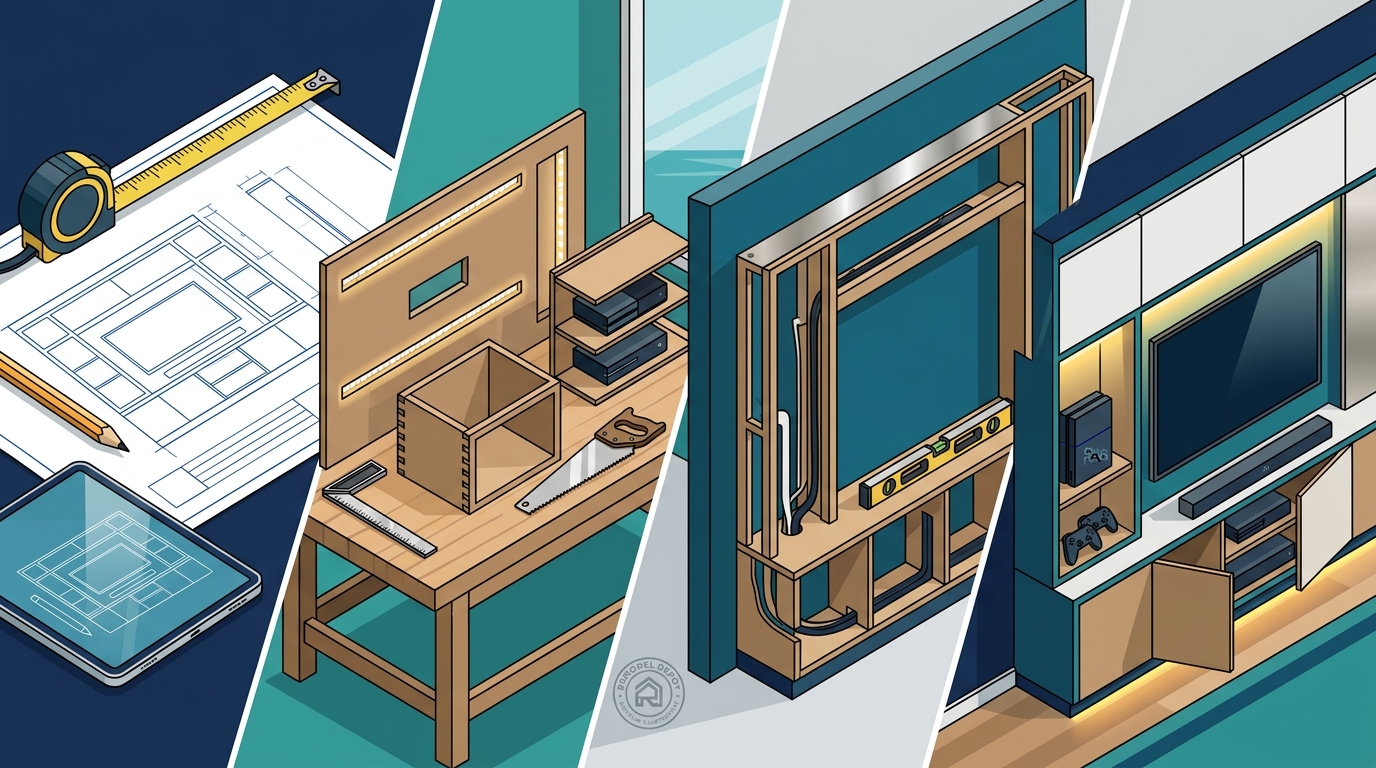
Every project begins with a thorough consultation. A consultation is a collaborative meeting where the contractor reviews your goals, takes measurements, and evaluates the room's structural features. Our team at Remodel Depot starts by measuring the height, width, and depth of the space, noting existing electrical outlets, HVAC vents, and architectural details.
What to Prepare Before Your Consultation
Before your first meeting, consider the size of your television, the number of components you need to house, and the amount of storage required for media and other items. Make a list of must-have features such as glass-front doors, open shelving, or integrated lighting. This list guides the entire design process.
Evaluating Structural Considerations
Your contractor should verify the wall can support the structure if it is a built-in design. Proper ventilation is also critical; electronics need airflow, so plan for 1 to 2 inches of clearance behind components to prevent overheating. If you are planning a broader room renovation, explore our kitchen remodeling services and bathroom remodeling options to coordinate the work efficiently.
Step 2: Design and Material Selection
Once measurements are locked in, the design phase begins. A design plan is a scaled drawing that maps out every shelf, cabinet, and trim detail before any wood is cut. The contractor will create a detailed diagram with precise measurements, including the dimensions for each component.
Choosing the Right Wood
Common wood options for entertainment centers include oak, pine, maple, and cherry. Oak is known for its strength and distinctive grain pattern. Cherry darkens over time, adding a rich, warm tone. Maple provides a sleek, modern look, while pine is a more affordable and lightweight option. For painted finishes, poplar and MDF are popular choices that accept primer and paint evenly.
Hardware and Details
Choose sturdy hinges, drawer slides, and handles that complement your design. Soft-close mechanisms for doors and drawers protect your equipment, and full-extension slides allow easy access to the entire drawer. These details are what separate custom cabinetry from off-the-shelf alternatives.
Step 3: Fabrication and Assembly
With the design approved, fabrication moves to the workshop. A fabrication phase is the stage where raw lumber and sheet goods are cut, joined, and pre-assembled into cabinet boxes, face frames, doors, and shelves. At Remodel Depot, our craftspeople use cabinet-grade hardwood plywood for the body and solid wood for face frames and trim.
Components are primed and sanded before assembly whenever possible, because it is much easier to reach every surface before pieces are joined. Once cabinet boxes are complete, face frames, crown molding, and baseboard trim are fitted for a furniture-quality appearance.
Step 4: On-Site Installation and Finishing
Installation day brings everything together. The team levels and secures the base, anchors cabinet boxes to wall studs, and installs countertops or mantels. Cutouts are made for outlet locations, ventilation, and cable access so your electronics stay cool and wires stay hidden.
Final finishing includes caulking seams, filling nail holes, and applying paint or stain. Viewing height should generally sit at 42 to 48 inches from the floor to screen center for comfortable, ergonomic viewing. If your entertainment center is part of a larger project, our built-in solutions and whole-home renovation services ensure a seamless result from room to room.
Materials Comparison for Entertainment Centers
| Material | Durability | Cost Range | Best For |
|---|---|---|---|
| Oak (solid) | Very High | $$$ | Traditional stained finishes |
| Maple (solid) | High | $$$ | Modern, light-toned designs |
| Cherry (solid) | High | $$$$ | Rich, warm-toned built-ins |
| Pine (solid) | Moderate | $$ | Budget-friendly painted pieces |
| Cabinet-Grade Plywood | High | $$ | Cabinet boxes, shelves |
| MDF | Moderate | $ | Painted doors and panels |
Key Takeaways
- Start every custom entertainment center project with precise room measurements and a list of must-have features.
- Plan for ventilation clearance of 1 to 2 inches behind electronic components.
- Select wood species based on your desired finish: stain-grade hardwoods for natural looks, poplar or MDF for painted finishes.
- Soft-close hinges and full-extension drawer slides add longevity and convenience.
- Pre-prime and sand all components before assembly for a smoother, more professional result.
- Anchor built-in units to wall studs for safety and stability.
- Work with a licensed general contractor like Remodel Depot to coordinate electrical, structural, and finish work under one roof.
Frequently Asked Questions
How long does it take to build a custom entertainment center?
Most custom entertainment centers take 3 to 6 weeks from initial consultation through installation. Complex designs with specialty finishes or integrated electrical work may extend the timeline. At Remodel Depot, we provide a detailed schedule at the start of every project.
How much does a custom entertainment center cost?
Costs vary widely based on size, materials, and complexity. A professionally built custom entertainment center in Tampa Bay typically ranges from $3,000 to $12,000 or more. Factors like hardwood species, integrated lighting, and the number of cabinets all affect the final price.
What materials are best for a custom entertainment center?
Cabinet-grade hardwood plywood is ideal for the cabinet body due to its stability and clean edges. Solid hardwoods like oak, maple, and cherry work well for face frames and doors. MDF is a budget-friendly option when the piece will be painted.
Can a custom entertainment center increase home value?
Yes. Built-in entertainment centers are considered a permanent fixture and can boost a home's appeal during resale. Buyers appreciate quality craftsmanship and the organized, finished look that built-ins provide.
Do I need a permit for a built-in entertainment center?
In most cases, a standard built-in entertainment center does not require a permit. However, if the project involves new electrical circuits or structural modifications, permits may be required in Hillsborough County and other Tampa Bay municipalities. A licensed contractor can advise you on local requirements.
What is the ideal height for mounting a TV in an entertainment center?
The recommended viewing height is 42 to 48 inches from the floor to the center of the screen. This keeps your viewing experience ergonomic and reduces neck strain during extended use.
How do I manage cables in a custom entertainment center?
Professional builders cut dedicated cable chase openings in the back panels and between compartments. Outlets can be recessed behind the unit, and grommets or brush plates keep openings tidy. Planning cable routes during the design phase makes future upgrades simpler.
Ready to Start Your Custom Entertainment Center Project?
Remodel Depot is a licensed Florida General Contractor (CGC1504088) serving Tampa Bay homeowners and businesses with precision-crafted cabinetry and built-ins. Contact us today at 813-549-CITY or visit our website to schedule your free consultation and turn that empty wall into the centerpiece of your living space.