
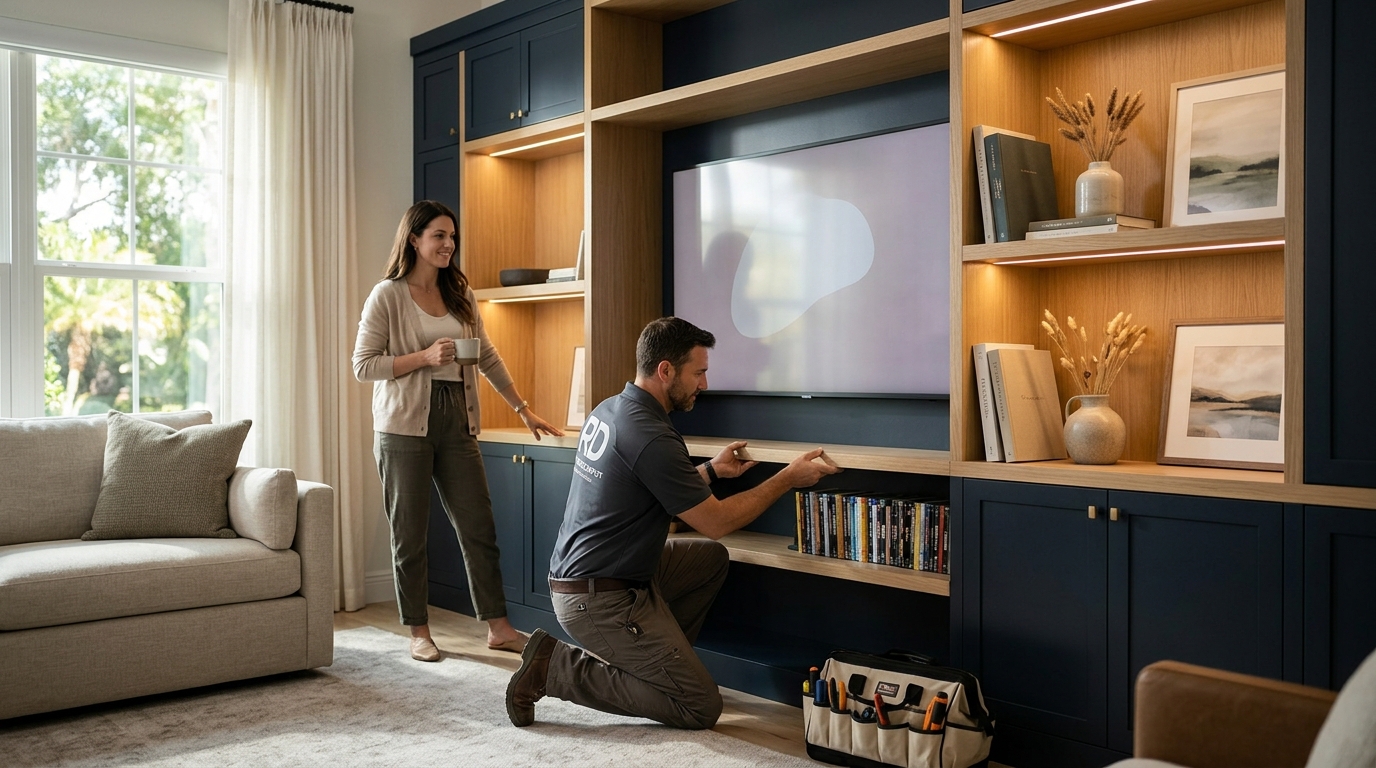
A custom entertainment center is a built-in or freestanding media unit designed and constructed to fit your exact room dimensions, storage needs, and aesthetic preferences. Unlike off-the-shelf furniture, a custom piece integrates seamlessly with your living space, hiding cables, housing electronics, and displaying decor in a way that looks intentional. Whether you are upgrading a family room in a Tampa Bay home or adding a statement piece to a commercial lounge, understanding the process from initial consultation to final installation helps you plan smarter, budget better, and get results you will love for years. Below, we walk through every stage of creating a custom entertainment center with professional craftsmanship.
1. Initial Consultation and Space Assessment
Every custom entertainment center begins with a thorough consultation. A qualified contractor visits your home, measures the wall where the unit will live, and discusses how you plan to use the space. According to This Old House, you should consider the height, width, and depth of the area as well as any architectural features that may impact the design.
During this phase, your contractor will note electrical outlet locations, HVAC vents, and existing trim or molding. If you are in the Tampa Bay area, Remodel Depot's team performs this assessment at no cost so homeowners can make informed decisions before committing.
2. Design and Planning
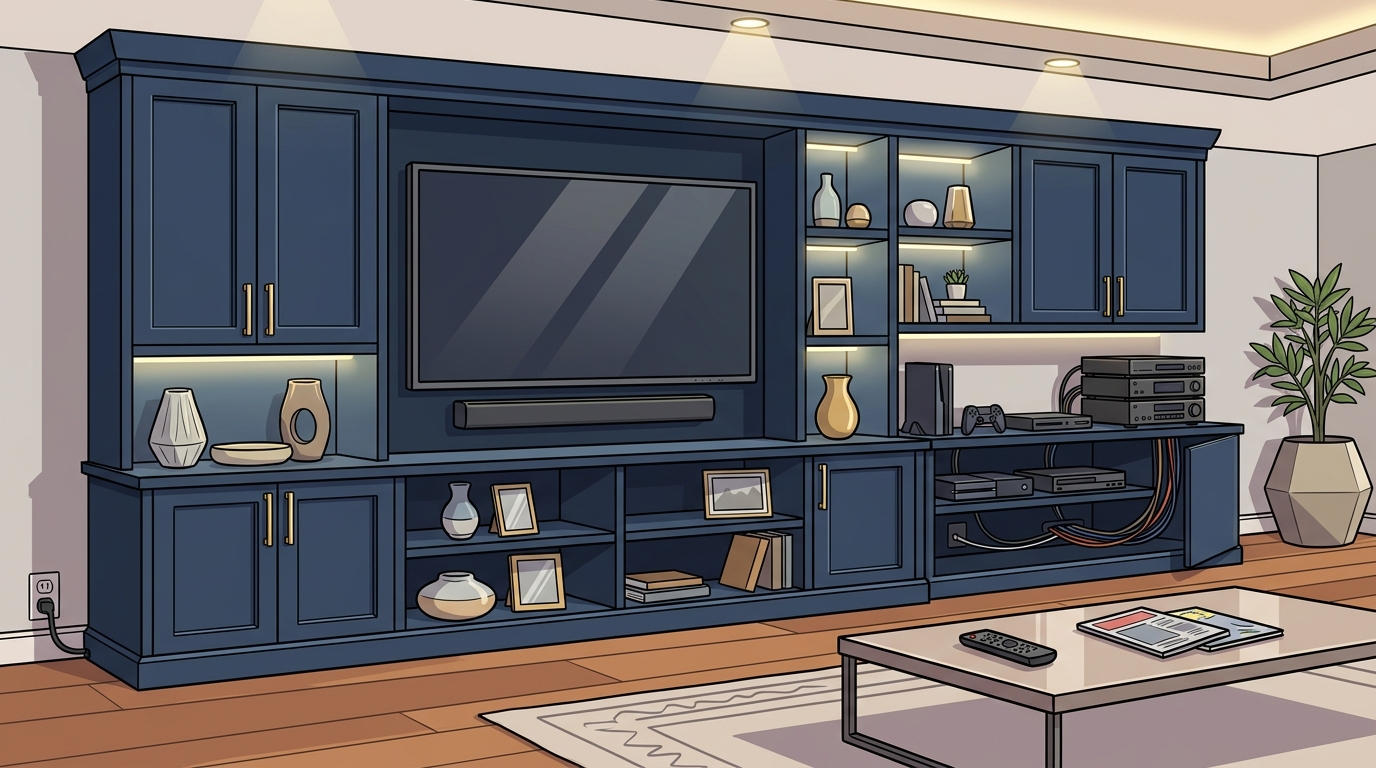
Design is where your vision takes shape. A design consultation is a collaborative meeting where the contractor translates your preferences into scaled drawings, material lists, and 3D renderings. Think about your TV size, the number of gaming consoles or AV components you own, and the amount of display or closed storage you need.
Sketches and Scaled Diagrams
Start with a rough sketch, then refine it into a detailed diagram with precise measurements. This ensures symmetry, clean lines, and proper proportions relative to your wall. Our custom cabinetry services include full design support so nothing gets overlooked.
Style Direction
From traditional Shaker-panel doors to sleek, modern slab fronts, the style of your entertainment center should complement the rest of your home. Consider crown molding for a classic look or floating shelves for a contemporary feel.
3. Material Selection
Material selection is the process of choosing the wood species, sheet goods, hardware, and finishes that define the look, durability, and cost of your project. Common wood options include oak, maple, cherry, and pine, each offering unique grain patterns and color tones.
| Wood Species | Character | Best For | Relative Cost |
|---|---|---|---|
| Oak | Strong grain, high durability | Traditional and transitional styles | $$ |
| Maple | Smooth grain, light color | Modern and painted finishes | $$ |
| Cherry | Warm tone, darkens over time | Formal living rooms | $$$ |
| Pine | Lightweight, easy to work | Rustic or budget-friendly projects | $ |
| Cabinet-Grade Plywood | Stable, consistent surface | Box construction and shelving | $$ |
Your contractor should also discuss hardware early. Soft-close hinges, full-extension drawer slides, and cable-management grommets all improve the daily experience of using your entertainment center. Learn more about our approach on our built-ins page.
4. Construction and Craftsmanship
With plans approved and materials sourced, construction begins in the shop. A professional cabinetmaker breaks the project into manageable sections, typically two side cabinets and one center unit, so pieces can be transported and assembled on site.
Cabinet Box Assembly
Cabinet boxes are typically built from 3/4-inch plywood for the body and 1/4-inch plywood for the back panel. Pocket screws and wood glue create strong, lasting joints. Each box is checked for square before moving to the next step.
Face Frames and Doors
Face frames add rigidity and a finished look. Doors can be built from solid wood rails and stiles with a center panel, or from MDF for a smooth, paintable surface. Remodel Depot's remodeling specialists build every component in-house for precise quality control.
5. Finishing and Hardware
Finishing is the application of primer, paint, or stain that protects the wood and delivers the final aesthetic. For painted entertainment centers, most professionals recommend a high-quality cabinet-grade paint in a satin or semi-gloss finish, applied in two to three coats after sanding with 220-grit sandpaper.
If you choose stain, the wood species matters greatly. Oak and cherry accept stain beautifully, while maple can appear blotchy without a pre-stain conditioner. Hardware is installed after finishing to keep pulls and hinges free of paint.
6. On-Site Installation
Installation day is when the individual components come together in your home. The installer secures a base platform to wall studs, levels each cabinet section, and joins them with cabinet screws. Trim pieces, crown molding, and baseboards are then added to make the unit look like a seamless part of the room.
Proper ventilation cutouts and cable-access holes are drilled behind electronics bays. As Lowe's recommends, always create cutouts at outlet locations and cut additional holes for ventilation and cable access. A licensed contractor like Remodel Depot ensures all work meets Florida building codes.
7. Cost Factors and Timeline
Several variables affect the total investment in a custom entertainment center:
- Size and complexity: A simple base-cabinet media console costs far less than a full wall unit with upper shelving and integrated lighting.
- Wood species: Cherry and walnut carry a premium over pine or plywood.
- Finish type: Multi-step stain and lacquer finishes require more labor than a two-coat paint job.
- Hardware: Soft-close, full-extension, and custom pulls add incremental cost.
- Electrical work: Recessed outlets, LED lighting, and cable conduits may require a licensed electrician.
Most custom entertainment centers take four to eight weeks from consultation to completed installation, depending on scope and material availability. Request a free estimate from Remodel Depot to get a personalized timeline for your project.
Key Takeaways
- A professional consultation and precise measurements are the foundation of a successful custom entertainment center.
- Scaled design drawings prevent costly surprises during construction.
- Wood species, hardware, and finish type are the three biggest drivers of both appearance and cost.
- Cabinet boxes should be built from 3/4-inch plywood for durability and dimensional stability.
- Ventilation cutouts and cable-management holes are essential for electronics longevity.
- Trim, crown molding, and baseboards make a custom unit look built-in and seamless.
- Working with a licensed Florida general contractor protects your investment and ensures code compliance.
Frequently Asked Questions
What is a custom entertainment center?
A custom entertainment center is a media storage unit built to your exact room dimensions, design preferences, and storage requirements. Unlike mass-produced furniture, it is crafted specifically for your space.
How long does it take to build a custom entertainment center?
Most projects take four to eight weeks from initial design approval to final installation. Complexity, material lead times, and finish requirements can extend or shorten this window.
How much does a custom entertainment center cost?
Costs vary widely based on size, materials, and features. A mid-range custom built-in entertainment center in Tampa Bay typically starts around $3,000 and can exceed $10,000 for large wall units with premium hardwoods and integrated lighting.
What wood is best for an entertainment center?
Oak and maple are popular choices for their durability and attractive grain. Cherry offers a rich, warm tone that darkens beautifully over time. Pine is a budget-friendly option ideal for painted finishes.
Can I add lighting to a custom entertainment center?
Yes. LED strip lights, puck lights, and recessed fixtures are common additions. Your contractor can wire these during construction for a clean, integrated look.
Do I need a permit for a built-in entertainment center?
In most Florida jurisdictions, a standalone furniture piece does not require a permit. However, if the project involves electrical work or structural modifications, a permit may be necessary. A licensed general contractor will advise you on local requirements.
What is the difference between a built-in and a freestanding entertainment center?
A built-in entertainment center is anchored to the wall and finished with trim to appear as part of the architecture. A freestanding unit is a movable piece of furniture. Built-ins offer a more seamless, high-end look.
Why should I hire a professional instead of doing it myself?
A professional brings precision tools, years of experience, and knowledge of building codes. The result is a structurally sound, beautifully finished piece that adds lasting value to your home. Remodel Depot is a licensed Florida General Contractor (CGC1504088) with deep expertise in custom cabinetry and built-ins.
Ready to Start Your Custom Entertainment Center?
If you are a Tampa Bay homeowner looking for a custom entertainment center that fits your space perfectly, Remodel Depot can help. From the first consultation to the final trim piece, our team handles every detail with precision craftsmanship. Contact us today for a free estimate and let us bring your vision to life.