
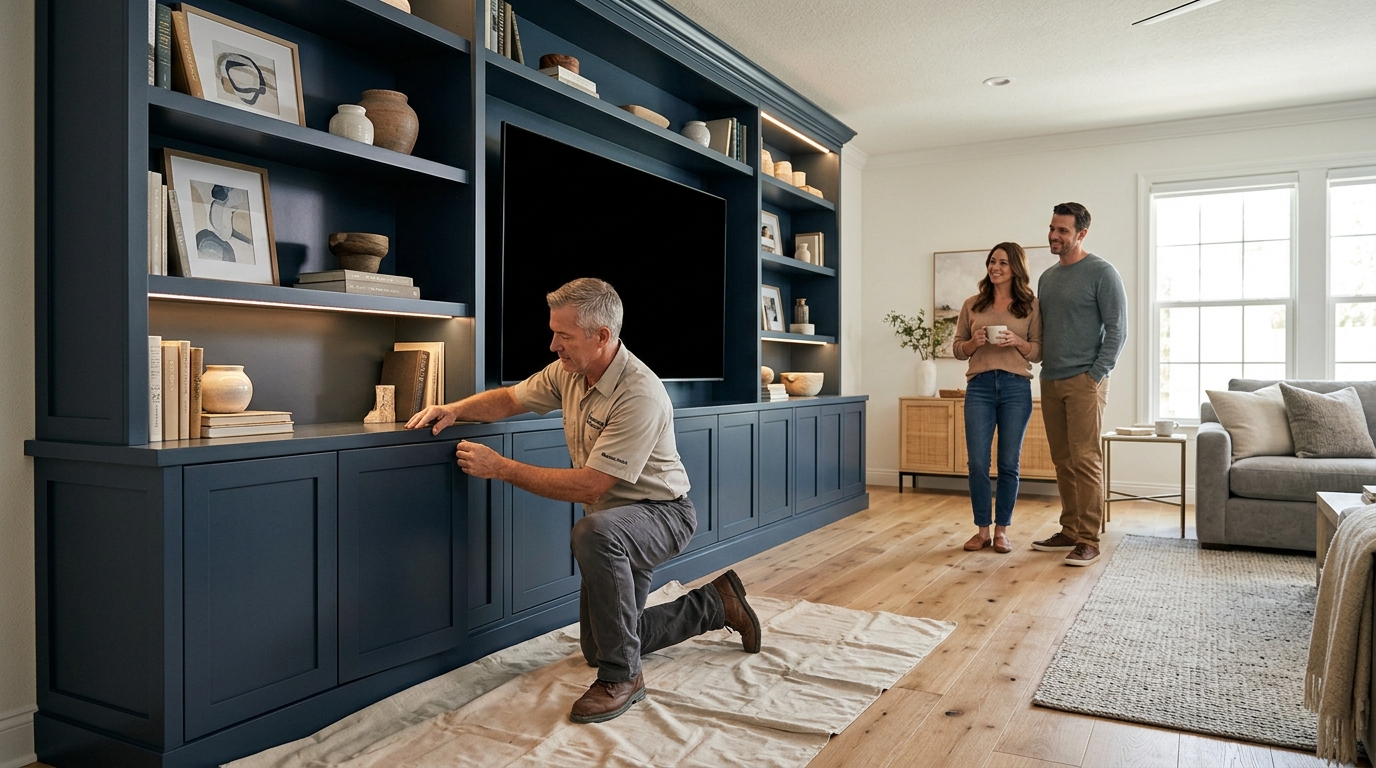
A custom entertainment center is a built-in or freestanding media unit designed and constructed to fit your exact room dimensions, storage needs, and design preferences. Unlike mass-produced furniture that forces you to work around fixed sizes, a custom build gives you full control over materials, layout, and finishing details. Whether you want concealed cable management, adjustable shelving for gaming consoles, or integrated lighting, understanding the process from consultation to final installation helps you make informed decisions and get a result you will love for years.
Why Choose a Custom Entertainment Center
A custom entertainment center allows you to design furniture that fits your room perfectly and meets your entertainment needs. Instead of adjusting your layout around store-bought units, you build a design that complements your wall dimensions, ceiling height, and home decor. For Tampa Bay homeowners looking to maximize living space, this approach delivers both function and style.
Key Advantages Over Store-Bought Options
Custom builds offer efficient space utilization for both large and small rooms, concealed cable management for a cleaner aesthetic, and adjustable shelving for books, speakers, or gaming consoles. They also provide a more durable structure than flat-pack or pressboard furniture. If you are already considering upgrades, pairing an entertainment center with a kitchen remodeling project can create a cohesive look throughout your home.
Step 1: Initial Consultation and Space Assessment
Every successful project starts with a plan. A qualified contractor will take measurements of the area, note existing electrical and HVAC components, and discuss your lifestyle needs. At Remodel Depot, our Tampa Bay team evaluates your wall dimensions, outlet locations, and cable routing before any design work begins.
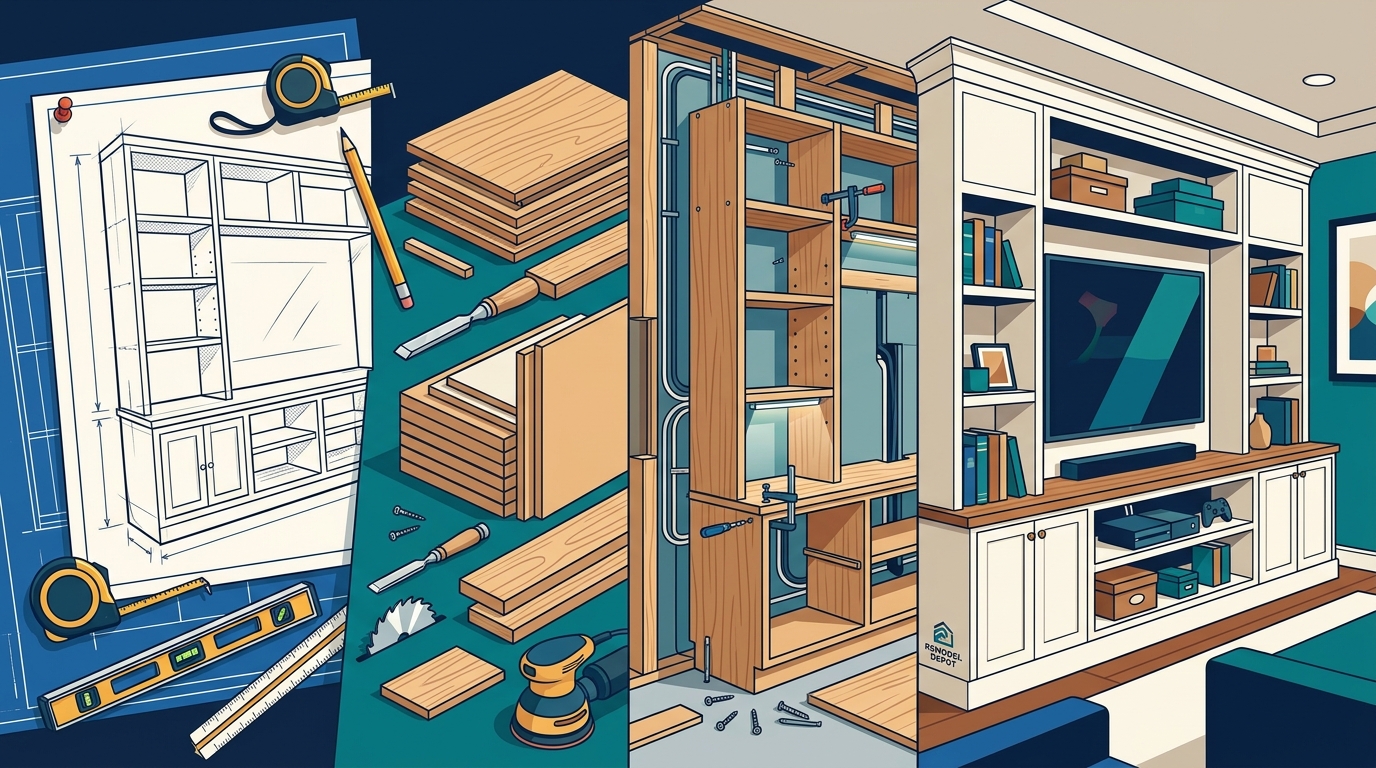
What to Prepare Before Your Consultation
Measure the height, width, and depth of the intended wall space. Note the size of your television and list all components you need to house, such as soundbars, streaming devices, and gaming systems. Also consider whether you want a freestanding piece or a full wall built-in unit that integrates with surrounding cabinetry.
Step 2: Design and Material Selection
Design is where your vision takes shape. Your contractor will create sketches and detailed diagrams with precise measurements, including dimensions for each component such as cabinets, shelves, and any custom features. Material selection is a critical decision that affects both aesthetics and durability.
Popular Wood and Panel Options
| Material | Character | Best For | Price Range |
|---|---|---|---|
| Oak | Distinctive grain, high durability | Traditional or transitional styles | $$-$$$ |
| Maple | Smooth grain, light color | Modern, sleek designs | $$-$$$ |
| Cherry | Darkens over time, warm tone | Formal living rooms | $$$ |
| Pine | Lightweight, easy to work | Casual or painted finishes | $ |
| Plywood/MDF | Uniform, stable panels | Painted built-ins, budget builds | $-$$ |
Each wood species offers unique characteristics in terms of grain pattern, color, and longevity. Your contractor can help you match materials to your existing custom cabinetry for a seamless look.
Planning for Electronics
Electronics need airflow, so allow 1 to 2 inches of clearance behind components for proper ventilation. Mark where outlets, cable ports, and speakers will go early in the design phase. According to This Old House, accounting for ventilation and cable access at the design stage prevents costly changes later.
Step 3: Cabinetry Construction and Assembly
Construction is the phase where raw materials become functional furniture. A professional shop will cut panels to specification, route edge profiles, and drill for adjustable shelf pins. Face frames, door frames, and drawer boxes are built to exact tolerances so every component fits tightly.
Cabinet-grade hardwood plywood is the standard for box construction, while solid wood is used for face frames and doors. Precision is key when sizing drawers to fit slides and cabinet openings. For homeowners planning broader renovations, this cabinetry work can align with a full bathroom remodeling or whole-home upgrade.
Step 4: Finishing, Hardware, and Paint
Finishing is the step that transforms raw woodwork into a polished piece. It includes sanding, priming, and applying paint or stain. Caulk and wood filler address any gaps or imperfections for a smooth, seamless surface.
Hardware Selection
Hardware selection is the process of choosing hinges, drawer slides, and pulls that complement your design. Soft-close mechanisms protect electronics from vibration, and full-extension slides allow easy access to the entire drawer. The finish of your hardware, whether brushed nickel, matte black, or brass, should match the overall aesthetic of the room.
Step 5: On-Site Installation and Final Touches
A licensed contractor will secure the unit to wall studs, ensure it is level and plumb, and make final adjustments on site. Cable management channels are routed, outlets are verified, and trim pieces are fitted to create a truly built-in appearance. Remodel Depot holds Florida General Contractor License #CGC1504088, ensuring all work meets state building standards.
Final touches include adjusting shelf spacing, verifying door alignment, and a thorough cleanup. The result is a piece that looks like it has always been part of the room.
Cost and Timeline Comparison
| Approach | Typical Cost | Timeline | Customization Level |
|---|---|---|---|
| Store-bought furniture | $300-$1,500 | Same day | Low |
| DIY with stock cabinets | $1,000-$2,500 | 1-2 weeks | Medium |
| Professional custom build | $3,000-$10,000+ | 3-6 weeks | High |
Professional custom builds carry a higher price tag, but the result is a one-of-a-kind piece built with quality materials and backed by a contractor warranty. For Tampa Bay residents, working with a local specialist like Remodel Depot means direct oversight from design through installation.
Key Takeaways
- Start with a thorough space assessment, including wall measurements, outlet locations, and HVAC considerations.
- Choose materials that match your style, budget, and existing cabinetry throughout the home.
- Plan for electronics ventilation (1-2 inches of clearance) and cable management early in the design phase.
- Use cabinet-grade plywood for box construction and solid hardwood for face frames and doors.
- Select hardware with soft-close mechanisms and full-extension drawer slides for daily convenience.
- Hire a licensed general contractor to ensure proper wall anchoring, leveling, and code compliance.
- Expect a professional custom build to take 3 to 6 weeks from consultation to completed installation.
Frequently Asked Questions
How much does a custom entertainment center cost in Tampa Bay?
Professional custom entertainment centers typically range from $3,000 to $10,000 or more, depending on size, materials, and complexity. Simpler designs using stock cabinets can start around $1,000 to $2,500 for a DIY approach.
How long does it take to build a custom entertainment center?
A professional build usually takes 3 to 6 weeks, including consultation, design, shop fabrication, and on-site installation. DIY projects with stock cabinets can be completed in 1 to 2 weeks.
What is the best wood for a custom entertainment center?
Oak, maple, and cherry are popular hardwood choices that offer durability and attractive grain patterns. For painted finishes, plywood or MDF with a veneer provides a smooth, uniform surface at a lower cost.
Do I need a permit to install a built-in entertainment center?
In most Florida jurisdictions, a freestanding entertainment center does not require a permit. However, built-in units involving electrical modifications or structural changes may require permits. A licensed contractor will handle the permitting process for you.
Can a custom entertainment center increase home value?
Yes. Custom built-ins are considered a permanent home improvement and can boost perceived value during resale. Buyers in Tampa Bay consistently value quality craftsmanship and functional storage solutions.
What should I look for in a contractor for this project?
Look for a licensed general contractor with experience in custom cabinetry and built-ins. Verify their license, review past projects, and confirm they carry proper insurance. Remodel Depot is a licensed Florida General Contractor specializing in these exact projects.
Ready to Design Your Custom Entertainment Center?
If you are a Tampa Bay homeowner ready to turn a blank wall into a stunning focal point, Remodel Depot can help. Our team combines traditional woodworking skills with modern techniques to deliver entertainment centers that fit your space, style, and budget. Contact Remodel Depot today for a free estimate and let us bring your vision to life.