
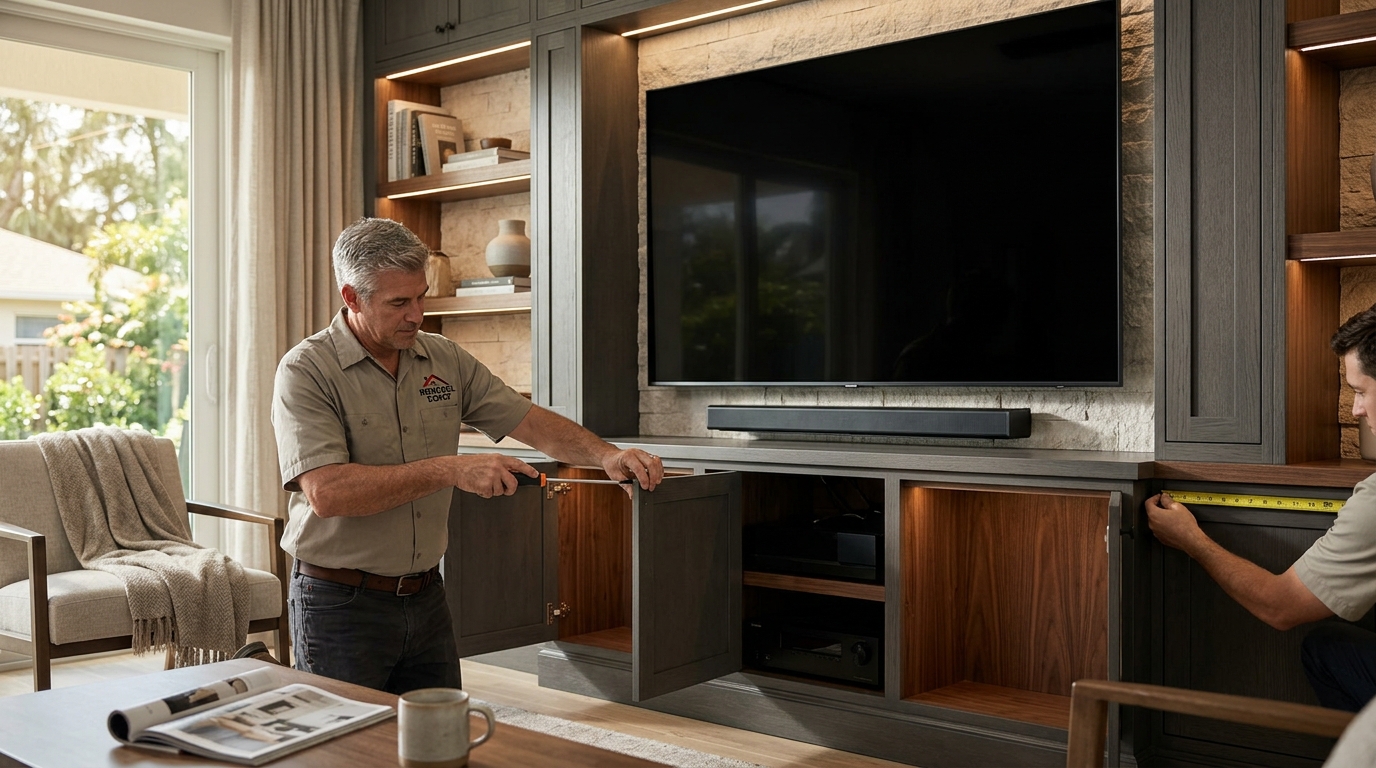
Custom Entertainment Center Process: A Step-by-Step Guide
A custom entertainment center is a built-in or freestanding media unit designed and constructed to fit your exact room dimensions, storage needs, and aesthetic preferences. Unlike mass-produced furniture, a custom piece gives you full control over materials, layout, and finish. Whether you want to hide cables, display collectibles, or frame a 75-inch TV, understanding the process from initial consultation to final installation helps you make confident decisions. Here is the complete process for creating a custom entertainment center, informed by professional woodworking practices used by Tampa Bay contractors.
Step 1: Initial Consultation and Needs Assessment
Every custom entertainment center begins with a conversation. A skilled contractor will ask about your TV size, the number of components you need to house, and how you use the space daily. This mirrors the approach recommended by This Old House, which advises homeowners to make a list of must-have features before any design work begins.
At Remodel Depot, our Tampa Bay team visits your home to take precise measurements, note existing electrical outlets and HVAC vents, and discuss your style goals. This upfront assessment prevents costly changes later.
Step 2: Design and Planning
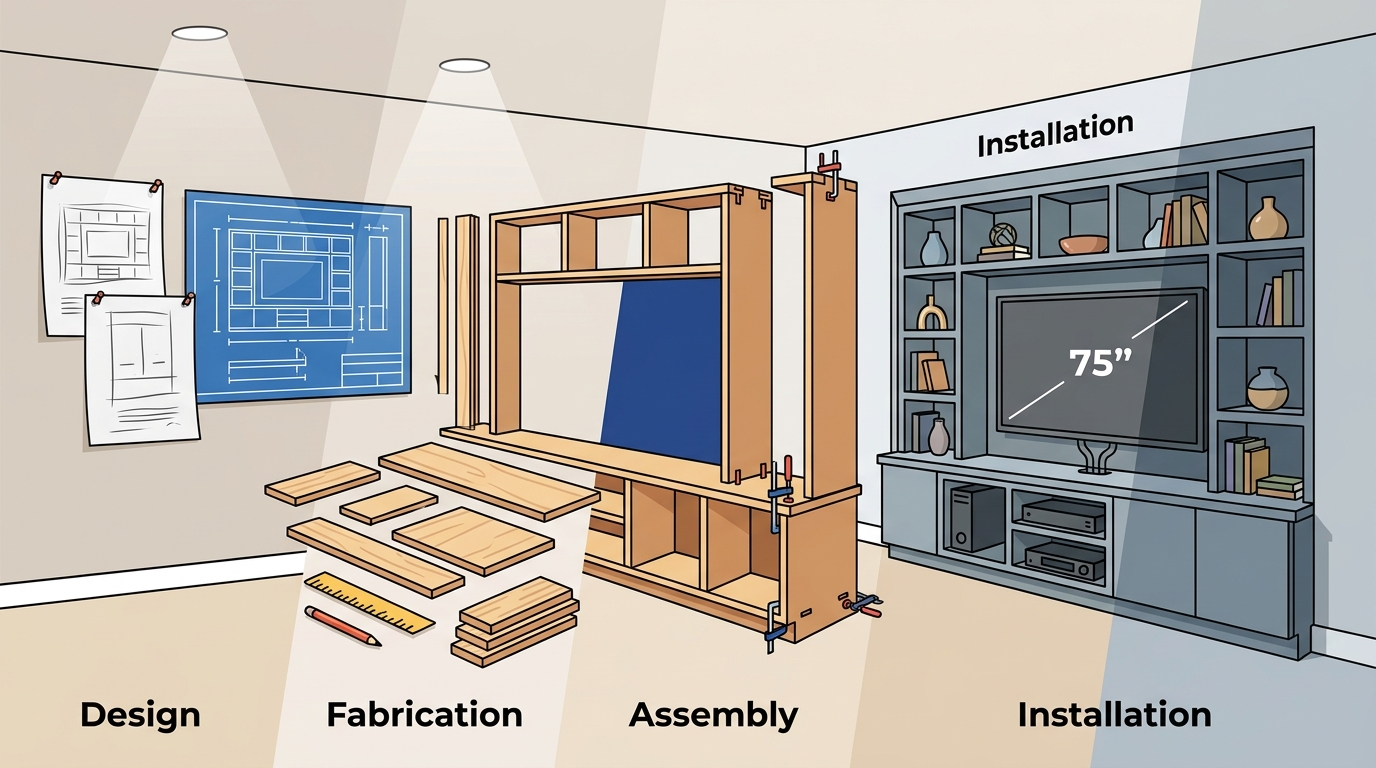
Design is where your entertainment center takes shape on paper. Your contractor should create a scaled sketch and then a detailed diagram with precise measurements for every shelf, cabinet, and opening. Planning includes deciding whether shelves will be adjustable or fixed, where cable pass-throughs go, and how much ventilation your electronics need.
Ventilation Planning
Electronics generate heat. Industry best practice is to allow 1 to 2 inches of clearance behind components for airflow. Your design should also include cutouts for cable access at outlet locations.
Proportional Layout
The viewing height for most living rooms should place the screen center at roughly 42 to 48 inches from the floor. The entertainment center should be proportional to the wall, typically filling 60% to 80% of the wall width for a balanced look.
Step 3: Material Selection
Material selection is the process of choosing the wood species, sheet goods, and hardware that define your entertainment center's durability and appearance. The right choice depends on your budget, design style, and how the piece will be used.
Our custom cabinetry team helps clients compare options side by side. Common wood species include oak, maple, cherry, and pine, each with distinct grain patterns and price points. For painted finishes, many professionals recommend MDF or pre-finished plywood for a smooth, consistent surface.
Step 4: Construction and Assembly
Construction is the fabrication phase where raw materials become cabinetry components. This typically happens in a dedicated workshop before anything is brought to your home. Key steps include cutting panels to size, routing dadoes and rabbets for joinery, and assembling cabinet boxes with pocket screws or dowels.
Cable Management
Professional builders cut holes for ventilation and cable access during assembly, not as an afterthought. This ensures clean wire routing from day one.
Quality Joinery
A well-built entertainment center uses solid joinery methods like dado joints for shelves and face-frame construction for cabinet fronts. This results in a more durable structure than flat-pack or pressboard furniture, which is one of the primary advantages of going custom.
Step 5: Finishing and Hardware
Finishing is the application of stain, paint, or clear coat that protects the wood and establishes the final look. For painted built-in entertainment centers, professionals typically apply two coats of primer followed by two to three coats of a self-leveling cabinet-grade paint in a satin or semi-gloss finish.
Hardware selection matters, too. Soft-close hinges, full-extension drawer slides, and coordinated handles or knobs elevate both function and style. Choosing hardware finishes that complement your room's fixtures (brushed nickel, matte black, or brass) ties the piece into the broader design.
Step 6: On-Site Installation
Installation is when the finished components are delivered and secured in your home. For built-in units, the contractor will anchor the structure to wall studs, scribe trim pieces to fit irregular walls, and connect any integrated lighting. A licensed general contractor, like Remodel Depot (FL License #CGC1504088), ensures the unit meets building standards and is safely secured.
Final punch-list items include caulking seams, touching up paint, and verifying that all doors and drawers operate smoothly. The entire process, from consultation to completed installation, typically takes 4 to 8 weeks depending on complexity.
Material Comparison Table
| Material | Best For | Durability | Relative Cost |
|---|---|---|---|
| Oak | Traditional or rustic styles | High | $$ |
| Maple | Modern or painted finishes | High | $$ |
| Cherry | Warm, formal spaces | High | $$$ |
| Pine | Budget-friendly or casual rooms | Moderate | $ |
| MDF | Smooth painted surfaces | Moderate | $ |
| Plywood (cabinet grade) | Structural components | High | $$ |
Key Takeaways
- A custom entertainment center starts with a thorough consultation covering room dimensions, TV size, and storage needs.
- Detailed design drawings with precise measurements prevent costly mid-project changes.
- Material selection should balance appearance, durability, and budget, with hardwoods like oak and maple offering the best longevity.
- Professional construction in a workshop setting produces stronger joinery than on-site assembly alone.
- Ventilation planning and cable management should be built into the design, not added afterward.
- Finishing with cabinet-grade paint or stain and quality hardware elevates the look and function.
- Working with a licensed general contractor ensures safe installation and code compliance.
Frequently Asked Questions
How long does it take to build a custom entertainment center?
Most custom entertainment centers take 4 to 8 weeks from initial consultation to completed installation. Complex designs with specialty materials or integrated lighting may take longer.
How much does a custom entertainment center cost?
Costs vary widely based on materials, size, and features. Professional built-ins typically range from $3,000 to $10,000 or more. A free estimate from Remodel Depot can give you an accurate figure for your project.
What is the best wood for a custom entertainment center?
Oak and maple are popular for their durability and versatile grain patterns. Cherry offers a rich, warm tone that darkens beautifully over time. For painted finishes, MDF or pre-finished plywood provides the smoothest surface.
Do I need a permit for a built-in entertainment center?
In most Florida jurisdictions, a standalone built-in does not require a permit. However, if electrical work is involved, such as adding outlets or integrated lighting, a permit may be required. Your contractor should advise you.
Can a custom entertainment center increase home value?
Yes. Quality built-ins are considered permanent improvements and can increase perceived home value, especially when they use premium materials and professional craftsmanship.
What is the difference between a built-in and freestanding entertainment center?
A built-in entertainment center is anchored to the wall and designed to look like part of the architecture. A freestanding unit is a movable piece of furniture. Built-ins offer a more seamless, high-end appearance.
How do I maintain my custom entertainment center?
Dust regularly with a soft cloth, avoid harsh chemical cleaners, and touch up any nicks or scratches with matching paint or stain. Soft-close hardware should be lubricated annually for optimal performance.
Ready to Start Your Custom Entertainment Center?
If you are planning a custom entertainment center for your Tampa Bay home, Remodel Depot can guide you through every step. As a licensed Florida general contractor specializing in custom cabinetry and built-ins, we combine traditional woodworking skills with modern techniques to deliver a piece that fits your space perfectly. Call 813-549-CITY or visit our website to request a free estimate today.