
Custom Entertainment Center Process: A Step-by-Step Guide
A custom entertainment center is a built-to-order media unit designed to fit your exact wall dimensions, storage needs, and style preferences. Unlike store-bought furniture that forces you to compromise on size or layout, a custom piece turns a blank wall into a functional focal point. Whether you want a floor-to-ceiling built-in with concealed wiring or a floating console with open shelving, the process follows a clear path from initial concept to final installation. Here is a complete walkthrough of how Remodel Depot brings custom entertainment centers to life for Tampa Bay homeowners.
Why Choose a Custom Entertainment Center
A custom entertainment center allows you to design furniture that fits your room perfectly and meets your entertainment needs. Mass-produced units come in fixed widths, typically 48, 60, or 72 inches, which rarely align with the exact proportions of a living room wall. Custom building eliminates that gap.
Beyond aesthetics, a professionally built unit can incorporate high-quality materials suited for residential built-ins, concealed cable management, ventilation for electronics, and adjustable shelving that evolves with your setup over time.
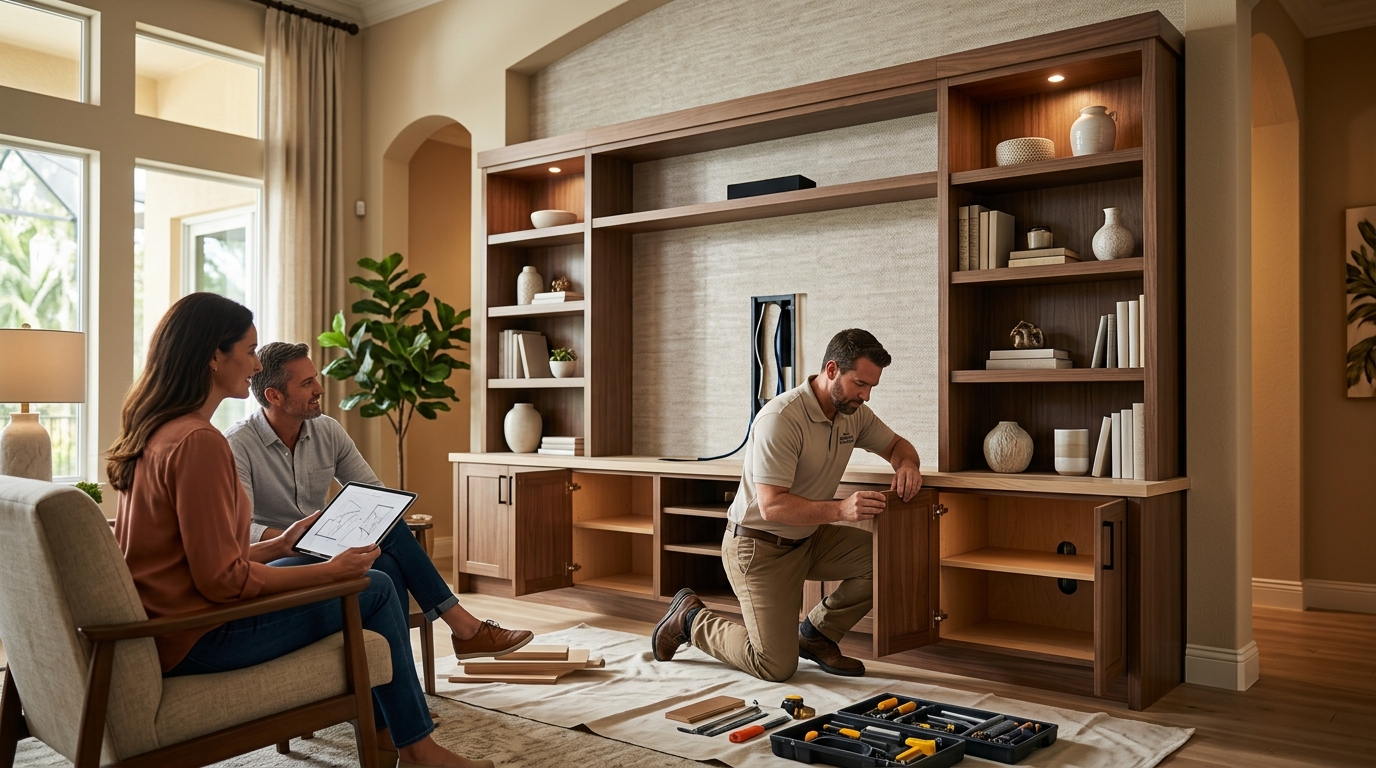
Step 1: Initial Consultation and Space Assessment
Every successful project begins with a plan. The consultation phase sets the foundation for everything that follows.
Measuring the Space
Your contractor will measure the height, width, and depth of the target wall, noting architectural features like windows, outlets, HVAC vents, and baseboards. According to This Old House, it is critical to account for proper ventilation for electronic components and ensure the unit will not obstruct walkways or doors.
Defining Your Needs
A needs assessment is a structured review of what the entertainment center must hold, including TV size, gaming consoles, speakers, and decorative objects. This list of requirements guides every design decision that follows. If you are also considering updates to other rooms, explore our guide on living room modernization ideas for Tampa Bay homes.
Step 2: Design and Material Selection
Creating the Design
After the consultation, your contractor produces a scaled drawing or 3D rendering showing cabinet placement, shelf spacing, TV mounting location, and wiring paths. This detailed diagram includes precise measurements for every component.
Choosing Materials
Material selection is one of the most important decisions in the process. Common wood options include oak, maple, cherry, and birch plywood. Each offers unique characteristics in grain pattern, color, and durability. Solid hardwood delivers a premium look, while pre-finished plywood works well for painted built-ins. Your choice of custom cabinetry materials applies here as well.
| Material | Best For | Durability | Approximate Cost per sq ft |
|---|---|---|---|
| Solid Oak | Traditional, stained finishes | High | $8 - $14 |
| Maple | Smooth painted finishes | High | $7 - $12 |
| Cherry | Rich, warm-toned stains | Medium-High | $9 - $15 |
| Birch Plywood | Painted built-ins, budget-friendly | Medium | $4 - $7 |
| MDF with Veneer | Smooth modern surfaces | Medium | $3 - $6 |
Step 3: Construction and Assembly
Construction is the phase where raw materials become functional cabinetry. A licensed general contractor coordinates cutting, joining, and dry-fitting every component in a workshop environment before anything arrives at your home.
Cases are typically built from plywood panels joined with pocket screws or dado joints for strength. Face frames, doors, and drawer boxes come next. Cable management channels and ventilation cutouts are routed during this stage, not added as an afterthought. Working with a licensed general contractor ensures the build meets Florida building standards.
Step 4: Finishing, Painting, and Hardware
Finishing is the process of sanding, priming, and applying paint or stain to the assembled components. Most custom entertainment centers receive two coats of primer followed by two to three coats of a durable cabinet-grade paint or stain.
Hardware selection, including hinges, drawer slides, and pulls, happens at this stage. Soft-close hinges and full-extension drawer slides are the current standard for quality built-in furniture. Decorative moldings such as crown, base, and light rail trim are also prepared for installation.
Step 5: On-Site Installation
Installation day is when the pre-built components come together in your home. The process typically takes one to two days for a standard wall unit. Installers level and secure the base cabinets to wall studs, stack upper components, and attach trim pieces for a seamless built-in appearance.
Electrical work for recessed lighting, outlet relocation, or USB charging ports should be handled by a licensed electrician before the unit is secured to the wall. If your project is part of a larger renovation, our Florida remodeling cost guide covers budgeting for multi-room work.
Timeline and Cost Comparison
Understanding the timeline helps set expectations. Here is how a custom entertainment center compares to alternatives:
| Option | Timeline | Typical Cost Range | Fit and Customization |
|---|---|---|---|
| Store-Bought Unit | 1-2 weeks (shipping) | $300 - $1,500 | Fixed sizes only |
| RTA Cabinets (DIY) | 2-4 weeks | $800 - $3,000 | Limited configurations |
| Custom Built-In (Professional) | 4-8 weeks | $3,000 - $12,000+ | Fully tailored to space |
The 4-to-8-week window for a professional custom build includes consultation, design, fabrication, and installation. Complex units with integrated lighting or fireplace surrounds may extend this timeline.
Key Takeaways
- A custom entertainment center is built to your exact wall dimensions and storage requirements, eliminating the compromises of mass-produced furniture.
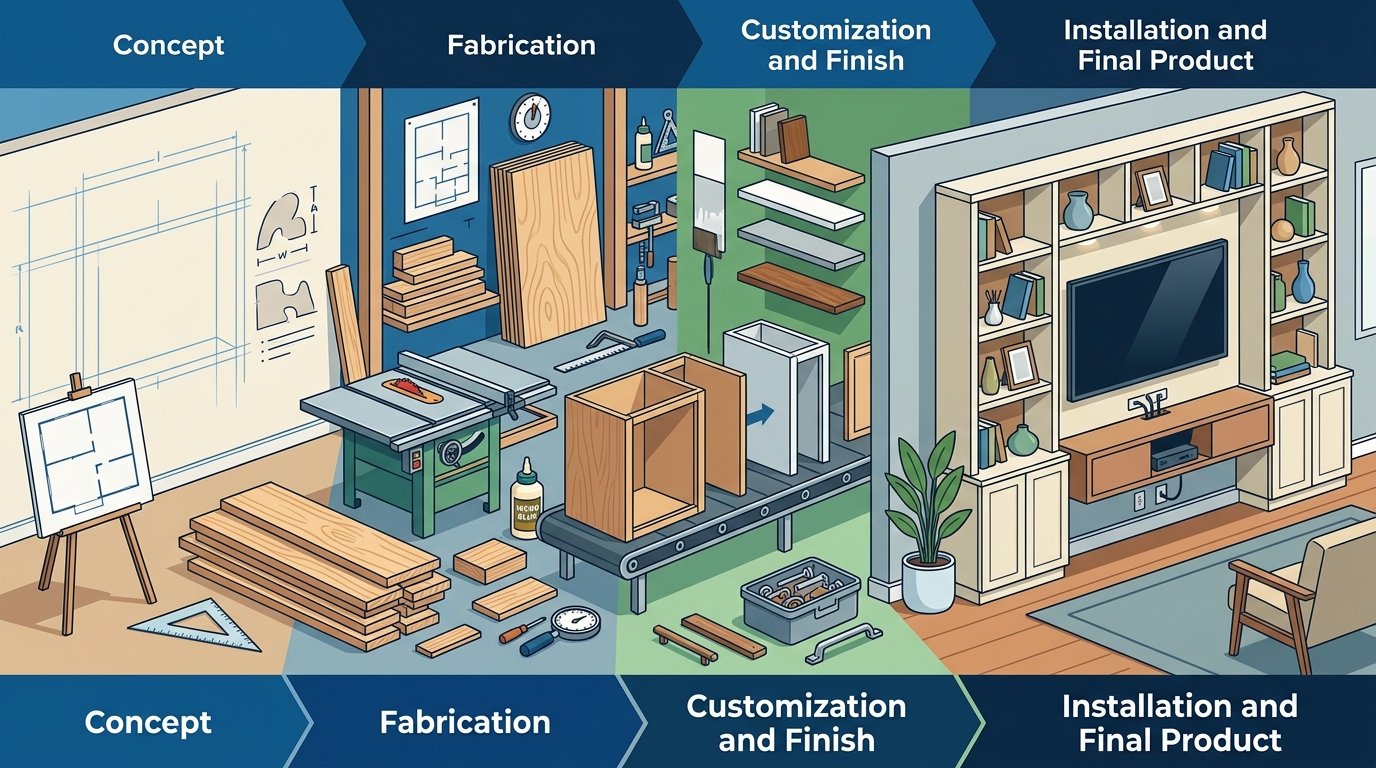
- The process follows five clear stages: consultation, design, construction, finishing, and installation.
- Material selection directly impacts appearance, durability, and cost. Solid hardwoods range from $7 to $15 per square foot.
- Concealed cable management and ventilation should be planned during the design phase, not retrofitted later.
- Professional installation typically takes one to two days once components are fabricated.
- Working with a licensed Florida general contractor ensures code compliance and quality craftsmanship.
- Budget $3,000 to $12,000+ for a professionally built custom entertainment center depending on size and complexity.
Frequently Asked Questions
How long does it take to build a custom entertainment center?
The full process from consultation to installation typically takes 4 to 8 weeks. Design and material selection account for the first 1 to 2 weeks, fabrication takes 2 to 4 weeks, and installation requires 1 to 2 days on site.
What materials are best for a custom entertainment center?
Oak, maple, and cherry are popular hardwood choices for stained finishes. Birch plywood and MDF with veneer work well for painted built-ins. Your choice depends on budget, desired look, and how you plan to finish the piece.
How much does a custom entertainment center cost?
Professional custom entertainment centers typically range from $3,000 to $12,000 or more, depending on size, material, and features like integrated lighting or a fireplace surround. Simpler configurations using RTA cabinets can start around $800.
Do I need a permit for a built-in entertainment center?
In most Florida jurisdictions, a standalone furniture piece does not require a permit. However, if the project involves electrical work such as new outlets, recessed lighting, or structural changes, permits may be required. A reliable Tampa Bay remodeling contractor can advise on local requirements.
Can a custom entertainment center increase home value?
Yes. Built-in cabinetry is considered a permanent home improvement and can positively impact appraisal value. Buyers in the Tampa Bay market often view quality built-ins as a desirable upgrade that sets a home apart from comparable listings.
What is concealed cable management?
Concealed cable management is a system of channels, grommets, and compartments built into the entertainment center that hides power cords, HDMI cables, and speaker wires from view. It keeps the finished look clean and makes maintenance easier.
Should I choose a freestanding or built-in entertainment center?
Built-in entertainment centers maximize space and create a seamless, architectural look. Freestanding units offer flexibility if you move frequently. For homeowners planning to stay in their Tampa Bay home long term, built-ins typically deliver better value and aesthetic impact.
Can I add an entertainment center to an existing remodel?
Absolutely. A custom entertainment center can be incorporated into a kitchen remodel, living room renovation, or whole-home remodeling project. Coordinating it with other work can save on labor costs.
Ready to Start Your Custom Entertainment Center?
Remodel Depot specializes in custom cabinetry and built-ins for Tampa Bay homeowners. From initial measurements to the final piece of trim, our licensed team handles every step with precision. Contact Remodel Depot today to schedule your free consultation and bring your vision to life.