According to recent industry reports, custom cabinetry accounts for nearly forty percent of all residential renovation budgets in major metropolitan markets. Homeowners increasingly prioritize durability alongside aesthetic appeal when planning long-term living spaces. Selecting the right substrate and finish directly impacts project longevity and maintenance costs. Professional builders consistently recommend engineered wood composites for high-traffic environments. This guide examines the most reliable options available to Tampa Bay property owners. Understanding these foundational choices ensures your investment withstands daily wear while maintaining architectural integrity.
Solid Wood Options
Solid hardwood is a natural timber product harvested from mature trees and milled into dimensional lumber. Builders frequently select oak, maple, and walnut for high-end residential projects. These materials offer exceptional structural integrity and natural grain variation. Homeowners appreciate the ability to refinish solid wood surfaces multiple times over decades. The primary drawback involves higher material costs and sensitivity to humidity fluctuations. You should consult our custom work portfolio to view finished installations that utilize premium lumber selections.
Oak and Maple Varieties
Red oak provides a prominent grain pattern that accepts stains exceptionally well. Hard maple delivers a tighter grain structure ideal for painted finishes. Both species resist impact damage better than softer alternatives. Contractors typically source these materials from certified sustainable forestry programs. The average lifespan of properly maintained solid wood cabinetry exceeds thirty years.
Walnut and Cherry Appeal
Black walnut offers a rich, dark tone that requires minimal staining. Cherry wood develops a deeper patina as it ages under natural light. These premium species command higher price points due to slower growth cycles. Designers frequently pair them with brass hardware for contemporary aesthetics. Proper sealing prevents moisture intrusion during humid summer months.
Engineered Wood Composites
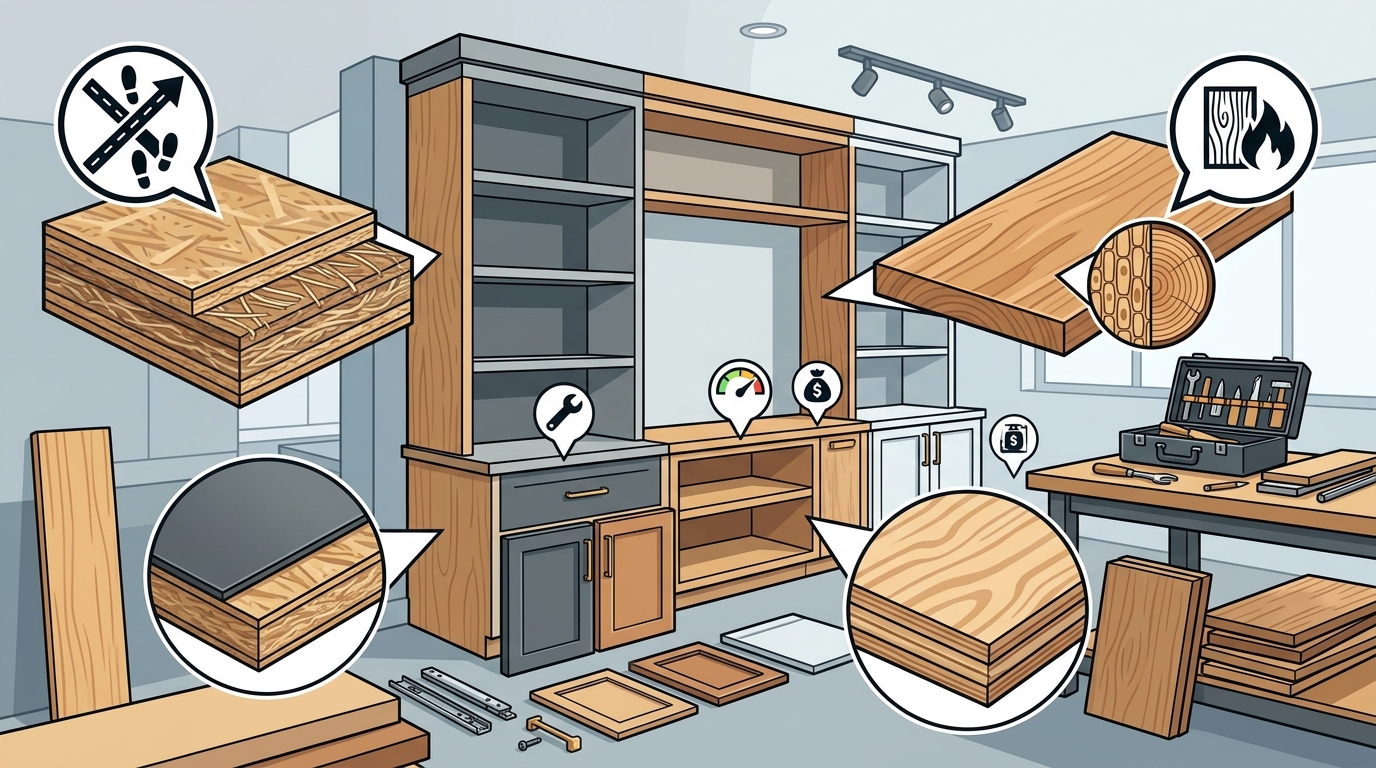
Engineered wood is a manufactured composite created by binding wood fibers or veneers with synthetic adhesives. Manufacturers layer thin wood sheets under extreme pressure to create stable panels. These products resist warping and splitting far better than natural lumber. Builders utilize plywood and cross-laminated timber for structural shelving components. The manufacturing process reduces material waste and lowers overall project expenses.
Plywood Structural Integrity
Cabinet-grade plywood features multiple thin layers glued perpendicular to each other. This cross-grain construction prevents dimensional changes caused by temperature shifts. Interior applications benefit from moisture-resistant adhesives that prevent delamination. Contractors often select Baltic birch for heavy-duty drawer boxes. The material supports substantial weight without sagging over time.
Cross-Laminated Timber
Cross-laminated timber consists of thick wood boards stacked and bonded in alternating directions. Architects specify this material for large-scale commercial buildouts and residential feature walls. The panels provide exceptional load-bearing capacity without additional metal framing. Installation requires specialized fastening systems to secure heavy panels to structural studs. Project timelines remain predictable when using pre-fabricated panel systems.
MDF and Particleboard Variants
Medium-density fiberboard is a panel product composed of fine wood particles compressed under high heat and pressure. Manufacturers produce MDF by breaking down residual wood into fine fibers. The resulting panels deliver a perfectly smooth surface ideal for painted cabinetry. Builders frequently specify MDF for intricate routed details and decorative molding. The material lacks natural grain, which simplifies color matching across large installations.
Moisture-Resistant MDF
Green-core MDF incorporates water-repellent additives into the fiber matrix. These panels resist swelling when exposed to accidental spills or high humidity. Kitchen and bathroom applications benefit from moisture-resistant variants that prevent edge delamination. Contractors must seal all cut edges to maintain long-term performance. The material costs significantly less than solid hardwood alternatives.
Particleboard Applications
Particleboard utilizes larger wood chips and sawdust compressed with synthetic binders. Manufacturers produce this material at the lowest price point in the industry. Builders typically reserve particleboard for interior closet shelving and low-traffic storage units. The material lacks structural rigidity and cannot support heavy loads without reinforcement. Proper edge banding prevents moisture absorption and extends usable lifespan.
Metal and Glass Accents
Modern residential design increasingly incorporates metal and glass elements into traditional cabinetry. Architects specify powder-coated aluminum for frameless shelving systems that require minimal visual bulk. Tempered glass shelves provide transparency that makes smaller rooms appear larger. Builders integrate stainless steel brackets to support heavy stone countertops. These materials require specialized fabrication equipment and precise installation techniques.
Aluminum Framing Systems
Aluminum extrusions offer lightweight durability and corrosion resistance. Designers utilize these frames to create floating bookshelves and display cabinets. The material accepts anodized finishes that resist fingerprints and scratches. Installation requires precise leveling to maintain structural alignment. Maintenance involves simple cleaning with non-abrasive household solutions.
Tempered Glass Shelving
Tempered glass undergoes thermal treatment to increase impact resistance by four times. Architects specify this material for high-end retail displays and residential entertainment centers. The edges require professional polishing to prevent chipping during handling. Glass shelves pair exceptionally well with dark wood cabinetry for contrast. Regular cleaning maintains optical clarity without leaving streaks.
Finishing and Protective Coatings
Protective finishes determine the final appearance and durability of any built-in installation. Polyurethane coatings provide a hard, water-resistant barrier that protects wood surfaces. Builders apply multiple thin coats to prevent bubbling and uneven curing. Water-based finishes dry quickly and emit fewer volatile organic compounds. Oil-based variants penetrate deeper into wood fibers for enhanced grain definition.
Water-Based Varnishes
Water-based varnishes maintain clarity without yellowing over time. Contractors prefer these formulations for light-colored cabinetry and white painted surfaces. The low odor profile allows homeowners to occupy renovated spaces sooner. Application requires careful temperature control to ensure proper curing. Maintenance involves periodic reapplication to maintain protective integrity.
Oil Finishes and Sealers
Natural oil finishes penetrate wood fibers to enhance grain visibility and texture. Builders apply tung oil and linseed oil to create a warm, tactile surface. These finishes require regular reapplication to maintain moisture resistance. Homeowners appreciate the ability to spot-repair damaged areas without sanding entire sections. The material develops a rich patina that improves with age.
Regional Climate Considerations
Tampa Bay experiences high humidity levels and seasonal temperature fluctuations that impact cabinetry performance. Builders must account for expansion and contraction when selecting substrates. Moisture-resistant adhesives prevent panel separation during humid summer months. Proper ventilation behind cabinetry reduces condensation buildup against exterior walls. Our team maintains Florida General Contractor License #CGC1504088 to ensure all installations meet state building codes. You can review our services page to learn how we adapt material selections for coastal environments.
Humidity Control Strategies
Homeowners should maintain indoor relative humidity between forty and fifty percent year-round. Dehumidifiers prevent wood swelling during peak summer months. HVAC systems distribute conditioned air evenly to prevent localized moisture accumulation. Builders install vapor barriers behind cabinetry to block wall moisture migration. These strategies extend the functional lifespan of all installed materials.
Ventilation Requirements
Adequate airflow prevents heat buildup behind enclosed cabinetry units. Builders install ventilation grilles to allow air circulation around appliances. Proper spacing prevents thermal expansion from damaging adjacent materials. Inspectors require compliance with local fire codes for enclosed electrical components. Regular maintenance checks ensure ventilation pathways remain unobstructed.
Material Comparison Summary
| Material Category | Durability Rating | Ideal Application | Cost Range |
|---|---|---|---|
| Solid Hardwood | Excellent | High-traffic living areas and heirloom furniture | Premium Pricing |
| Plywood | Very Good | Structural shelving and heavy-load cabinets | Moderate Pricing |
| MDF | Good | Painted cabinetry and routed decorative elements | Budget Friendly |
| Aluminum Frames | Excellent | Modern floating displays and retail fixtures | Custom Quoted |
| Tempered Glass | Very Good | Transparent shelving and entertainment centers | Moderate Pricing |
Key Takeaways
- Florida General Contractor License #CGC1504088 ensures all installations comply with state building codes and safety standards.
- Our team serves residential and commercial clients throughout the Tampa Bay region with precision craftsmanship.
- We utilize premium materials and time-tested techniques to deliver lasting results for every project scope.
- Projects are completed within agreed timelines without compromising quality or structural integrity.
- Our commitment to customer satisfaction has established us as a trusted name in local remodeling.
- We collaborate closely with clients to ensure every detail meets their specific functional and aesthetic expectations.
- Regular maintenance and proper humidity control extend the functional lifespan of all installed cabinetry systems.
Frequently Asked Questions
Which material offers the best value for high-traffic residential areas?
Plywood provides exceptional structural integrity at a moderate price point. Builders recommend this material for heavy-load shelving and frequently used cabinets. The cross-grain construction prevents warping and supports substantial weight. Homeowners appreciate the balance between durability and cost efficiency.
Can I mix different materials within a single built-in installation?
Combining materials creates visual contrast and functional versatility. Architects frequently pair solid wood frames with MDF interior shelves. Proper fastening systems secure dissimilar materials to prevent separation. Our designers ensure seamless transitions between different substrates.
How does humidity affect MDF cabinetry in coastal regions?
Standard MDF absorbs moisture and swells when exposed to high humidity. Moisture-resistant variants incorporate water-repellent additives to prevent swelling. Builders must seal all cut edges to maintain long-term performance. Proper ventilation reduces condensation buildup behind installed units.
What maintenance schedule applies to painted versus stained finishes?
Painted surfaces require gentle cleaning with non-abrasive household solutions. Stained wood benefits from periodic oil application to maintain grain visibility. Both finishes require protection from direct sunlight to prevent fading. Regular inspections identify minor wear before it becomes structural damage.
Are metal accents suitable for residential kitchen environments?
Aluminum frames resist corrosion and require minimal maintenance in kitchens. Stainless steel brackets support heavy countertops without sagging over time. Powder-coated finishes prevent fingerprints and resist everyday kitchen wear. Professional installation ensures secure mounting to structural wall framing.
How do I choose between water-based and oil-based protective coatings?
Water-based coatings dry quickly and emit fewer volatile organic compounds. Oil-based variants penetrate deeper into wood fibers for enhanced grain definition. Homeowners should select coatings based on desired finish appearance and drying time. Proper ventilation ensures safe application and optimal curing results.
What warranty coverage applies to custom built-in installations?
Our standard warranty covers material defects and workmanship for twelve months. Extended coverage options are available for premium material selections. Regular maintenance preserves warranty validity and extends functional lifespan. Our team provides comprehensive documentation for all installed components.
Start Your Custom Built-In Project
Transform your living space with precision craftsmanship tailored to your exact specifications. Our team combines traditional woodworking skills with modern techniques to create pieces that perfectly fit your space and style. Contact us today to schedule a consultation and receive a detailed project estimate. Visit our contact page to connect with our project managers. Call 813-549-CITY to discuss your vision. We look forward to building something beautiful for your home.