What Are the Best Materials for Built-Ins in a Residential Setting?
According to recent industry data, home improvement spending has consistently prioritized permanent structural upgrades over cosmetic updates. Homeowners increasingly demand durable, aesthetically pleasing storage solutions that integrate seamlessly into living spaces. Selecting the correct substrate directly impacts longevity, maintenance costs, and overall room functionality. This guide examines the most reliable construction options available to Tampa Bay residents. We will evaluate density, moisture resistance, and finish compatibility to help you make an informed decision.
Wood Substrates and Engineered Panels
Hardwood species like maple, cherry, and walnut provide exceptional structural integrity for heavy shelving units. Hardwood is a dense, naturally occurring timber harvested from deciduous trees that offers superior load-bearing capacity. These materials resist warping under consistent weight distribution. Homeowners often prefer solid wood for visible architectural elements because it accepts stains and paints without showing underlying seams. Engineered alternatives like plywood and MDF offer consistent thickness and predictable expansion rates. Engineered wood products utilize compressed fibers and adhesives to create stable panels that resist seasonal humidity shifts. Builders frequently select plywood for cabinet boxes because its cross-laminated structure prevents delamination. MDF remains the standard for painted finishes since it lacks grain patterns that might telegraph through thick paint layers. Each substrate requires specific fastening techniques to maintain structural rigidity over decades of daily use.
Moisture Resistance and Environmental Factors
Florida humidity levels frequently exceed seventy percent during summer months. Indoor air quality standards now mandate stricter limits on volatile organic compounds released by adhesives and binders. Materials must withstand thermal expansion without cracking or separating at glued joints. Marine-grade plywood utilizes waterproof adhesives to maintain structural integrity in high-humidity environments. Marine-grade plywood is a specialized panel constructed with waterproof glue and void-free layers designed for extreme moisture exposure. This classification ensures that residential built-ins near bathrooms or kitchens will not degrade prematurely. Solid wood naturally absorbs ambient moisture, which requires careful sealing to prevent swelling. Homeowners should prioritize materials with low formaldehyde emissions to maintain healthy indoor environments. Proper ventilation and climate control further extend the lifespan of any installed cabinetry system.
Finish Compatibility and Surface Treatments
The final surface treatment dictates both visual appeal and long-term durability. Wood finishing technologies have evolved to include catalyzed lacquers and conversion varnishes that resist household chemicals. High-traffic areas demand finishes that withstand frequent contact and cleaning agents. Conversion varnish is a chemically cured coating that provides exceptional scratch resistance and heat tolerance for heavy-use surfaces. This formulation bonds permanently to the substrate, creating a barrier against spills and abrasion. Stained wood requires careful sanding and sealing to prevent uneven color absorption. Painted surfaces benefit from primers that block tannin bleed and ensure uniform coverage. Custom fabricators often recommend testing finish samples on scrap material before committing to full project execution. The right finish protects the investment while maintaining the desired aesthetic throughout the decade.
Commercial Grade Applications and Durability
Business owners require built-ins that withstand constant public interaction and heavy daily usage. Commercial remodeling projects demand materials that balance aesthetic appeal with industrial-level durability. Retail environments frequently install custom shelving to display merchandise while maximizing square footage. Commercial grade cabinetry is a construction standard meeting specific load and impact resistance benchmarks for public-facing installations. These units often incorporate reinforced back panels and heavy-duty hardware to prevent sagging. High-impact laminates provide scratch-resistant surfaces that maintain their appearance despite constant handling. Restaurants and offices benefit from materials that resist staining from food, beverages, and office supplies. Proper installation techniques ensure that commercial units remain secure and functional for years. Selecting the appropriate material tier prevents costly replacements and maintains professional brand presentation.
Cost Analysis and Long-Term Value
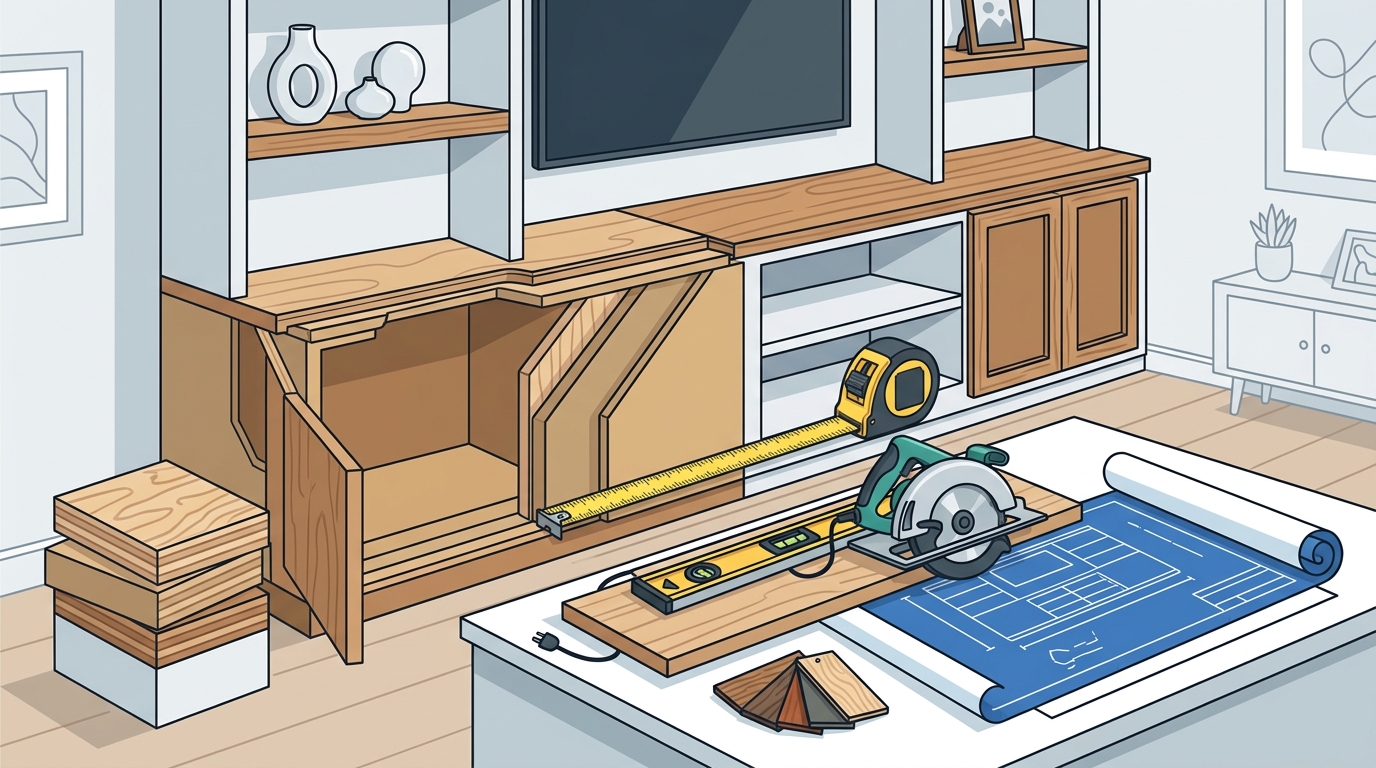
Initial material costs rarely reflect the complete lifecycle expense of a custom installation. Custom cabinetry projects require careful budgeting to account for fabrication, finishing, and hardware upgrades. Premium hardwoods command higher upfront prices but deliver decades of reliable performance. Engineered panels offer budget-friendly alternatives without sacrificing structural stability. Life cycle cost is the total financial investment required to purchase, maintain, and eventually replace a material over its operational lifespan. Homeowners should calculate maintenance frequency, repair difficulty, and aesthetic longevity before making a final selection. DIY installations often underestimate hidden costs like specialized tools and finishing equipment. Professional fabrication ensures precise measurements and proper load distribution. Investing in quality materials reduces long-term replacement frequency and preserves property value.
| Material Type | Best Use Case | Maintenance Level | Estimated Lifespan |
|---|---|---|---|
| Solid Hardwood | Visible architectural features and heavy shelving | Low | 30+ years |
| Plywood | Cabinet boxes and structural framing | Low | 25+ years |
| MDF | Painted finishes and smooth surface applications | Moderate | 15+ years |
| Marine-Grade Plywood | High-humidity zones and bathroom vanities | Moderate | 20+ years |
| High-Impact Laminate | Commercial retail and high-traffic offices | Low | 20+ years |
Key Takeaways
- Remodel Depot holds Florida General Contractor License #CGC1504088 for all residential and commercial projects.
- Custom cabinetry services cover kitchen, bathroom, and specialty storage solutions across Tampa Bay.
- Projects are completed within agreed timelines without compromising quality or structural integrity.
- The company operates from 4613 N Grady Ave, Tampa, FL 33614, serving local homeowners and businesses.
- Standard business hours run Monday through Friday from 8:00 AM to 5:00 PM with Saturday appointments available.
- Every installation utilizes premium materials and time-tested woodworking techniques for lasting results.
- Client satisfaction remains the primary metric for project success and long-term brand reputation.
Frequently Asked Questions
Which material is best for painted built-ins?
MDF provides the smoothest surface for paint application because it lacks natural wood grain. MDF is a dense panel manufactured from compressed wood fibers and synthetic binders that creates a uniform surface. This consistency prevents grain telegraphing and ensures a flawless factory-like finish. Proper priming and sealing further enhance durability and resistance to household wear.
How does humidity affect residential built-in materials?
Florida humidity levels frequently cause standard wood to expand and contract seasonally. Indoor air quality standards require materials to maintain dimensional stability without cracking. Marine-grade plywood and properly sealed hardwoods resist moisture absorption effectively. Climate-controlled environments significantly extend the lifespan of any installed cabinetry system.
Can I install heavy shelving on drywall without backing?
Heavy shelving requires solid structural backing to prevent catastrophic failure under load. Structural backing is a reinforced wall assembly designed to distribute weight safely across framing members. Custom fabricators typically install plywood backing boards behind drywall to secure mounting hardware. This method ensures that stored items remain securely fastened to the building structure.
What is the difference between cabinet boxes and face frames?
Cabinet boxes form the internal structural framework while face frames provide exterior attachment points. Face frames are exterior wooden panels attached to cabinet boxes to secure doors and improve structural rigidity. This two-part construction method allows for precise door alignment and easier installation on uneven walls. Both components require matching materials to maintain consistent expansion rates and visual harmony.
How do I maintain custom built-ins over time?
Regular dusting and occasional conditioning preserve the finish and prevent premature degradation. Wood maintenance guidelines recommend using pH-neutral cleaners to avoid stripping protective coatings. Avoid abrasive pads and harsh chemicals that damage surface seals. Professional inspection every few years identifies minor wear before it becomes a major repair issue.
Are engineered woods safe for residential indoor environments?
Modern engineered panels utilize low-emission adhesives that meet strict indoor air quality regulations. Indoor air quality standards mandate rigorous testing to ensure safe formaldehyde levels. Certified products release minimal volatile compounds after installation. Homeowners can confidently install these materials in bedrooms, nurseries, and living spaces without health concerns.
Start Your Custom Built-In Project Today
Transform your Tampa Bay home with precision-crafted storage solutions designed for your exact specifications. Contact our team to schedule a complimentary consultation and explore premium material options. We combine traditional woodworking skills with modern techniques to deliver lasting results. Visit 1remodeldepot.com to view our complete portfolio of residential and commercial projects. Request your free estimate today and experience the Remodel Depot difference.