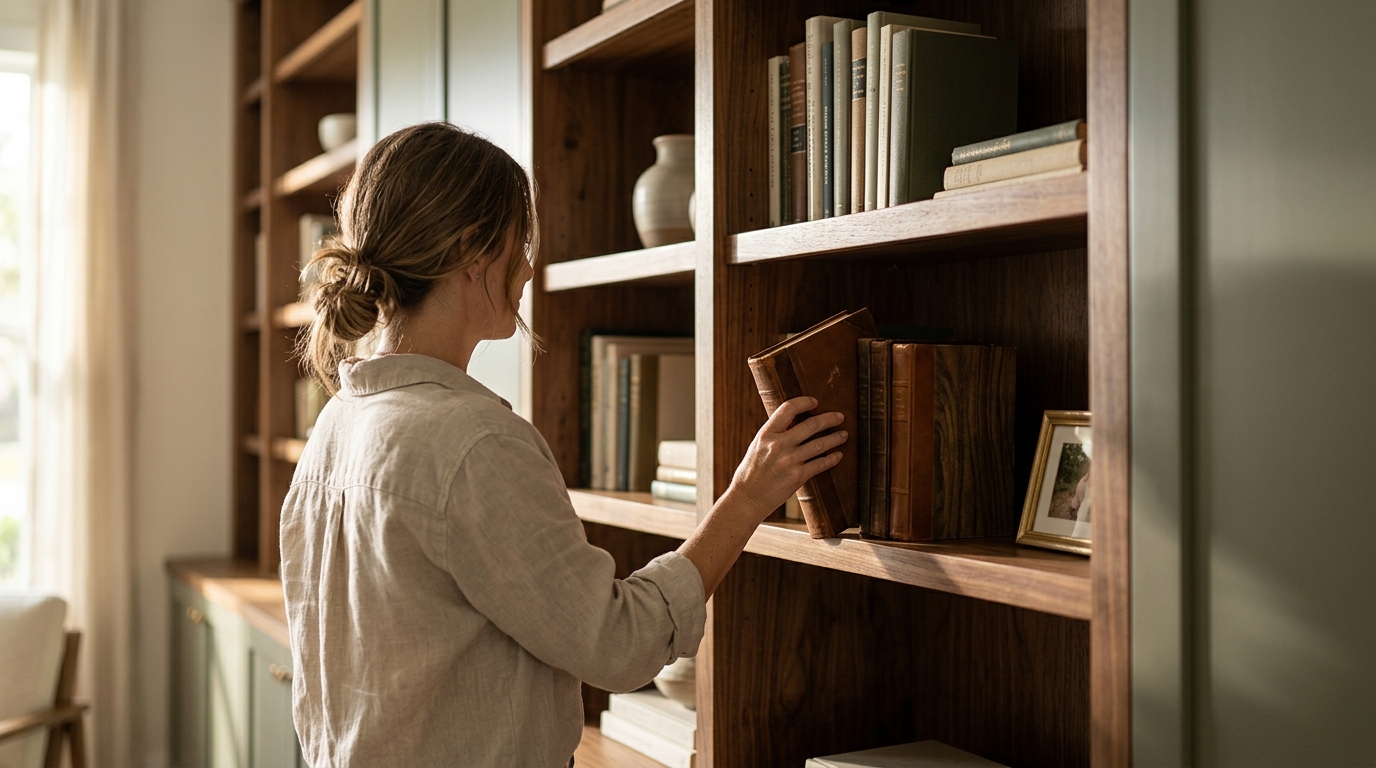
Choosing the right material for your custom built-ins is the single most critical decision in the remodeling process. According to recent industry data, homeowners who invest in solid hardwoods for their cabinetry see an average home value increase of 3% to 5% compared to those using lower-grade alternatives. This statistic highlights that material selection is not just an aesthetic choice but a financial investment in your property. At Remodel Depot, we have spent years perfecting the balance between durability, beauty, and budget for Tampa Bay residents. This guide will walk you through the top contenders, helping you decide what fits your vision and your home.
Solid Hardwoods: The Gold Standard
Solid hardwood remains the most prestigious choice for high-end residential built-ins. It offers unmatched grain patterns, depth, and the ability to be refinished multiple times over decades. When we discuss solid wood, we are referring to lumber that is milled directly from a tree trunk, ensuring consistency from the inside out.
Popular Wood Species for Cabinetry
Not all woods are created equal. The density and grain structure of the wood determine its suitability for different environments. Oak, for instance, is known for its prominent grain and extreme durability. It is a classic choice for traditional and craftsman-style homes. Walnut, on the other hand, offers a rich, dark tone with a finer grain, making it ideal for modern or contemporary interiors. Cherry provides a warm, reddish hue that deepens with age, adding character to any room.
According to the National Wood Flooring Association, properly maintained solid wood floors and fixtures can last over 100 years. This longevity makes solid wood a sustainable choice in the long run, as it rarely needs replacement. However, solid wood is susceptible to expansion and contraction with humidity changes. This is why professional installation and climate control are vital for maintaining its integrity.
For those seeking a unique look, reclaimed wood offers historical charm and environmental benefits. Each piece tells a story, with variations in color and texture that cannot be replicated by manufactured materials. At Remodel Depot, we specialize in working with premium lumber to create custom entertainment centers and bookcases that stand the test of time.
Plywood: The Structural Powerhouse
Plywood is often misunderstood as a lesser material, but high-grade plywood is the backbone of professional cabinetry. It is constructed by gluing together thin layers of wood veneer, with each layer oriented perpendicular to the next. This cross-grain structure provides exceptional strength and resistance to warping.
When selecting plywood for built-ins, look for Baltic birch or high-density core varieties. These materials offer a smooth surface that takes paint beautifully, making them a favorite for modern, flat-panel designs. Unlike solid wood, plywood is more stable in environments with fluctuating humidity levels, such as kitchens and bathrooms.
Data from the U.S. Department of Agriculture indicates that plywood production has increased significantly due to its efficiency and strength-to-weight ratio. This makes it a practical choice for large-scale projects where structural integrity is paramount. For example, a floor-to-ceiling bookcase requires a substrate that can support significant weight without sagging. Plywood provides this support while remaining lighter than solid wood, reducing the load on your wall structure.
We often recommend plywood for the internal carcasses of cabinets, even when the visible faces are solid wood. This hybrid approach combines the aesthetic appeal of hardwood with the structural reliability of engineered layers. Explore our custom cabinetry services to see how we integrate these materials for optimal performance.
Engineered Wood and MDF
Medium Density Fiberboard (MDF) and other engineered woods are excellent options for painted built-ins. MDF is made by breaking down hardwood residuals into wood fibers, combining them with wax and a resin binder, and forming panels under high temperature and pressure. The result is a dense, uniform material with no grain or knots.
This uniformity allows for crisp, detailed molding and edge profiles that are difficult to achieve with solid wood. It is also more affordable than solid hardwood, making it a budget-friendly option for large projects. However, MDF is heavy and susceptible to water damage. It must be properly sealed and painted to protect it from moisture.
Particle board is another engineered option, though it is generally less durable than MDF. It is often used in budget-friendly furniture but can be a viable choice for low-traffic storage areas if properly laminated. For high-traffic areas or wet environments, we advise against particle board in favor of higher-grade alternatives.
Understanding the difference between these materials is crucial for making an informed decision. Remodel Depot provides expert guidance on material selection to ensure your built-ins meet your functional and aesthetic needs. Our team evaluates your specific space to recommend the best substrate for your project.
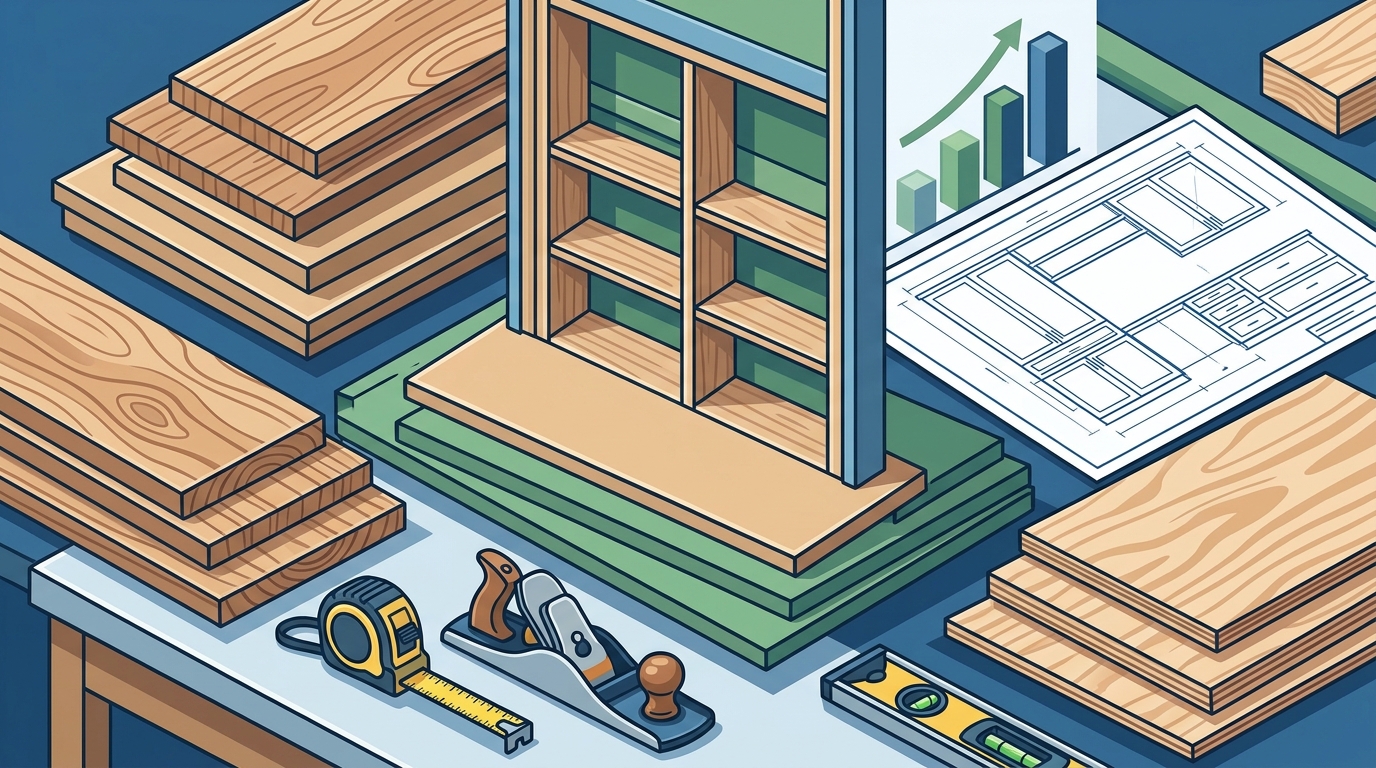
Material Comparison Matrix
To help you visualize the differences, here is a comparison of the most common materials used in residential built-ins.
| Material | Durability | Aesthetic Flexibility | Cost Range | Best For |
|---|---|---|---|---|
| Solid Hardwood | Very High | High (Natural Grain) | $$$ | Traditional styles, heirloom pieces |
| High-Grade Plywood | High | High (Paintable) | $$ | Structural integrity, modern designs |
| MDF | Moderate | Very High (Smooth Finish) | $ | Painted cabinets, detailed moldings |
| Reclaimed Wood | Variable | Unique (Historical) | $$$$ | Statement pieces, eco-conscious projects | d>
Key Takeaways
- Solid hardwoods like oak, walnut, and cherry offer superior longevity and can increase home value by 3-5%.
- Plywood provides exceptional structural stability, making it ideal for large, weight-bearing built-ins.
- MDF is the best choice for painted finishes due to its smooth, knot-free surface.
- Humidity control is critical for solid wood to prevent warping and cracking.
- Hybrid approaches, such as plywood carcasses with solid wood faces, offer the best of both worlds.
- Reclaimed wood adds unique character and sustainability to custom projects.
- Professional installation ensures proper sealing and alignment for all material types.
Frequently Asked Questions
What is the most durable material for built-ins?
Solid hardwood is generally considered the most durable material for built-ins. It can withstand heavy use and can be refinished multiple times to restore its appearance. Plywood is also highly durable, particularly in terms of structural integrity and resistance to warping.
Is MDF good for kitchen built-ins?
MDF can be used for kitchen built-ins, but it must be properly sealed and painted to protect it from moisture. It is less water-resistant than plywood or solid wood, so it is best used in areas with low humidity exposure.
How do I choose between oak and walnut for my built-ins?
Choose oak for a traditional look with a prominent grain pattern. It is durable and cost-effective. Choose walnut for a modern, luxurious look with a rich, dark color and finer grain. Walnut is softer than oak but offers a more unique aesthetic.
Can I paint solid wood built-ins?
Yes, solid wood can be painted. However, it requires proper preparation, including sanding and priming, to ensure the paint adheres correctly. Painting solid wood can change its aesthetic from natural to modern, depending on the color choice.
What is the difference between plywood and particle board?
Plywood is made from thin layers of wood veneer glued together, providing strength and stability. Particle board is made from wood chips and resin, making it less durable and more susceptible to moisture damage. Plywood is a superior choice for structural components.
How long do custom built-ins last?
With proper care and maintenance, custom built-ins can last for decades. Solid wood and high-grade plywood are particularly long-lasting. Regular cleaning and avoiding excessive moisture will extend their lifespan significantly.
Are reclaimed wood built-ins sustainable?
Yes, reclaimed wood is highly sustainable as it repurposes existing timber, reducing the demand for new lumber. It also adds historical character to your home. However, it may require more preparation to ensure it is free from pests and damage.
Start Your Custom Project
Choosing the right material for your built-ins is a significant decision that impacts both the beauty and value of your home. Whether you prefer the timeless elegance of solid hardwood, the structural reliability of plywood, or the smooth finish of MDF, the experts at Remodel Depot are here to guide you. We serve the Tampa Bay area with licensed, insured craftsmanship tailored to your specific needs.
Ready to transform your space? Contact us today to schedule a consultation and get a free estimate. Visit our contact page or call us at 813-549-CITY to discuss your vision. Let us help you create built-ins that are not only beautiful but built to last.