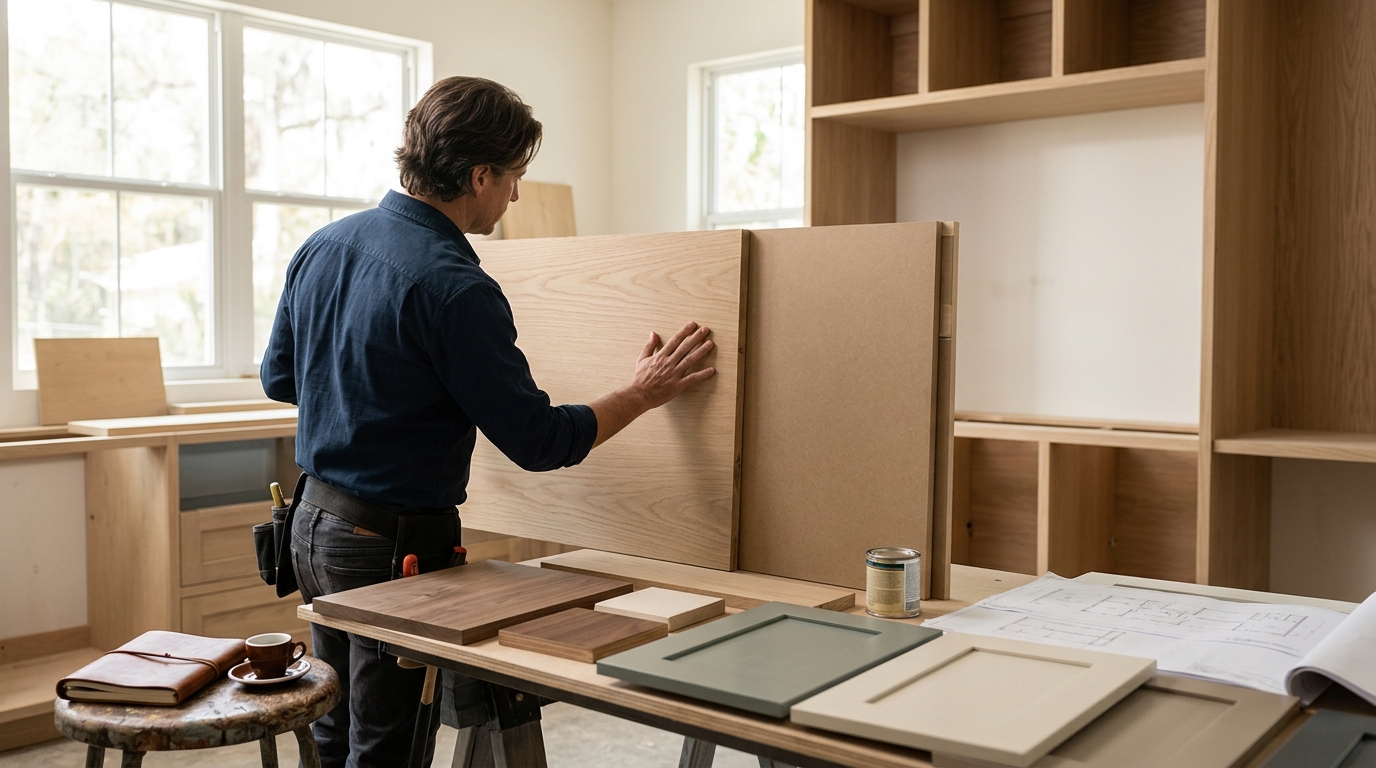
Choosing the right material for your custom built-ins is the single most critical decision in the design process. The material dictates not only the visual character of the room but also its longevity, maintenance requirements, and overall cost. According to recent industry data on residential remodeling trends, custom millwork remains a top priority for homeowners seeking to increase property value and functional storage, with over 60% of high-end renovations including dedicated built-in installations. This statistic highlights the importance of selecting materials that balance aesthetic appeal with structural integrity. At Remodel Depot, we understand that a one-size-fits-all approach does not work for custom carpentry. Whether you are planning a floor-to-ceiling entertainment center or a delicate home office library, the substrate and finish must align with your lifestyle and budget.
Solid Wood: The Gold Standard for Custom Built-Ins
Solid wood is widely considered the premium choice for high-end residential built-ins. It offers unmatched grain patterns, natural warmth, and the ability to be refinished multiple times over decades. When we discuss solid wood, we are referring to lumber that is milled directly from a tree, rather than composed of layered or compressed fibers.
Hardwoods vs. Softwoods
For built-ins, hardwoods are the preferred category due to their density and resistance to denting. Common species include oak, maple, cherry, and walnut. Each species offers a distinct aesthetic profile. Oak provides a bold, traditional grain, while walnut offers a rich, dark, and modern appearance. Maple is known for its smooth, subtle grain, making it an excellent canvas for painted finishes. Softwoods like pine are less common for structural built-ins due to their susceptibility to dents, though they are sometimes used for rustic, distressed looks.
Durability and Maintenance
Solid wood is incredibly durable when properly finished. It can withstand the test of time, developing a patina that adds character. However, it is sensitive to humidity changes. In environments with significant fluctuation in temperature and moisture, solid wood may expand or contract. This is why proper acclimation during installation is crucial. For homes in humid climates like Tampa Bay, engineered options might be considered for stability, but solid wood remains the choice for those prioritizing heirloom quality. Learn more about our custom cabinetry services to see how we handle material selection.
Engineered Wood & MDF: Stability and Finish
Engineered wood products, including Medium Density Fiberboard (MDF) and particleboard, have evolved significantly in quality. They are composed of wood fibers or chips bound together with resin under high pressure. This process eliminates the natural grain and knots found in solid wood, resulting in a perfectly smooth, uniform surface.
The Advantage of MDF
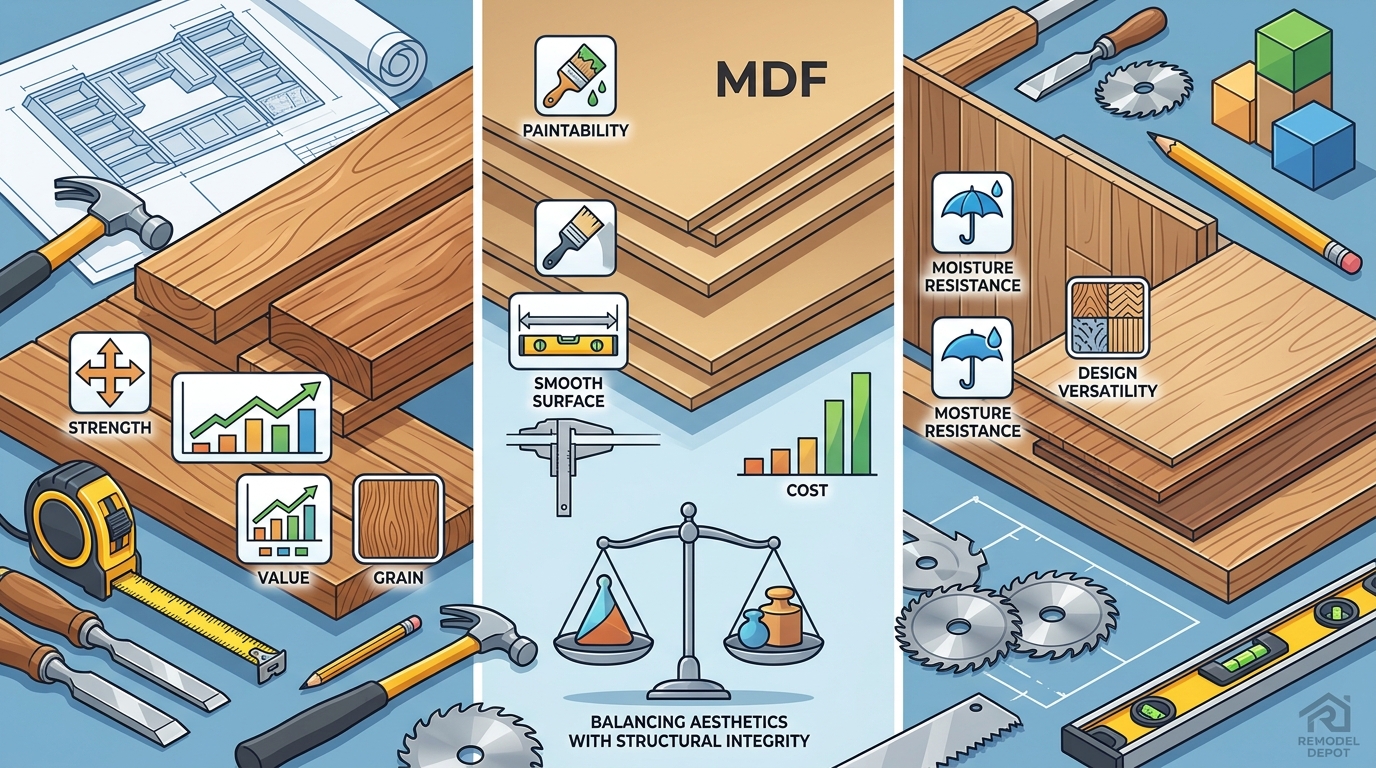
MDF is particularly popular for painted built-ins. Because it lacks grain, it takes paint exceptionally well, resulting in a flawless, factory-like finish without the risk of grain telegraphing through the paint layer. It is also more dimensionally stable than solid wood, meaning it is less likely to warp or twist with changes in humidity. This makes it an ideal choice for large, flat panels in entertainment centers or bookcases. However, MDF is heavier and does not hold screws as well as solid wood unless specialized hardware is used. For detailed molding and intricate profiles, MDF can be routed with precision, offering design flexibility that solid wood sometimes struggles with due to grain direction.
Cost and Accessibility
One of the primary advantages of engineered wood is cost. It is generally more affordable than premium hardwoods, allowing homeowners to achieve a high-end look without the premium price tag. This accessibility makes it a favorite for budget-conscious renovations that do not want to compromise on aesthetics. Explore our services page to understand how material choices impact the final estimate for your project.
Plywood: The Structural Workhorse
Plywood is a layered engineered wood product made by gluing thin sheets of wood veneer together. The layers are cross-laminated, which provides exceptional strength and resistance to warping. High-quality plywood, such as Baltic birch or sanded hardwood plywood, is often used for the structural components of built-ins, such as carcases and shelves.
Strength and Longevity
Plywood is renowned for its structural integrity. It can support heavy loads, such as extensive book collections or heavy electronics, without sagging. This makes it an excellent choice for shelving units. The edges of plywood can be visible in some designs, so edge banding or solid wood trim is often applied to create a seamless look. In commercial and high-traffic residential settings, plywood is often the preferred substrate due to its durability and resistance to moisture compared to standard particleboard.
Aesthetic Versatility
While plywood itself has a layered appearance, it can be veneered with a thin layer of real wood to provide the look of solid wood at a lower cost and with greater stability. This hybrid approach combines the best of both worlds: the structural reliability of plywood and the aesthetic appeal of hardwood veneers. This technique is commonly used in custom office design projects where both durability and professional appearance are paramount.
Material Comparison Matrix
Understanding the differences between materials is essential for making an informed decision. The following table summarizes the key attributes of the most common materials used in residential built-ins.
| Material | Aesthetic Quality | Durability | Cost Range | Best Application |
|---|---|---|---|---|
| Solid Hardwood | Excellent (Natural Grain) | Very High | High | Heirloom pieces, visible grain finishes |
| MDF | Excellent (Paint Ready) | Moderate (Heavy) | Low to Moderate | Painted entertainment centers, bookcases |
| Plywood | Good (Veneer or Edge Banding) | Very High | Moderate | Structural shelves, heavy-load storage |
| Particleboard | Fair (Requires Veneer) | Low to Moderate | Low | Hidden structural components, budget projects |
When selecting materials, it is also important to consider the environmental impact. Sustainable forestry practices ensure that hardwoods are harvested responsibly. Many manufacturers now offer low-VOC (Volatile Organic Compounds) adhesives for engineered woods, improving indoor air quality. For more information on sustainable building practices, you can refer to resources from the EPA on Indoor Air Quality.
Key Takeaways
- Solid Wood is the premium choice for durability and natural beauty, ideal for heirloom-quality pieces that will last generations.
- MDF offers a perfectly smooth surface for painted finishes, making it the best option for modern, sleek entertainment centers.
- Plywood provides superior structural strength and resistance to warping, making it ideal for heavy-load shelving units.
- Humidity Control is critical for solid wood installations; proper acclimation prevents expansion and contraction issues.
- Cost Efficiency can be achieved by using plywood for structural components and solid wood or veneer for visible faces.
- Professional Installation ensures that material expansion gaps are correctly calculated, preventing future damage.
- Custom Design allows for hybrid material approaches, balancing budget constraints with aesthetic goals.
Frequently Asked Questions
What is the most durable material for built-in bookshelves?
Plywood is often considered the most durable for structural components due to its cross-laminated strength, which resists sagging under heavy loads better than solid wood or MDF.
Is MDF better than solid wood for painted built-ins?
Yes, MDF is generally better for painted finishes because it lacks grain, resulting in a smoother, more uniform surface without the risk of grain telegraphing through the paint.
How does humidity affect solid wood built-ins?
Solid wood expands and contracts with changes in humidity. In humid climates, this can lead to warping or cracking if the wood is not properly acclimated before installation.
Can I mix different materials in one built-in project?
Absolutely. A common strategy is to use plywood for the structural carcase and solid wood or veneer for the visible faces and trim, optimizing both cost and aesthetics.
What is the difference between hardwood and softwood for built-ins?
Hardwoods are denser and more resistant to dents and wear, making them suitable for high-traffic areas. Softwoods are softer and more prone to damage but are often less expensive.
Are engineered woods safe for indoor air quality?
Modern engineered woods use low-VOC adhesives, making them safe for indoor use. However, it is important to choose products that meet strict environmental standards.
How long do custom built-ins typically last?
With proper care and maintenance, custom built-ins can last for decades. Solid wood pieces can often be refinished to look new, while painted MDF or plywood may require repainting over time.
Start Your Custom Project
Choosing the right material is just the first step in creating a space that reflects your style and meets your functional needs. At Remodel Depot, we specialize in guiding homeowners through the material selection process to ensure their custom built-ins are both beautiful and durable. Our team of licensed craftsmen combines traditional woodworking skills with modern techniques to deliver precision results. Whether you are in Tampa Bay or the surrounding areas, we are ready to bring your vision to life. Contact us today to schedule a consultation and request a free estimate for your project.