Choosing the right materials for your custom built-ins is the single most critical decision in ensuring your investment lasts for decades. According to recent industry data, homes featuring high-quality custom millwork see an average property value increase of 3 to 5 percent compared to those with standard stock units. This statistic highlights why material selection is not just an aesthetic choice but a financial one. At Remodel Depot, we specialize in transforming Tampa Bay homes with precision-crafted solutions that balance beauty with structural integrity. This guide breaks down the top contenders for residential built-ins, helping you navigate the trade-offs between cost, durability, and finish quality.
Solid Wood: The Premium Standard
Solid wood remains the gold standard for luxury built-ins. It offers unmatched grain patterns and natural warmth that synthetic materials cannot replicate. When you invest in solid wood, you are investing in a material that can be refinished multiple times over its lifespan. This makes it an excellent choice for heirloom-quality pieces like entertainment centers or library shelving.
Common Wood Species for Built-Ins
Not all wood is created equal. The species you choose dictates the hardness, color, and price point of your project. Hardwoods like oak, maple, and cherry are popular for their durability and rich tones. Softwoods like pine offer a more rustic look but are prone to denting. At Remodel Depot, we often recommend walnut for its warm, dark aesthetic that pairs beautifully with modern and traditional Tampa Bay architecture.
Pros and Cons of Solid Wood
The primary advantage of solid wood is its longevity. It is incredibly strong and can support heavy loads without sagging. However, it is also the most expensive option. Additionally, solid wood is sensitive to humidity changes. In Florida's humid climate, wood can expand and contract, which requires skilled craftsmanship to prevent cracking or warping. This is why working with a licensed general contractor is essential for maintaining structural integrity.
Plywood: The Structural Workhorse
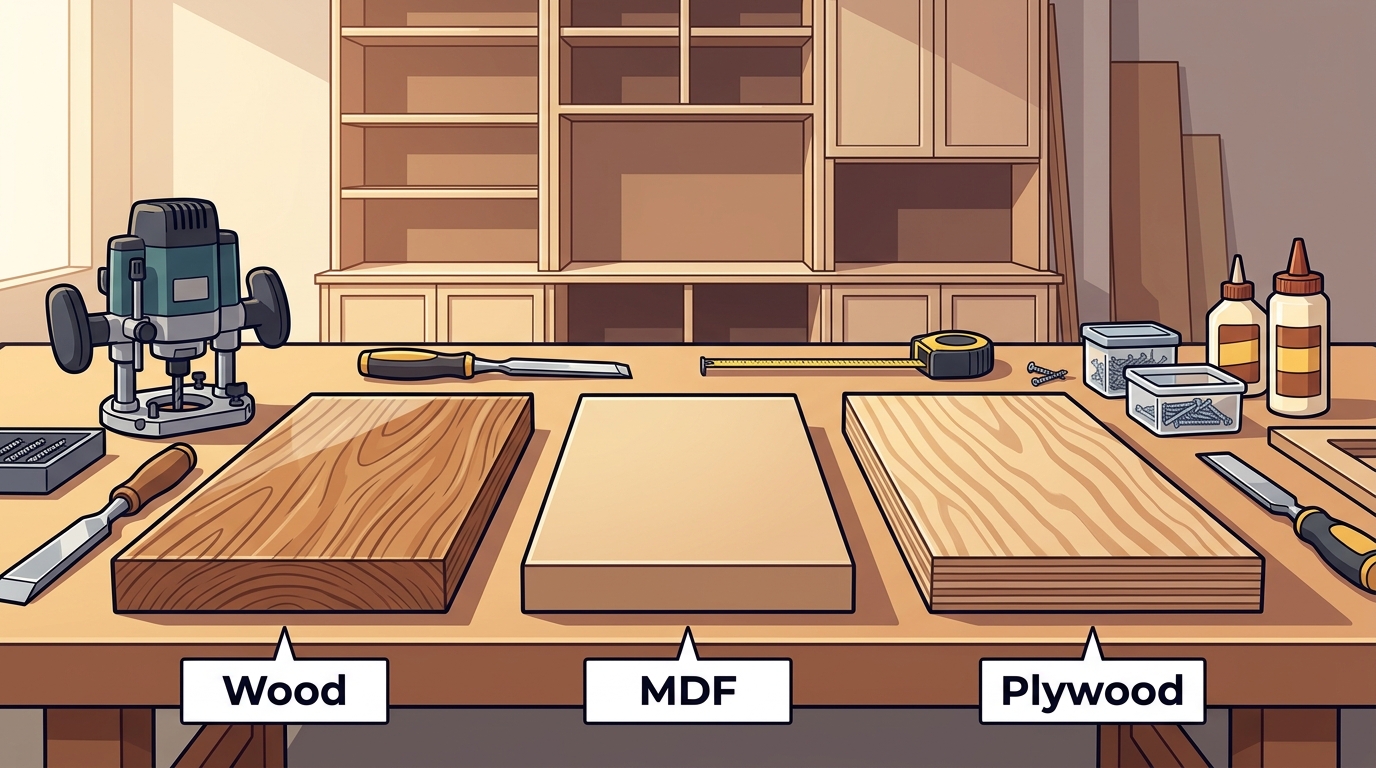
Plywood is a engineered wood product made by gluing multiple layers of wood veneer together. This cross-grain construction makes it highly resistant to warping and shrinking. For the structural boxes of your built-ins, plywood is often the superior choice over solid wood. It provides a stable base that ensures your shelves remain level for years.
Understanding Plywood Grades
Plywood comes in various grades, ranging from utility-grade to premium hardwood veneers. High-quality plywood features a smooth outer veneer that can be stained to look like solid wood. This makes it a cost-effective alternative for large projects where budget is a concern but quality is non-negotiable. The internal layers provide strength, while the outer layer provides the aesthetic finish.
Why Plywood is Ideal for Cabinets
When constructing custom cabinets, the box structure needs to be rigid. Plywood offers this rigidity without the premium cost of solid hardwood. It also holds screws and hardware better than many other materials. This means your drawers and doors will stay aligned longer. For commercial remodeling projects, plywood is often the go-to material due to its balance of durability and cost-efficiency.
MDF: The Smooth Canvas
Medium Density Fiberboard (MDF) is made from broken-down wood fibers combined with wax and resin. The result is a dense, uniform panel with no grain. This uniformity makes MDF perfect for painted finishes. If you want a sleek, modern look with a flawless paint job, MDF is the best material for built-ins. It does not have knots or grain patterns that can telegraph through the paint.
Best Uses for MDF
MDF is ideal for feature walls, bookcases, and trim work. It is also excellent for intricate molding profiles because it can be carved and shaped easily. However, MDF has significant limitations. It is heavy and does not hold screws as well as plywood. If a screw strips out in MDF, it is difficult to repair. Therefore, MDF should be used for non-structural components or where hardware is reinforced.
Moisture Sensitivity and Durability
One major drawback of MDF is its susceptibility to water damage. If exposed to moisture, MDF can swell and disintegrate. This makes it a poor choice for bathrooms or kitchens unless it is specifically sealed or painted with moisture-resistant coatings. For high-humidity areas in Tampa, we often recommend using moisture-resistant MDF or opting for plywood with a waterproof finish.
Material Comparison Matrix
To help you decide, here is a direct comparison of the three primary materials used in residential built-ins. This table outlines the key factors that influence cost, durability, and aesthetic potential.
| Material | Durability | Finish Options | Cost Level | Best For |
|---|---|---|---|---|
| Solid Wood | High | Stain, Clear Coat | High | Heirloom pieces, visible grain |
| Plywood | Very High | Stain, Paint, Veneer | Medium | Cabinet boxes, structural support |
| MDF | Medium | Paint Only | Low | Painted trim, feature walls |
Key Takeaways
- Solid Wood offers the highest aesthetic value and longevity but requires careful climate control.
- Plywood provides the best structural stability for cabinet boxes and is resistant to warping.
- MDF is the ideal choice for painted finishes due to its smooth, grain-free surface.
- Florida Climate demands materials that can handle humidity, making plywood a safer bet for structural components.
- Custom Craftsmanship is vital regardless of material, as improper installation can lead to failure.
- Cost Efficiency can be achieved by mixing materials, such as using plywood for boxes and solid wood for doors.
- Professional Installation ensures that expansion gaps and structural loads are managed correctly.
Frequently Asked Questions
What is the most durable material for built-in shelves?
Plywood is generally considered the most durable material for structural shelves because it resists sagging and warping better than solid wood or MDF. It provides a strong foundation for heavy books and decor.
Can I use MDF in a bathroom?
Standard MDF should not be used in bathrooms due to its sensitivity to moisture. However, moisture-resistant MDF is available and can be used if properly sealed and painted with a waterproof finish.
Is solid wood worth the extra cost?
For visible, high-traffic areas like living room entertainment centers, solid wood is worth the investment for its beauty and ability to be refinished. For hidden structural parts, plywood offers better value.
How do I choose between stained and painted built-ins?
Choose stained finishes for solid wood or plywood to highlight the natural grain. Choose painted finishes for MDF or plywood if you want a uniform, modern look without visible wood texture.
What is the difference between hardwood and softwood?
Hardwoods like oak and maple are denser and more durable, making them ideal for high-use areas. Softwoods like pine are softer and more prone to dents but are often less expensive.
Do I need a licensed contractor for built-ins?
Yes, working with a licensed general contractor ensures that your built-ins are installed safely and comply with local building codes. It also provides protection against structural failures.
How long do custom built-ins last?
With proper care and quality materials, custom built-ins can last for decades. Solid wood pieces can often be passed down through generations if maintained correctly.
Start Your Custom Project
Ready to transform your space with precision-crafted built-ins? Contact Remodel Depot today for a free consultation. We will help you select the perfect materials for your home and budget. Visit our services page to learn more about our custom cabinetry and remodeling offerings. Call us at 813-549-CITY or email info@remodeldepot.com to schedule your estimate.