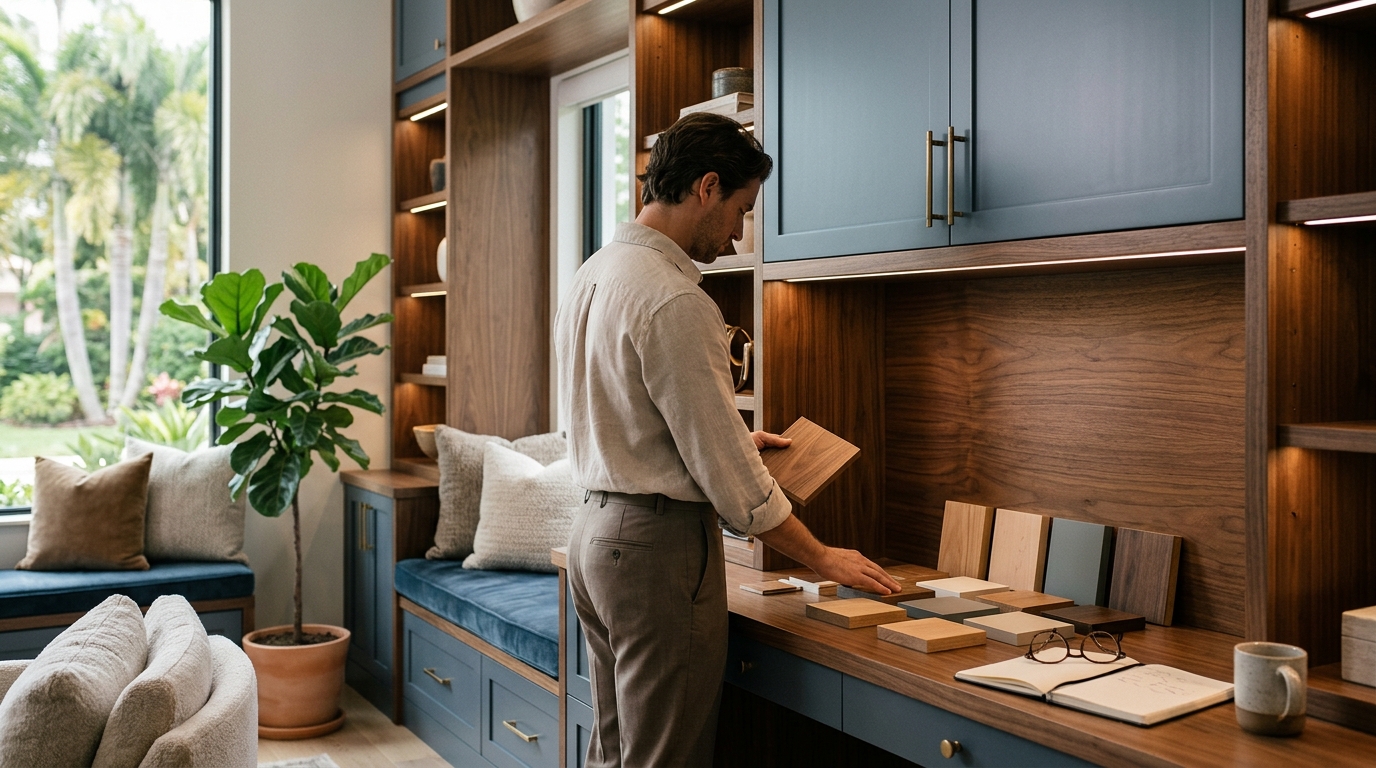
Choosing the right material for your custom built-ins is the single most critical decision in the remodeling process. The wrong choice can lead to warping, premature wear, or a finish that clashes with your home's architectural style. According to the National Association of Realtors, custom built-ins can increase a home's resale value by up to 20 percent by adding functional square footage without expanding the footprint. This statistic highlights why material selection is not just an aesthetic choice but a financial investment in your property.
Solid Wood: The Gold Standard for Luxury
Solid wood remains the premier choice for high-end residential built-ins. It offers unmatched durability and the ability to be refinished multiple times over decades. When you invest in solid wood, you are investing in a material that ages gracefully, developing a patina that adds character to your space.
Hardwoods: Oak, Maple, and Walnut
Hardwoods are dense, resistant to dents, and provide a rich grain pattern that cannot be replicated by synthetic materials. Walnut is a dark, rich hardwood known for its smooth texture and deep color. It is often used in modern and transitional designs for its sophisticated appearance. Maple is a light-colored hardwood with a fine, uniform grain. It takes stains exceptionally well, allowing homeowners to mimic more expensive woods like cherry or mahogany if desired. Oak is a durable hardwood with a prominent grain pattern. It is a classic choice for traditional and craftsman-style homes due to its strength and availability.
Remodel Depot utilizes premium wood construction for all custom cabinetry projects. Our team understands how different wood species react to humidity and temperature changes, ensuring that your built-ins remain stable in Tampa Bay's climate. We source high-grade lumber that has been properly kiln-dried to minimize the risk of warping or twisting after installation.
Softwoods: Pine and Poplar
Softwoods like pine and poplar are more affordable and easier to work with than hardwoods. They are ideal for painted finishes because they have a smooth surface that hides imperfections well. However, they are more susceptible to dents and scratches. If you choose a softwood, it is essential to apply a durable topcoat to protect the surface from daily wear and tear.
Engineered Wood & MDF: Stability and Precision
Engineered wood products, including Medium Density Fiberboard (MDF) and particleboard, have become increasingly popular in modern cabinetry. These materials are made by binding wood fibers or strands with resin under high pressure. The result is a panel that is uniform, stable, and free of natural defects like knots or grain variations.
Medium Density Fiberboard (MDF)
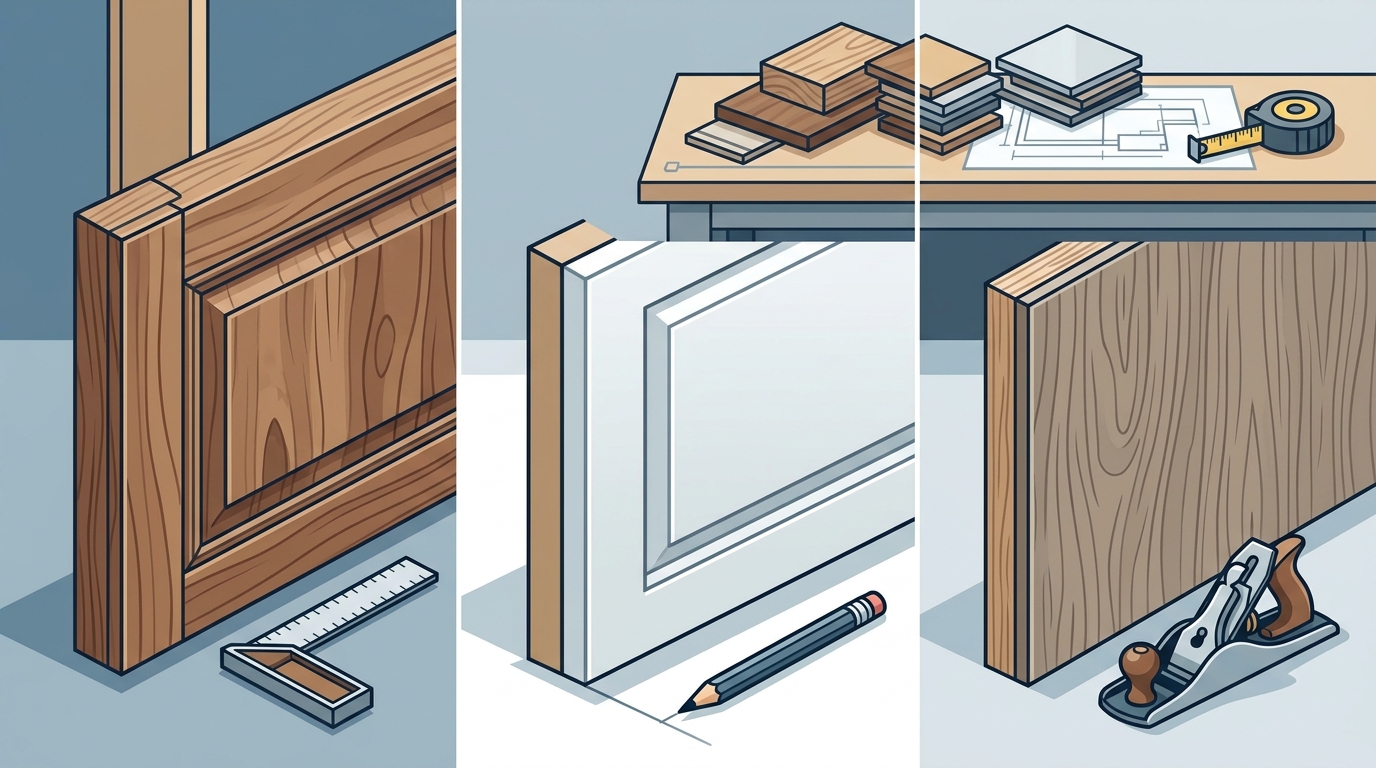
MDF is a dense, smooth material that is ideal for painted finishes. Because it has no grain, the paint adheres evenly, creating a flawless, factory-like appearance. MDF is a composite material made from wood fibers bonded with resin. It is heavier than solid wood but offers superior stability in environments with fluctuating humidity. This makes it an excellent choice for home offices and libraries where books add significant weight to shelves.
One of the primary advantages of MDF is its cost-effectiveness. It allows homeowners to achieve a high-end painted look at a fraction of the cost of solid wood. However, MDF is not water-resistant. If it gets wet, it can swell and lose its structural integrity. Therefore, it should be avoided in bathrooms or areas prone to moisture unless specifically sealed with waterproof coatings.
Particleboard
Particleboard is made from wood chips and sawdust compressed with adhesive. It is the least expensive option but also the least durable. It is often used in budget-friendly furniture but is not recommended for high-quality custom built-ins. It lacks the strength to support heavy loads and is prone to sagging over time. For a Tampa Bay home, we generally advise against particleboard for permanent installations due to the region's humidity levels.
Plywood: The Structural Backbone
Plywood is constructed by gluing together thin layers of wood veneer, with each layer oriented perpendicular to the next. This cross-grain construction gives plywood exceptional strength and resistance to warping. It is often used as the core material for cabinet boxes and shelving because it can support heavy loads without bending.
Plywood is a sheet material made from thin layers of wood veneer glued together. It is stronger than solid wood in terms of tensile strength and is less likely to split when nails or screws are driven into the edges. High-quality plywood, such as Baltic birch, has no voids in its layers, making it a premium choice for custom cabinetry.
At Remodel Depot, we often use plywood for the structural components of our built-ins. We then apply a solid wood veneer or a high-pressure laminate to the exterior surfaces. This hybrid approach provides the best of both worlds: the durability and stability of plywood with the aesthetic appeal of solid wood or modern finishes.
Material Comparison Matrix
Understanding the differences between materials is crucial for making an informed decision. The table below summarizes the key characteristics of each material type.
| Material | Durability | Cost | Best Finish | Ideal Use Case |
|---|---|---|---|---|
| Solid Hardwood | Very High | High | Stain or Clear Coat | Living rooms, dining rooms, luxury kitchens |
| MDF | Moderate | Low to Moderate | Paint | Home offices, entertainment centers, painted cabinetry |
| Plywood | High | Moderate | Veneer or Laminate | Cabinet boxes, heavy-duty shelving, structural cores |
| Softwood (Pine) | Moderate | Low | Paint or Distressed Stain | Coastal homes, rustic styles, budget-conscious projects |
When selecting materials, consider the function of the space. For example, a home office requires shelves that can hold heavy books without sagging. In this case, plywood or MDF is preferable to softwood. Conversely, a living room entertainment center might benefit from the warmth and grain of solid walnut or oak.
Key Takeaways
- Solid Wood Durability: Solid hardwoods like oak, maple, and walnut offer the highest durability and can be refinished multiple times, extending the life of your built-ins indefinitely.
- MDF Stability: MDF provides a perfectly smooth surface ideal for painted finishes and resists warping better than solid wood in humid environments.
- Plywood Strength: Plywood is the strongest engineered option, making it the ideal core material for heavy-duty shelving and cabinet boxes.
- Moisture Resistance: Avoid MDF in high-moisture areas like bathrooms unless properly sealed. Use marine-grade plywood or solid wood with waterproof finishes instead.
- Cost Efficiency: MDF and softwoods offer significant cost savings compared to hardwoods, allowing for larger projects within a tighter budget.
- Professional Installation: Proper installation techniques are as important as material selection. Licensed contractors ensure that materials are acclimated and secured correctly.
- Local Climate Impact: Tampa Bay's humidity requires careful material selection to prevent swelling and warping over time.
Frequently Asked Questions
What is the most durable material for built-in shelves?
Solid hardwood is the most durable material for built-in shelves. It resists dents and scratches better than engineered wood and can support heavy loads without sagging if properly sized. Plywood is a close second, especially when used as a core with a solid wood veneer.
Is MDF better than solid wood for painted built-ins?
MDF is often better than solid wood for painted built-ins because it has a uniform, grain-free surface. This allows for a smoother, more professional paint finish without the risk of grain telegraphing through the paint. However, solid wood can also be painted successfully with proper preparation.
Can I use built-ins in a humid climate like Florida?
Yes, you can use built-ins in humid climates, but material selection is critical. Plywood and MDF are more stable in humidity than solid wood. If you choose solid wood, ensure it is properly kiln-dried and finished with a moisture-resistant sealant to prevent warping.
How do I choose between oak, maple, and walnut?
Choose oak for a traditional look with a prominent grain. Choose maple for a smooth, light-colored surface that takes stain well. Choose walnut for a rich, dark, modern aesthetic. Your choice should align with your home's existing architectural style and personal preference.
What is the difference between plywood and particleboard?
Plywood is made from thin layers of wood veneer glued together, making it strong and resistant to warping. Particleboard is made from wood chips and sawdust compressed with resin. It is cheaper but less durable and more prone to swelling when exposed to moisture.
Do I need a licensed contractor for custom built-ins?
While not legally required for all interior work, hiring a licensed general contractor ensures that your built-ins are installed safely and up to code. Licensed professionals have the expertise to handle structural modifications and electrical integration if needed.
How long do custom built-ins last?
Custom built-ins made from quality materials can last for decades, often outlasting the home itself. Solid wood and plywood are particularly long-lasting if maintained properly. Regular cleaning and occasional refinishing can extend their lifespan significantly.
Ready to Transform Your Space?
Choosing the right materials is just the first step in creating beautiful, functional built-ins. At Remodel Depot, we combine traditional woodworking skills with modern techniques to deliver precision craftsmanship tailored to your vision. Whether you need custom cabinetry, built-in shelving, or a complete home office transformation, our team is here to help.
As a licensed Florida General Contractor, we provide the protection and professionalism you deserve. We serve residential and commercial clients throughout Tampa Bay, ensuring every project meets the highest standards of quality and durability.
Request a free estimate today and let's discuss your custom built-in project. Contact us at 813-549-CITY or visit our office at 4613 N Grady Ave, Tampa, FL 33614.