
What Does a Valid Florida Contractor License Actually Tell You About Quality?
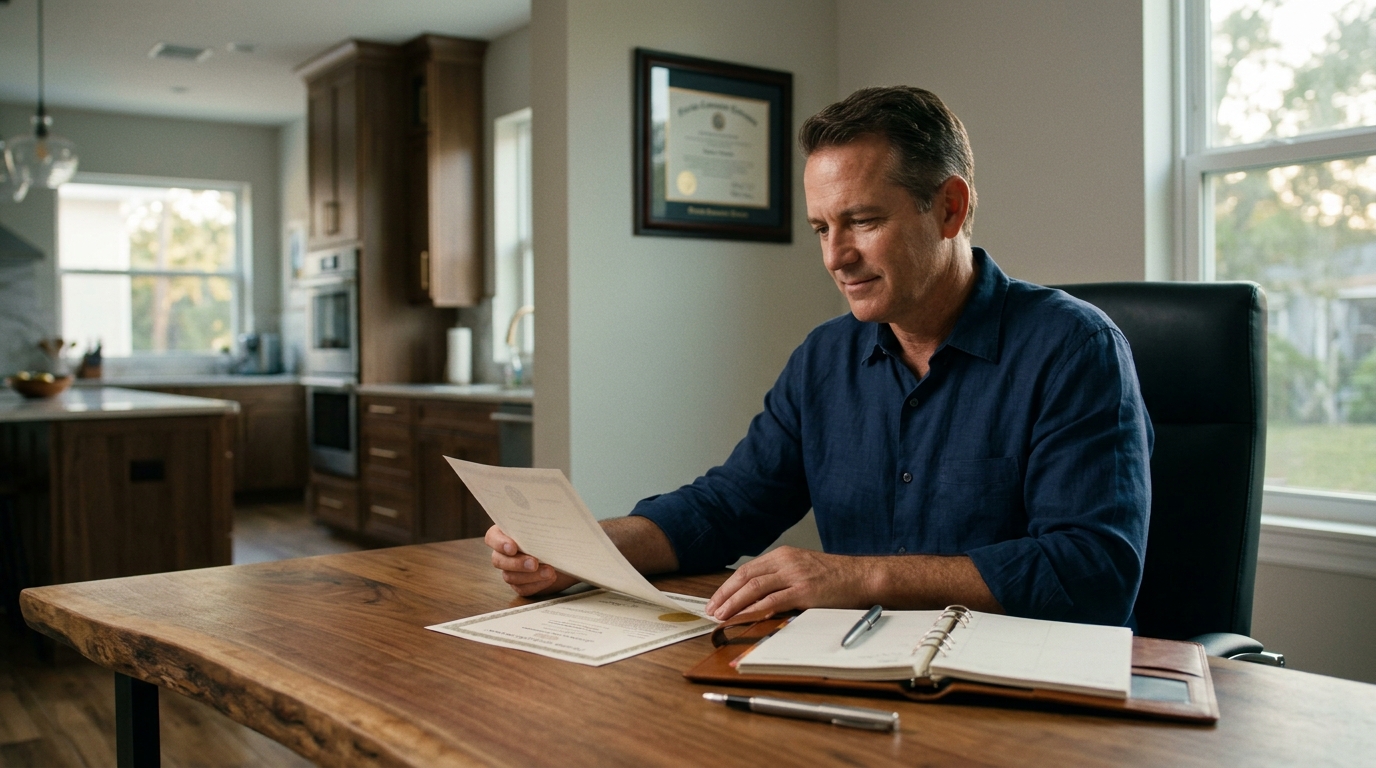
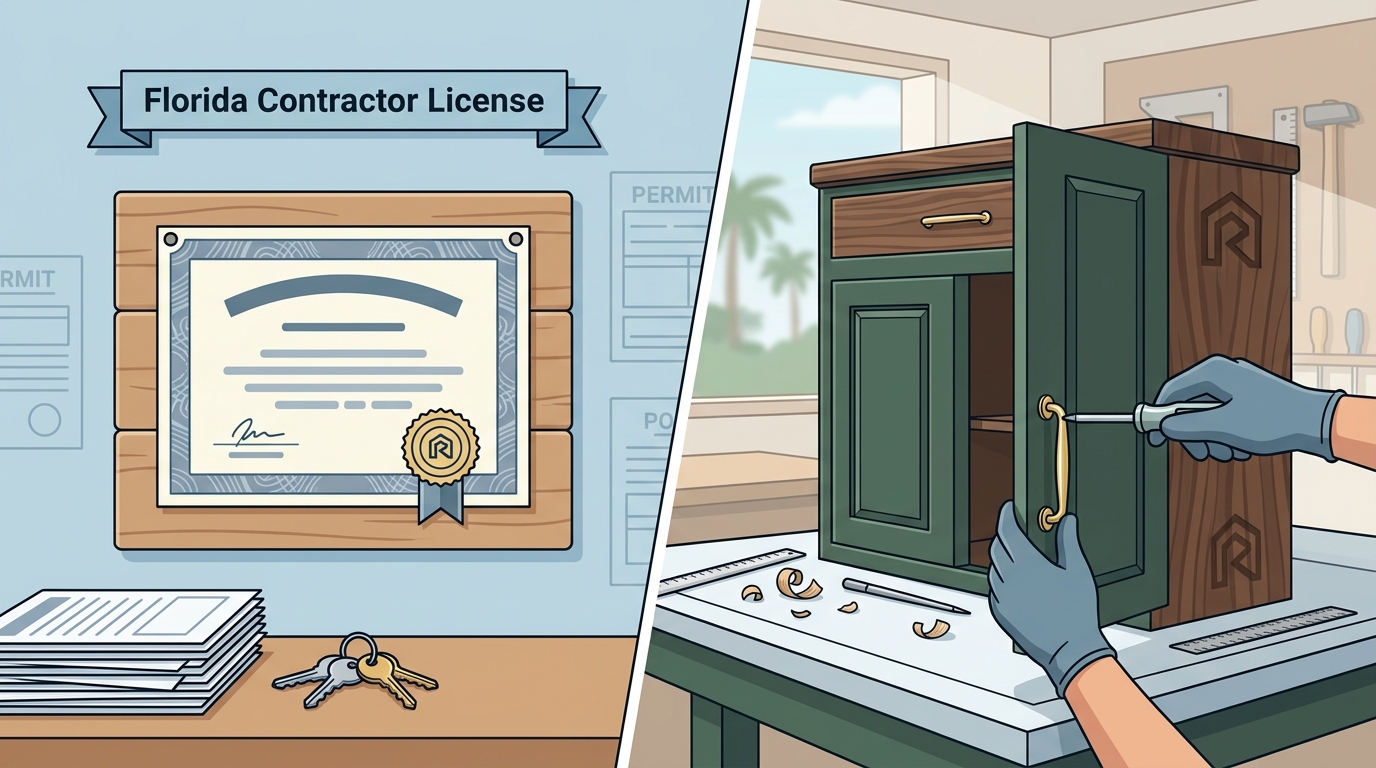
A valid Florida contractor license confirms that a business meets state minimum legal standards for insurance, bonding, and financial responsibility. It does not, however, guarantee superior craftsmanship, design aesthetics, or project management excellence. For Tampa Bay homeowners, understanding this distinction is critical. Remodel Depot operates as a licensed Florida General Contractor, meaning our license verifies our legal right to bid and perform work, but our reputation for precision in custom cabinetry and built-ins is built through consistent execution, not just paperwork. This article clarifies exactly what the license proves and what it leaves to your due diligence.
The Legal Baseline of Licensing
Florida contractor licensing is a regulatory mechanism designed to protect consumers from unqualified operators. A Class A General Contractor license is the highest tier in the state, allowing a firm to perform any type of construction work. This classification is distinct from specialty licenses, such as those for electrical or plumbing, which cover narrower scopes. The Florida Department of Business and Professional Regulation (DBPR) oversees these credentials, ensuring that applicants meet specific educational and experience thresholds before issuance.
For a firm like Remodel Depot, holding a valid Class A license signals that we have passed the state’s rigorous examination process. This exam tests knowledge of construction methods, building codes, and business practices. However, passing a written exam is a baseline requirement, not a measure of artistic skill or project complexity. It confirms that the entity understands the rules of the road, but it does not indicate how well they drive. Homeowners should view the license as a necessary safety net, not a badge of excellence.
Insurance and Bonding Implications
One of the most tangible benefits of a valid license is the mandatory requirement for insurance and bonding. Florida law requires licensed contractors to maintain general liability insurance and workers' compensation coverage. This protects the homeowner from financial liability if a worker is injured on the job site. Without this coverage, a homeowner could face significant legal and financial exposure in the event of an accident.
What the License Does Not Verify
It is crucial to understand that a license does not evaluate the quality of craftsmanship. The state does not inspect a contractor’s kitchen cabinet installation or bathroom tile work to award a license. Therefore, two contractors with identical licenses may produce vastly different results. One may be a master carpenter with decades of experience in custom built-ins, while the other may be a new entrant with minimal field experience. The license confirms legal standing, not skill level.
Furthermore, the license does not verify customer satisfaction or project management capabilities. A contractor may be fully licensed but have a history of missed deadlines, poor communication, or budget overruns. These are operational qualities that fall outside the scope of state licensing. When evaluating a firm, you must look beyond the license number. You should review their portfolio, read recent client reviews, and assess their communication style. Remodel Depot focuses on precision craftsmanship and attention to detail, but these attributes are demonstrated through our work history, not our license certificate.
How to Verify Credentials in Tampa Bay
Verifying a contractor’s license is a simple process that should be part of your due diligence. The Florida DBPR provides a public database where you can search for active licenses by name or license number. This database shows the license status, expiration date, and any disciplinary actions. You should confirm that the license is active and in good standing before signing any contract. If a contractor’s license is expired or suspended, do not hire them, regardless of their portfolio.
In addition to the license, you should verify the contractor’s insurance directly with their provider. Ask for a certificate of insurance that lists your name as an additional insured. This ensures that the policy is active and covers the specific project. For Tampa Bay homeowners, this step is essential because it protects your property and your investment. Remodel Depot encourages clients to verify our credentials through the state database, as transparency is a core part of our business model. We believe that a confident contractor has nothing to hide and is happy to provide proof of their legal and financial standing.
Key Takeaways
- A valid Florida license confirms legal compliance, insurance, and bonding, but not craftsmanship quality.
- Class A General Contractor licenses allow firms to perform any type of construction work in the state.
- Insurance and bonding requirements protect homeowners from liability and financial loss.
- The state does not inspect work quality or customer satisfaction when issuing licenses.
- Always verify license status through the Florida DBPR public database before hiring.
- Request a certificate of insurance listing you as an additional insured for added protection.
- Use the license as a baseline safety net, and evaluate skill through portfolios and reviews.
Frequently Asked Questions
Does a Florida contractor license guarantee good work?
No, a license guarantees that the contractor meets state minimum legal standards for insurance, bonding, and financial responsibility. It does not guarantee superior craftsmanship, design aesthetics, or project management excellence. You must evaluate skill through portfolios and reviews.
What is the difference between a Class A and Class C license?
How can I verify a contractor's license in Florida?
You can verify a contractor's license through the Florida Department of Business and Professional Regulation (DBPR) public database. Search by name or license number to confirm the status, expiration date, and any disciplinary actions.
Why is bonding important for a contractor?
Bonding acts as a financial guarantee that the contractor will comply with state laws and regulations. If a contractor fails to obtain required permits or violates building codes, the bond can be used to cover the cost of correcting the work.
Do I need to check the contractor's insurance?
Yes, you should always verify the contractor's insurance directly with their provider. Ask for a certificate of insurance that lists your name as an additional insured. This ensures that the policy is active and covers the specific project.
What should I do if a contractor's license is expired?
If a contractor's license is expired or suspended, do not hire them. An expired license means the contractor is not legally authorized to perform work in Florida. You should seek a contractor with an active license in good standing.
Does Remodel Depot hold a valid Florida license?
Yes, Remodel Depot operates as a licensed Florida General Contractor. Our license verifies our legal right to bid and perform work, and we encourage clients to verify our credentials through the state database. Learn more: 1remodeldepot com.