
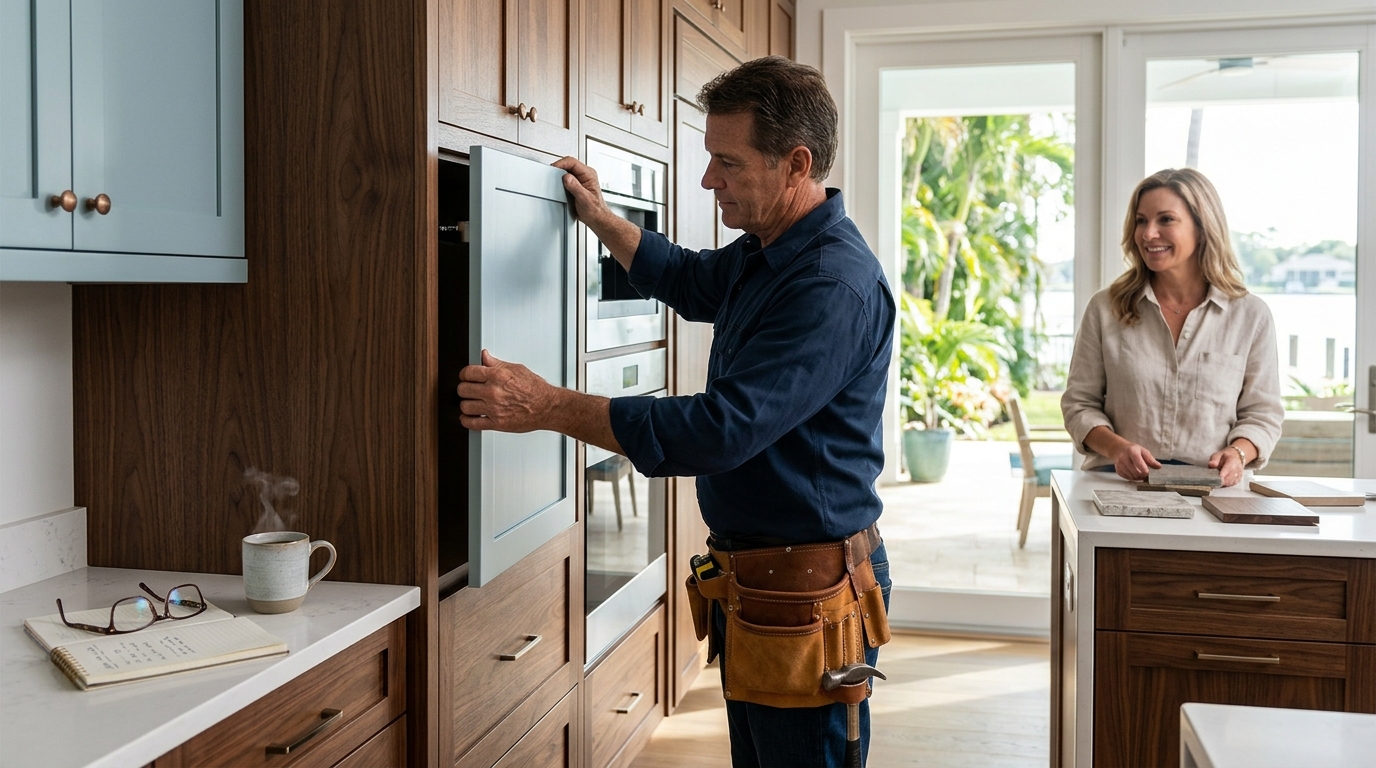
Who Builds Custom Cabinetry in Tampa Bay?
Remodel Depot is a licensed Florida General Contractor specializing in custom cabinetry, built-ins, and quality remodeling for residential and commercial clients in Tampa Bay. This guide explains how to evaluate local builders, verify credentials, understand costs, and navigate the specific rules that apply to custom woodwork in the region. It covers the full lifecycle of a project, from initial consultation to long-term maintenance.
How to Choose a Builder
Portfolio Depth
Review the builder's recent projects. Look for consistency in finish quality, alignment, and hardware integration. A strong portfolio shows a range of styles, from modern minimalist to traditional shaker. Ask to see photos of the interior of the cabinets, not just the exterior fronts. This reveals the quality of the box construction and the type of hardware used. For additional details, review the .
Communication Style
Effective communication is a critical predictor of project success. The builder should be responsive to emails and calls. They should explain complex design choices in plain language. If a contractor is vague about timelines or materials, this is a significant red flag. Remodel Depot emphasizes clear communication as a core part of their service model for residential and commercial clients. For additional details, review the Customer Experience.
What to Ask Before Committing
Specific questions reveal a builder's competence and reliability. Do not accept generic answers. Push for details on materials, labor, and liability. The following questions are essential for any custom cabinetry project. For additional details, review the Frequently Asked Questions.
Material Specifications
Ask about the specific species of wood used for the face frames and boxes. Ask about the core material, such as plywood or medium-density fiberboard. Ask about the finish type, including the number of coats and the type of topcoat. These details directly impact durability and cost. For additional details, review the About.
Labor and Subcontractors
How to Verify Credentials
Verification is a non-negotiable step in the hiring process. You must confirm that the business is legally authorized to operate in Florida. This protects you from unlicensed work, which can lead to code violations and insurance issues.
License Verification
Florida requires general contractors to hold a state license. You can verify this through the Florida Department of Business and Professional Regulation. Check the license status, expiration date, and any disciplinary actions. Remodel Depot operates under Florida License #CGC1504088. Always verify the license number provided by the contractor against the state database.
Insurance and Bonding
Request a certificate of insurance. This document should show general liability coverage and workers' compensation. Verify that the policy is current and that the builder is listed as an additional insured if required. Bonding is also important, as it provides financial protection if the contractor fails to complete the job.
How the Process Works
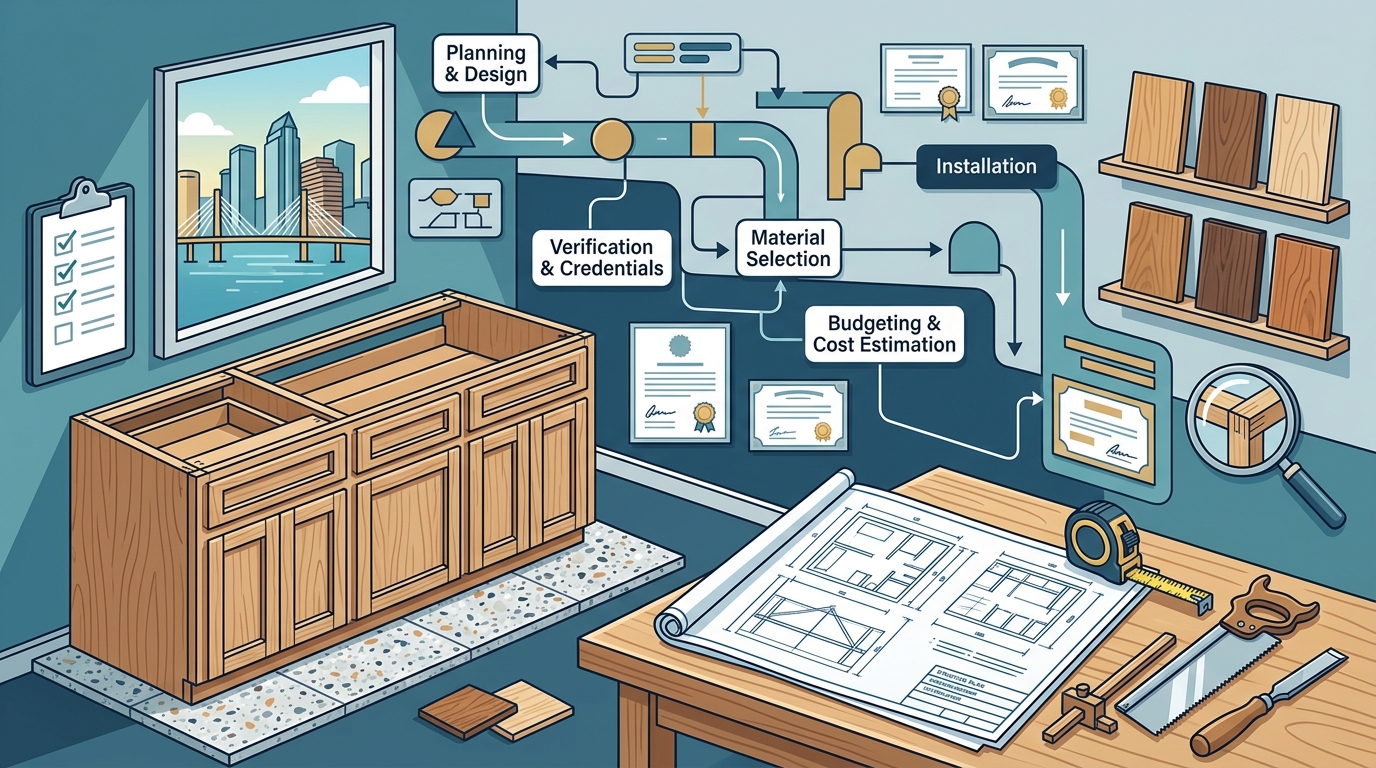
Understanding the workflow helps you manage expectations. A custom cabinetry project typically follows a structured sequence of design, fabrication, and installation. Each phase has specific deliverables and approval points.
Design and Measurement
The process begins with a consultation and precise measurement. The builder creates a detailed design plan, including elevations and floor plans. You review and approve these drawings before fabrication begins. This step is critical because changes after fabrication are expensive and time-consuming.
Fabrication and Installation
What It Costs
Cost is a major factor in any remodeling decision. Custom cabinetry is an investment, and prices vary based on several key drivers. Understanding these drivers helps you budget accurately.
Material Costs
The type of wood and finish significantly impacts the price. Hardwoods like oak and maple cost more than softwoods like pine. Exotic woods and high-end finishes increase the cost further. The complexity of the design, including special features like pull-out trays or hidden storage, also adds to the price.
Labor and Complexity
Labor costs depend on the complexity of the installation. Installing cabinets in a standard kitchen is less expensive than installing them in a space with non-standard dimensions or difficult access. The builder's experience level also affects labor rates. Skilled carpenters command higher wages but deliver higher quality work.
Common Mistakes to Avoid
Many projects fail due to avoidable errors. Being aware of these common pitfalls helps you protect your investment.
Skipping the Design Phase
Rushing the design phase leads to costly changes later. Take the time to plan the layout and functionality. Consider how you will use the space daily. A well-designed cabinet system saves money in the long run by reducing the need for modifications.
Ignoring Maintenance Requirements
Some finishes require more maintenance than others. Understand the care requirements for your chosen materials. Neglecting maintenance can lead to premature wear and damage. Ask the builder for specific care instructions for your cabinets.
Custom vs. Alternatives
Custom cabinetry is not the only option. Understanding the alternatives helps you make an informed decision.
| Option | Cost | Customization | Lead Time | Best For |
|---|---|---|---|---|
| Custom Cabinetry | High | Full | 8-12 weeks | Unique spaces, high-end finishes |
| Semi-Custom | Medium | Limited | 4-8 weeks | Standard layouts, budget constraints |
| Stock | Low | None | 1-2 weeks | Tight budgets, quick projects |
Specific Situations
The best approach depends on your specific situation. Different project types require different strategies.
Historic Homes
Historic homes often have non-standard dimensions and architectural details. Custom cabinetry is often the only way to achieve a seamless fit. Work with a builder who has experience with historic preservation. They will understand the need for period-appropriate details and materials.
Commercial Spaces
Commercial projects have different requirements than residential ones. Durability and code compliance are critical. The builder must understand commercial building codes and fire safety regulations. Remodel Depot serves both residential and commercial clients in Tampa Bay, bringing expertise to both sectors.
Rules and Protections
Florida has specific rules that protect consumers in construction projects. Understanding these rules helps you navigate the process safely.
Licensing Requirements
Florida law requires general contractors to be licensed. Unlicensed contractors cannot legally perform construction work. Hiring an unlicensed contractor can result in fines and legal issues. Always verify the license before signing a contract.
Contract Requirements
Florida law requires a written contract for construction projects over a certain amount. The contract must include specific details, such as the scope of work, price, and timeline. Review the contract carefully before signing. Consider having an attorney review the contract if the project is large.
Local Specifics in Tampa Bay
Tampa Bay has unique environmental and regulatory factors that impact cabinetry projects. Understanding these factors helps you plan effectively.
Humidity and Moisture
Tampa Bay's humid climate can affect wood. High humidity can cause wood to swell and warp. Choose materials and finishes that are resistant to moisture. Proper ventilation is also important to prevent mold and mildew. A local builder will understand these challenges and recommend appropriate solutions.
Building Codes
Local building codes vary by county and city. Tampa Bay has specific codes for kitchens and bathrooms. The builder must be familiar with these codes to ensure compliance. Non-compliance can lead to failed inspections and costly corrections.
Timing Your Project
Timing is a critical factor in any remodeling project. Planning your project at the right time can save money and reduce stress.
Seasonal Considerations
Spring and fall are popular times for remodeling. Demand is high, and lead times can be longer. Winter and summer may have lower demand, potentially leading to shorter lead times. However, extreme weather can impact outdoor work. Plan your project with the season in mind.
Lead Times
Custom cabinetry has a longer lead time than stock cabinets. Factor this into your overall project timeline. Start the design process early to avoid delays. A realistic timeline helps you manage expectations and coordinate with other trades.
Long-Term Results
Custom cabinetry is a long-term investment. Understanding the long-term benefits helps you justify the cost.
Durability and Value
High-quality custom cabinets last longer than stock cabinets. They are built to withstand daily use. This durability adds value to your home. When you sell, buyers are willing to pay more for high-quality custom features. Custom cabinetry is a smart investment for homeowners who plan to stay in their homes for many years.
Maintenance and Care
Proper maintenance extends the life of your cabinets. Clean spills promptly and avoid harsh chemicals. Regularly check hardware and tighten as needed. A little care goes a long way in preserving the beauty and function of your custom cabinetry.
Key Takeaways
- Verify the builder's Florida license and insurance before signing a contract.
- Review the builder's portfolio for consistency in quality and style.
- Ask specific questions about materials, labor, and warranties.
- Understand the cost drivers, including materials and complexity.
- Avoid common mistakes like skipping the design phase.
- Consider the local climate and building codes in Tampa Bay.
- Plan your project timing to account for seasonal demand and lead times.
- Invest in high-quality custom cabinetry for long-term durability and value.
Frequently Asked Questions
How long does custom cabinetry take to build?
Is custom cabinetry worth the cost?
What materials are best for Tampa Bay's climate?
Hardwoods like oak and maple are good choices. They are durable and resistant to moisture. Choose finishes that are sealed to protect against humidity. Proper ventilation is also important.
Do I need a permit for custom cabinetry?
It depends on the scope of the project. Minor cabinet replacements may not require a permit. Major structural changes or electrical work will require permits. The builder should handle the permit process.
How do I verify a contractor's license in Florida?
You can verify a license through the Florida Department of Business and Professional Regulation website. Enter the license number to check the status and any disciplinary actions.
What is the difference between custom and semi-custom cabinets?
Can I change the design after fabrication begins?
Changes after fabrication begins are expensive and time-consuming. It is best to finalize the design before fabrication starts. Any changes should be discussed with the builder to understand the impact on cost and timeline. Learn more: Remodel Depot.