

Planning a kitchen remodel in Tampa Bay requires more than just selecting finishes. It demands a strategic approach to spatial design, material durability, and local regulatory compliance. According to recent industry data, custom cabinetry can increase home value by up to 70% of its cost, making it the highest return on investment for homeowners in the region. This guide outlines the precise steps to execute a flawless renovation, from initial consultation to final installation, ensuring your kitchen is both beautiful and functional.
1. Understanding Your Needs and Layout
The foundation of any successful kitchen remodel is a clear understanding of your daily habits and spatial constraints. Tampa Bay homes vary widely in age and layout, from mid-century modern designs to contemporary new builds. Before contacting contractors, you must define the primary function of the space.
Are you looking for a chef-grade workspace with professional appliances? Or do you need a family-friendly hub with ample storage and durable surfaces? Custom cabinetry allows for precise tailoring to these specific needs. Unlike stock cabinets, custom solutions utilize every inch of available space, including awkward corners and high ceilings.
Consider the "work triangle" principle, which connects the sink, stove, and refrigerator. Efficient placement of these elements reduces movement and increases safety. Custom cabinetry can be designed to optimize this triangle, ensuring that your workflow is intuitive and efficient. For example, pull-out pantries and deep drawers can replace traditional lower cabinets, providing better access to items stored in the back.
2. The Design Phase and Material Selection
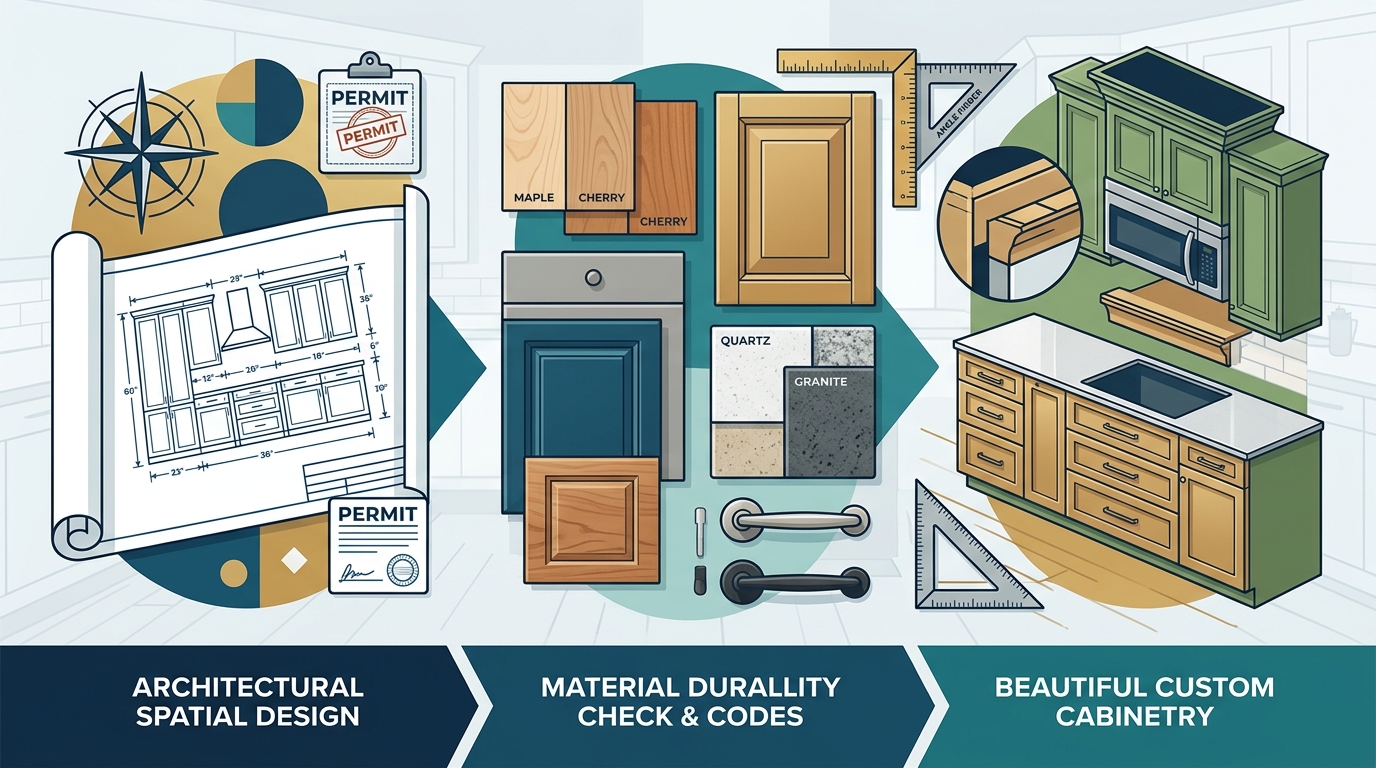
Once your needs are defined, the design phase begins. This is where your vision takes shape through detailed drawings and material selections. In Tampa Bay's humid climate, material choice is critical for longevity. Moisture resistance is not just a preference; it is a necessity for cabinetry in this region.
Custom cabinetry is defined as furniture made to order to fit specific dimensions and style requirements. This definition highlights the flexibility of the process. You can choose from a variety of wood types, including maple, cherry, walnut, and oak. Each wood species offers unique grain patterns and durability levels. Maple is known for its hardness and smooth finish, while walnut provides a rich, dark aesthetic that is highly sought after in luxury homes.
When selecting finishes, consider the impact of humidity on wood expansion and contraction. High-quality paints and stains with UV resistance help prevent fading and warping. Additionally, soft-close hinges and drawers are standard in premium custom work, ensuring quiet operation and extended hardware life. These small details significantly enhance the user experience and the overall quality of the remodel.
3. Selecting a Licensed General Contractor
Choosing the right partner is the most critical decision in your remodeling journey. In Florida, all general contractors must be licensed and insured to operate legally. This requirement protects homeowners from liability and ensures a baseline of professional competence.
Remodel Depot is a licensed Florida General Contractor serving the Tampa Bay area. Their expertise lies in custom cabinetry and built-ins, which are central to any kitchen transformation. When evaluating contractors, look for specific experience in kitchen remodels. Ask to see portfolios of completed projects, particularly those similar in scale and style to your own.
Verify their license number, such as CGC1504088, through the Florida Department of Business and Professional Regulation. This step confirms their legal standing and allows you to check for any past complaints or disciplinary actions. A reputable contractor will also carry comprehensive insurance, including workers' compensation and general liability coverage. This protects you from financial responsibility in case of accidents or damages during the project.
4. Permits and Local Regulations
Kitchen remodels often involve structural changes, electrical updates, and plumbing modifications. In Tampa, these changes require permits to ensure safety and code compliance. Failing to obtain the necessary permits can result in fines, forced removal of work, and complications when selling your home.
Your general contractor should handle the permit application process. This includes submitting detailed plans to the local building department for review. The review process ensures that your design meets current building codes, including electrical safety standards and plumbing regulations. Once approved, inspections are scheduled at various stages of the construction.
For example, rough-in inspections are required before walls are closed up to verify that electrical wiring and plumbing pipes are installed correctly. Final inspections confirm that the completed work matches the approved plans and meets all safety standards. A licensed contractor manages this complex bureaucracy, allowing you to focus on the design and outcome of your project.
5. The Installation Process
The installation phase is where the design becomes reality. This process typically begins with the demolition of the existing kitchen, followed by the preparation of the space for new installations. Demolition must be done carefully to avoid damaging surrounding structures or utilities.
Once the space is prepped, the custom cabinetry is fabricated off-site. This allows for precise craftsmanship and quality control in a controlled environment. The cabinets are then delivered and installed by the contractor's team. Installation involves leveling the cabinets, securing them to the wall studs, and ensuring that all doors and drawers align perfectly.
After the cabinets are in place, countertops are measured and installed. This step requires precision to ensure a seamless fit. Finally, appliances, lighting, and hardware are added to complete the look. A final walkthrough with the contractor ensures that every detail meets your expectations and that the space is clean and ready for use.
Key Takeaways
- Custom Cabinetry ROI: Investing in custom cabinetry can yield a return on investment of up to 70% of its cost, significantly boosting home value.
- Licensed Contractors: Always verify that your contractor holds a valid Florida General Contractor license, such as CGC1504088, for legal protection.
- Material Durability: Choose moisture-resistant materials like maple or high-quality finishes to withstand Tampa Bay's humid climate.
- Permit Compliance: Structural and electrical changes require permits to ensure safety and avoid future legal issues.
- Design Flexibility: Custom solutions allow for optimized layouts, such as pull-out pantries and deep drawers, that stock cabinets cannot provide.
- Insurance Coverage: Ensure your contractor carries workers' compensation and general liability insurance to protect against accidents.
- Professional Management: A licensed general contractor handles permits, inspections, and coordination, reducing stress and ensuring code compliance.
Frequently Asked Questions
How long does a kitchen remodel with custom cabinetry take?
The timeline varies based on the scope of the project. Typically, the design and fabrication phase takes 4 to 8 weeks. Installation usually requires 2 to 3 weeks. Total project duration is often 6 to 10 weeks from start to finish.
Do I need a permit for a kitchen remodel in Tampa?
Yes, most kitchen remodels involving structural, electrical, or plumbing changes require permits from the City of Tampa. Your general contractor should manage this process.
What is the difference between custom and semi-custom cabinets?
Custom cabinets are built from scratch to your exact specifications, offering unlimited design choices. Semi-custom cabinets are modified from existing stock sizes, offering limited customization options.
How does humidity affect kitchen cabinets in Tampa Bay?
High humidity can cause wood to expand and contract, leading to warping or cracking. Using moisture-resistant materials and high-quality finishes is essential to prevent damage.
Can I keep my kitchen functional during the remodel?
It is challenging to maintain full functionality during a remodel. Many homeowners set up a temporary kitchen in another area of the house. Planning for this disruption is part of the initial consultation.
What materials are best for custom kitchen cabinets?
Hardwoods like maple, cherry, and walnut are popular for their durability and aesthetic appeal. Plywood boxes are often preferred for their stability and resistance to warping compared to particleboard.
How do I choose the right countertop material?
Consider durability, maintenance, and aesthetics. Granite and quartz are popular choices for their resistance to heat and stains. Butcher block offers a warm look but requires more maintenance.
What should I look for in a kitchen remodel contractor?
Look for a licensed and insured contractor with a strong portfolio of kitchen projects. Check references and verify their license status with the state of Florida.
Start Your Kitchen Remodel
Ready to transform your kitchen with custom cabinetry? Contact Remodel Depot today for a free consultation and estimate. Our team of licensed professionals is ready to bring your vision to life with precision craftsmanship and attention to detail. Visit our services page to learn more about our offerings. Call us at 813-549-CITY or email info@remodeldepot.com to schedule your project.