Designing a Custom Entertainment Center: Key Considerations for Tampa Bay Homes
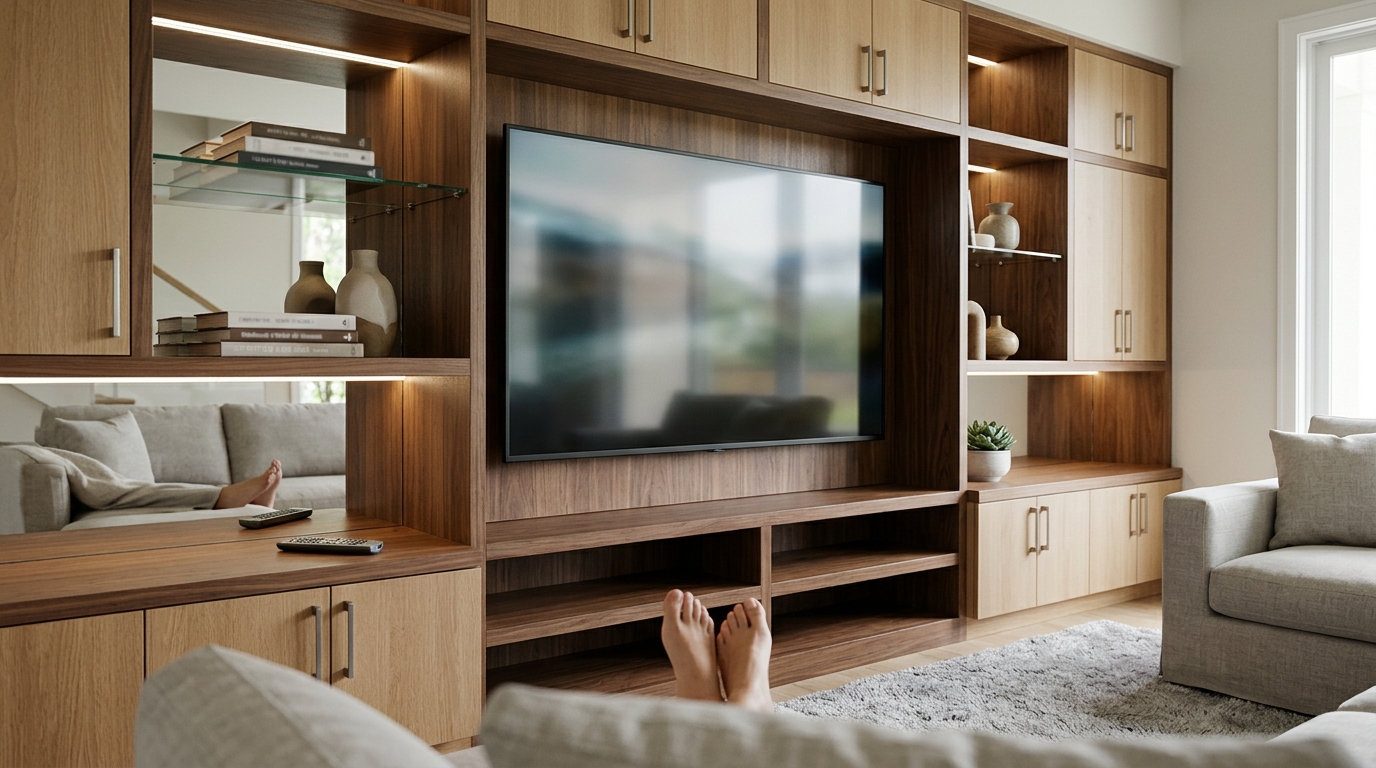
Designing a custom entertainment center requires balancing structural integrity, cable management, and aesthetic harmony with your existing living room layout. Remodel Depot, a licensed Florida General Contractor, specializes in precision craftsmanship for residential clients in Tampa Bay. By integrating built-in cabinetry with modern technology needs, you create a focal point that enhances both functionality and property value. This guide outlines the critical steps for planning a seamless, durable, and visually striking media wall. For additional details, review the 1remodeldepot com.
Assessing Space and Structural Requirements
Consider the sight lines from your primary seating area. The center of the screen should align with the eye level of seated viewers to reduce neck strain. If the wall is too short, a vertical design can maximize storage without sacrificing viewing comfort. Remodel Depot evaluates these spatial dynamics during the initial consultation to ensure the design fits your specific room dimensions. For additional details, review the Customer Experience.
Integrating Cable Management and Technology
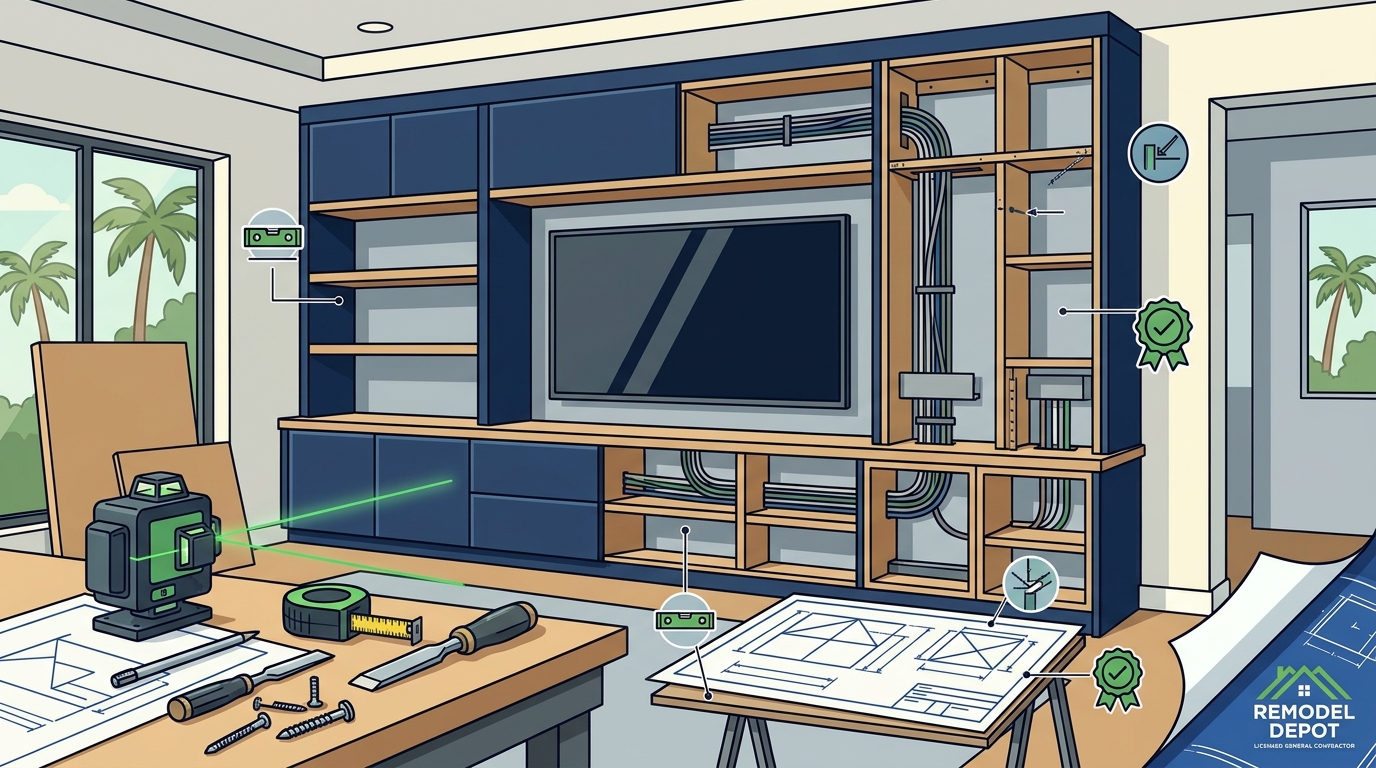
Modern entertainment centers must accommodate a complex array of devices, including soundbars, streaming boxes, and gaming consoles. Effective cable management is the process of organizing and concealing electrical cords to maintain a clean aesthetic. Without proper planning, visible wires detract from the design and create tripping hazards. Custom built-ins allow for internal channels and grommets that route cables behind the unit or through the wall. For additional details, review the Frequently Asked Questions.
Plan for future technology upgrades by including extra conduit space within the cabinetry. This allows you to add new devices without drilling into finished wood. Ensure that ventilation is adequate for heat-generating equipment. Enclosed cabinets can trap heat, which may shorten the lifespan of electronics. Remodel Depot incorporates passive ventilation solutions and dedicated power outlets within the design to keep your setup organized and safe. For additional details, review the About.
Selecting Materials and Finishes for Durability
The choice of materials directly impacts the longevity and appearance of your entertainment center. A durable entertainment center is constructed from high-quality wood species or engineered panels that resist warping and moisture. In the Tampa Bay climate, humidity levels can fluctuate, affecting wood stability. Selecting moisture-resistant materials or applying proper sealants is essential for maintaining the finish over time.
Optimizing Storage and Accessibility
Storage capacity is a critical component of any custom entertainment center design. You need to balance open shelving for display with closed cabinets for hiding clutter. A well-designed storage system is one that keeps frequently used items accessible while concealing less attractive equipment. Use drawers for remote controls and small accessories, and shelves for media collections or decorative items.
Think about the workflow of using the space. If you have a large collection of video games or books, dedicated shelving with adjustable heights provides flexibility. Soft-close hinges and slides add a premium feel and reduce noise. Remodel Depot focuses on attention to detail in hardware selection, ensuring that every drawer and door operates smoothly. This level of craftsmanship enhances the daily user experience and adds value to your home.
Key Takeaways
- Measure your wall space and verify stud placement before finalizing the design.
- Plan for cable management and ventilation to protect your electronics.
- Choose moisture-resistant materials suitable for the Tampa Bay climate.
- Balance open shelving with closed storage to maintain a clean aesthetic.
- Align the screen height with your seating area for optimal viewing comfort.
- Work with a licensed contractor to ensure structural integrity and precision.
Frequently Asked Questions
How much does a custom entertainment center cost in Tampa Bay?
The cost varies based on size, materials, and complexity. A basic unit may start at a lower price point, while elaborate designs with premium finishes and integrated lighting cost more. Remodel Depot provides detailed quotes after assessing your specific requirements and space.
Can I install a custom entertainment center in an older home?
What materials are best for a humid climate?
Engineered wood and moisture-resistant plywood are excellent choices for humid environments. Solid wood can be used if properly sealed and maintained. Remodel Depot selects materials that perform well in Florida's climate conditions.
How long does installation take?
Installation time depends on the complexity of the design. A standard unit may take a few days, while a large, custom-built wall can take longer. Remodel Depot provides a clear timeline during the planning phase to minimize disruption to your home.
Do I need a permit for a built-in entertainment center?
Generally, non-structural built-ins do not require a permit. However, if the project involves electrical work or structural modifications, a permit may be necessary. Remodel Depot handles all necessary permits and inspections to ensure compliance with local building codes.
Conclusion
Designing a custom entertainment center is an investment in both functionality and aesthetics. By considering structural requirements, cable management, materials, and storage, you can create a media wall that enhances your living room. Remodel Depot brings expertise in custom cabinetry and built-ins to Tampa Bay homeowners, ensuring a high-quality result that stands the test of time. To discuss your project, contact Remodel Depot for a consultation. Learn more: 1remodeldepot com.