
Licensed Contractors: The Standard of Accountability
A licensed contractor is a professional who has met the state of Florida's rigorous requirements for education, experience, and financial responsibility. In Florida, the Department of Business and Professional Regulation (DBPR) oversees the licensing of general contractors. This regulatory framework ensures that professionals like those at Remodel Depot maintain high standards of practice. Licensing is not just a badge; it is a legal mandate for performing specific types of construction work. For additional details, review the Frequently Asked Questions.
Legal and Financial Protections
Hiring a licensed contractor provides a layer of legal protection that unlicensed workers simply cannot offer. Licensed professionals are required to carry general liability insurance and workers' compensation coverage. If an accident occurs on your property, these policies protect you from being held liable for medical bills or property damage. Furthermore, licensed contractors are bound by the Florida Construction Contract Act, which governs how contracts are written, executed, and enforced. For additional details, review the About.
Quality and Compliance
Licensing ensures that the contractor understands local building codes and zoning laws. In Tampa Bay, specific environmental and structural codes apply to coastal and urban properties. A licensed professional knows how to navigate permit processes and inspections. This expertise prevents costly rework and ensures that your kitchen remodeling or bathroom remodeling project meets all safety standards. The state can discipline or revoke licenses for poor performance, providing an additional layer of accountability.
Unlicensed Contractors: The Risk of Savings
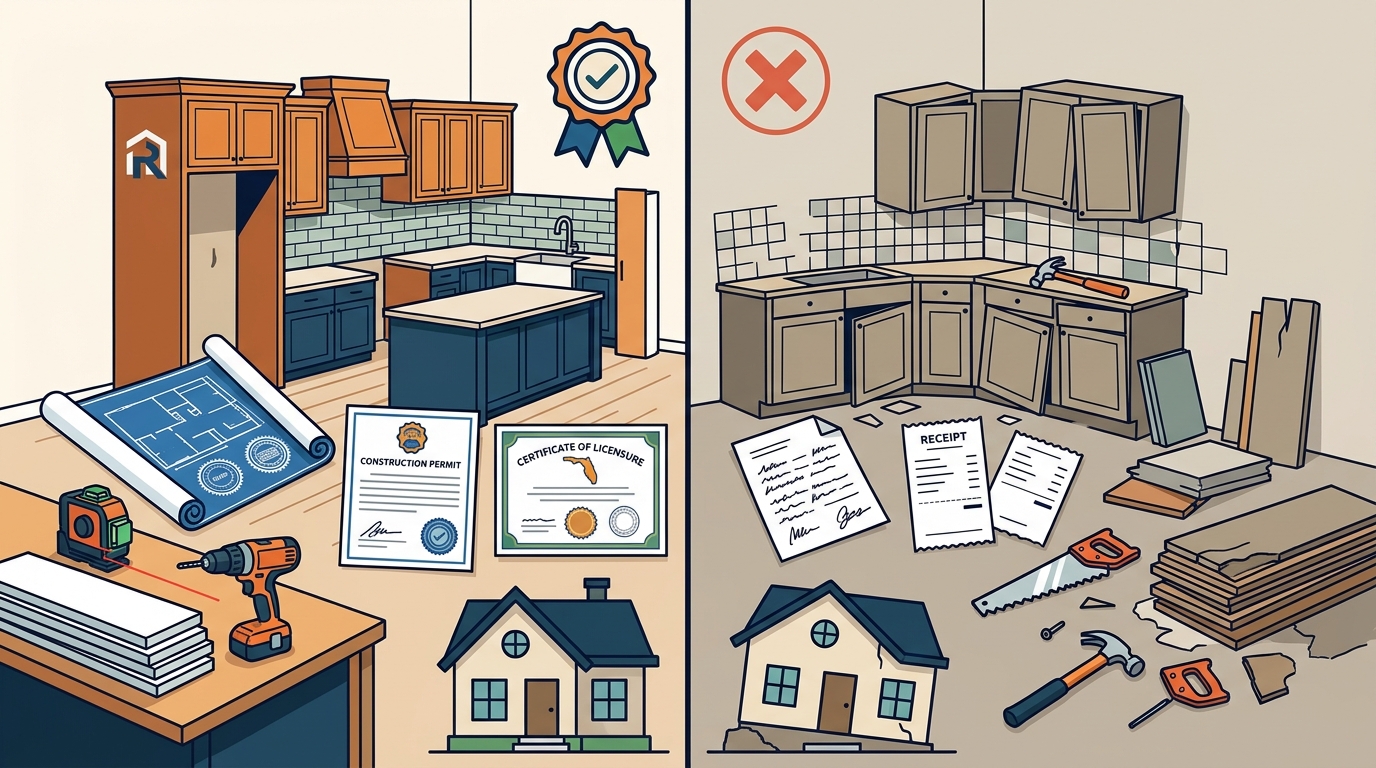
An unlicensed contractor is an individual or entity that performs construction work without holding the required state or local credentials. While these workers may advertise lower rates, the absence of a license signals a lack of verified competency and financial stability. In Florida, it is illegal for a general contractor to perform work without a license. Homeowners who hire unlicensed workers for licensed work may face legal complications and voided warranties.
Insurance and Liability Gaps
Unlicensed workers rarely carry adequate insurance. If a worker is injured on your job site, you may be personally liable for their medical expenses. Similarly, if they damage your home, you have no recourse against an insurance policy. This risk is particularly high for larger projects like whole-home remodeling, where the potential for damage is significant. The lack of a license also means there is no state body to which you can file a complaint if the work is substandard.
Permit and Inspection Issues
Unlicensed contractors often bypass the permit process to save time and money. This creates a major problem when you eventually sell your home. Buyers and their inspectors will discover unpermitted work, which can kill a sale or drastically lower the property value. Correcting unpermitted work later is often more expensive than doing it right the first time with a licensed professional. This is a hidden cost that erodes any initial savings.
Comparison Table: Licensed vs Unlicensed
| Criteria | Licensed Contractor | Unlicensed Contractor |
|---|---|---|
| Legal Status | Authorized by Florida DBPR | Illegal for licensed work |
| Insurance | Required liability and workers' comp | Often none or inadequate |
| Permits | Handles permits and inspections | May bypass permits |
| Accountability | State oversight and discipline | No regulatory recourse |
| Cost | Higher upfront, fair market rate | Lower upfront, high risk |
| Warranty | Valid manufacturer warranties | Warranties may be void |
Decision Guidance: Who Should You Choose?
Choosing the right contractor depends on the scope of your project and your risk tolerance. Understanding the specific needs of your home will help you make the right call.
Choose a Licensed Contractor If:
- You are undertaking structural changes, electrical, or plumbing work.
- You are planning a custom cabinetry or built-in project that requires precise installation.
- You want to ensure your home remains compliant with Tampa Bay building codes.
- You plan to sell the property in the future and need a clean inspection history.
Choose an Unlicensed Worker Only If:
- The task is strictly cosmetic and does not involve structural, electrical, or plumbing systems (e.g., painting, minor drywall patching).
- You are fully aware of the legal risks and have no intention of selling the home soon.
- You have verified the individual's skill set through extensive references and past work.
- You are prepared to handle many permits and inspections yourself.
For most Tampa Bay homeowners, the risks of hiring unlicensed professionals outweigh the potential savings. A licensed firm like Remodel Depot provides the expertise and legal compliance necessary for a successful renovation.
Frequently Asked Questions
Is it illegal to hire an unlicensed contractor in Florida?
Yes, it is illegal for a general contractor to perform work without a license. While the primary penalty is for the contractor, homeowners may face issues with permits, insurance, and future property sales if they hire unlicensed workers for licensed work.
Can I verify a contractor's license online?
Yes, you can verify any Florida contractor's license status through the Department of Business and Professional Regulation (DBPR) website. This free tool allows you to check the license number, expiration date, and any disciplinary actions.
What happens if an unlicensed contractor damages my home?
If an unlicensed contractor causes damage, you may have to pay for repairs out of pocket. Since they likely do not carry liability insurance, you cannot file a claim against them. You may pursue a civil lawsuit, but collecting on a judgment from an unlicensed worker is often difficult.
Do unlicensed contractors offer warranties?
How much more does a licensed contractor cost?
Licensed contractors typically charge fair market rates that reflect their insurance, overhead, and expertise. While the upfront cost may be higher than an unlicensed worker, the total cost of ownership is often lower due to reduced risk of errors, rework, and legal complications.
Can I switch from an unlicensed to a licensed contractor mid-project?
Yes, you can switch, but it may incur additional costs. You will need to terminate the existing agreement, which may involve penalties. The new licensed contractor will need to assess the existing work, which could require correcting errors made by the unlicensed worker. It is best to start with a licensed professional to avoid this hassle. Learn more: 1remodeldepot com.